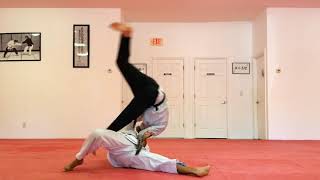
Classification and Terminology
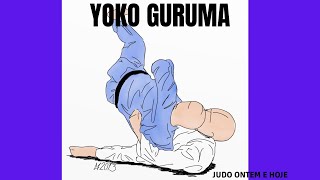
Tani otoshi is classified as a yoko sutemi waza, a side sacrifice throw executed by abandoning one's upright position rather than throwing over the head. The term "sacrifice" is misleading; the practitioner simply relinquishes their vertical posture and allows gravity to execute the throw. This technique requires no muscular force and can be performed effectively by smaller practitioners, as demonstrated by the instructor's experience being thrown by a one-armed judoka using tani otoshi.
Entry and Body Positioning
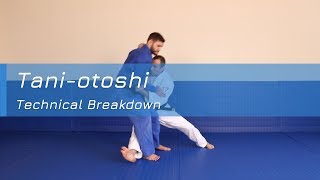
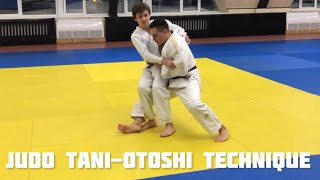
The practitioner must enter perpendicular to the opponent, a critical positioning requirement for technique execution. The approach mirrors kosotogari entry, with the left hand establishing kuzushi by pulling the opponent straight backward. The right hand becomes the tsurite, or pulling hand, while the left serves as the hikite, or controlling hand.
Leg Placement and Foot Trajectory
The right leg must travel across the opponent's body with a bent knee, passing behind the opponent's heel rather than stopping at it. The practitioner should step past the opponent's toes and aim beyond the heel to ensure proper extension. The right knee bends during the entry, requiring the practitioner to rise on the ball of the foot to achieve the necessary reach and flexibility.
Posture and Upper Body Mechanics
The elbow must remain low with the thumb positioned against the opponent's neck, driving downward rather than pushing backward at the shoulder. Since the body follows the head, controlling the head through neck pressure generates superior kuzushi. The gaze should remain fixed past the opponent's face to maintain connection and prevent losing balance if the opponent turns.
Hand Position and Finishing Details
The hands should remain close to the body rather than extended outward in a clothesline position. A subtle wrist rotation coordinates with the overall body movement, contributing to the cumulative effect of the technique. Every micro-movement functions as an ingredient in the complete technique execution.
Waza Judo Versus Power Judo
Tani otoshi exemplifies waza judo, technique-based judo that achieves results through proper mechanics rather than strength. Proficiency in waza judo requires dedicated repetition to internalize all technical components and their coordination. When properly executed, the technique produces decisive results regardless of the practitioner's size or strength level.
Training Methodology and Practice Principles
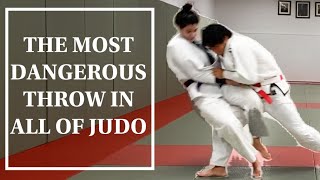
Practitioners must train tani otoshi with relaxed resistance rather than full power to develop proper mechanics safely. This technique is dangerous and demands careful, methodical practice to master. Repetitive drilling builds the muscle memory and coordination necessary to execute the technique instinctively under pressure.
Integration with Conditioning and Combat Application
Strength in judo functions primarily as stamina rather than power, enabling practitioners to maintain technique application throughout extended engagement. Traditional conditioning through drills like slaughter lines—successive matches against multiple opponents—develops the endurance necessary to apply techniques consistently. Practitioners who master waza judo through proper training can effectively execute techniques even under intense physical and mental fatigue.
Tani-Otoshi Tips | Riki Judo Dojo
Key Takeaways
- •Classification and Terminology
- •Entry and Body Positioning
- •Leg Placement and Foot Trajectory
- •Posture and Upper Body Mechanics
Riki sensei explained tani-otoshi (谷落 - valley drop) during judo class on 1-3-2022. 0:00 Abandon your upright position 0:26 Technique over strength 0:48 Get perpendicular 1:04 Kuzushi 1:24 Bend uke's knee 1:56 Keep your knee sideways 2:06 Aim past uke's heel 2:28 Be on the ball of your foot 2:38 Keep your elbow down 2:55 Toe details 3:05 Look past uke's face 3:15 Your body is a T.E.A.M. 3:38 Kyuzo Mifune's tani-otoshi 3:48 Waza judo & slaughter lines Riki sensei began Judo in Okinawa and is a Shichidan with over 56 years of study, practice, competition and teaching. He competed for 25 years at the local, national and international levels. A few of the great Judoka Riki sensei has studied and practiced with include: Kotani, Daigo, Ito, Inokuma, Okano, Kimura, Kaminaga and Nakatani. See Riki sensei teach every Monday, Wednesday, Thursday and Friday evening at 535 W. Iron Ave, Mesa, AZ 85210. Youth classes are 6 - 6:55 PM, adult classes are 7:00 - 8:30 PM. For more info, please visit rikidojousa.com The purpose of this YouTube channel is to pass on the original, traditional, authentic Kodokan Judo that Riki sensei loves so much. Riki sensei's students maintain this YouTube channel (and are responsible for any errors), but you can find more of his thoughts at the Riki Judo Dojo Facebook page: https://www.facebook.com/Riki-Judo-Dojo-USA-194351210607759 16
Frequently Asked Questions
What does this video teach about standard tani otoshi?
This video covers classification and terminology, entry and body positioning, leg placement and foot trajectory. It provides detailed instruction from Riki Judo Dojo.
How long does it take to learn standard tani otoshi?
The basic mechanics can be understood in a single session, but developing reliable execution requires consistent drilling over weeks of practice. This 8-part breakdown helps structure your training by isolating each phase of the technique.
What are the key details for finishing standard tani otoshi?
Practitioners must train tani otoshi with relaxed resistance rather than full power to develop proper mechanics safely. This technique is dangerous and demands careful, methodical practice to master. Repetitive drilling builds the muscle memory and coordination necessary to execute the technique instinctively under pressure.