Fundamental Grip and Balance Breaking
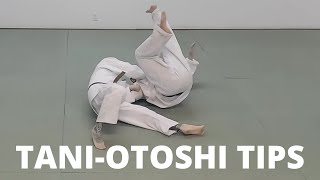
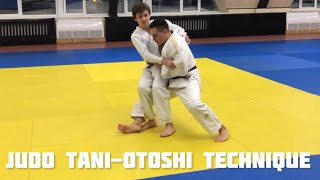
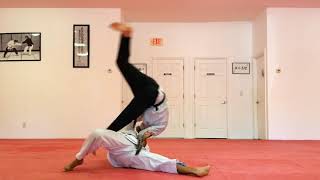
Tani Otoshi requires the practitioner to break uke's balance directly backward over their heels. The sleeve hand maintains control close to uke's hips while the dominant hand grips the collar or back of the neck on the outside. Head positioning directly in front of uke's chest is critical for effective balance disruption.
Footwork and Leg Placement
The blocking leg must be positioned immediately behind uke's feet to prevent their retreat. This placement occurs on the second step of the technique and works in conjunction with proper head positioning to complete the balance break.
Critical Safety Considerations
A common beginner error is attempting the technique without fully breaking uke's balance backward. This causes the practitioner to lunge onto the nearest leg, risking dangerous knee flexion and potential ligament damage. Complete kuzushi backward must be established before execution.
Setup One: Direction Change from Hip Attack
The practitioner initiates a front hip throw, prompting uke to push their hips forward defensively. As uke's balance shifts backward, the practitioner immediately changes direction, connects head-to-chest, and executes the throw.
Setup Two: Transition from Kosoto Gari
Following a kosoto gari attack to the leg, uke lifts their leg in response. The practitioner lunges without hesitation, maintaining head contact with uke's chest to break balance completely and transition seamlessly into Tani Otoshi.
Setup Three: Counter to Hip Throw Attack
When uke attacks with a hip throw, the practitioner must completely block the technique first. The timing is critical—the practitioner waits for uke to begin recovering their balance before executing Tani Otoshi, turning uke's own momentum against them.
Variation One: Double Sleeve Grip
The practitioner establishes a two-sleeve grip, wrapping both arms around uke's sleeves. With head contact maintained at uke's chest, the backward balance break is executed smoothly, completing the throw.
Variation Two: Against Strong Lapel Grip
When uke holds a strong lapel grip and resists the practitioner's break attempt, the practitioner uses this defensive resistance against them. By weaving the hand around uke's hips and establishing a solid grip, the practitioner executes Tani Otoshi using uke's own tension to facilitate the throw.
Tani-otoshi - Technical Breakdown
Key Takeaways
- •Fundamental Grip and Balance Breaking
- •Footwork and Leg Placement
- •Critical Safety Considerations
- •Setup One: Direction Change from Hip Attack
#efficientjudo #judo #judothrows Technical Breakdown from Tani-otoshi, looking how to perform the technique, some common and set ups and variations.
Frequently Asked Questions
What does this video teach about standard tani otoshi?
This video covers fundamental grip and balance breaking, footwork and leg placement, critical safety considerations. It provides detailed instruction from Efficient Judo.
How long does it take to learn standard tani otoshi?
The basic mechanics can be understood in a single session, but developing reliable execution requires consistent drilling over weeks of practice. This 8-part breakdown helps structure your training by isolating each phase of the technique.
What are the key details for finishing standard tani otoshi?
The practitioner establishes a two-sleeve grip, wrapping both arms around uke's sleeves. With head contact maintained at uke's chest, the backward balance break is executed smoothly, completing the throw.