Introduction to Head Outside Drag Fundamentals
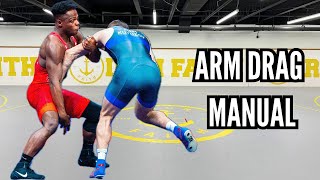
Aiden Sinclair demonstrates the foundational setup for the head outside drag, a versatile upper body attack that prevents the wrestler from being trapped underneath. The technique begins with grip establishment through methods such as the slap drag or fake post tour drag. Proper positioning requires aligning the toes, driving the elbow deep into the opponent's knee pit, and maintaining hand control throughout the initial contact.
Footwork and Elbow Placement
Executing the drag requires decisive footwork with the ability to step outside using either leg. The attacking wrestler must drive the elbow deeply into the opponent's knee pit while taking a substantial step to generate momentum. This positioning creates leverage and prevents the opponent from easily defending or escaping the attack.
Response to Downward Defense and Double Leg Finish
When the opponent reacts by moving downward, the attacking wrestler can immediately transition to a double leg takedown by sneaking the free arm inside. Achieving the high C position is critical, as it limits the opponent's scrambling options and creates a high-percentage finish. This response demonstrates the interconnected nature of drag attacks and their finishing sequences.
Countering the Turn-In Defense with Arm Beat
A common defensive reaction involves the opponent turning inward into the drag. The wrestler maintains control by beating the opponent's elbow with the head outside arm, preventing the elbow from returning to a defensive position. Dropping into high C while maintaining the arm beat creates the conditions for an effortless lifting finish.
Avoiding Scramble Disadvantages
If the opponent successfully recovers their elbow, the attacking wrestler risks being trapped underneath as the opponent sprawls and pulls their leg back. Beating the opponent's arm during the turn-in is essential to prevent this disadvantageous scramble. Controlling the elbow determines whether the finish remains easy or becomes contested.
Introduction to Slide By Attack
The slide by attack shares the same motion and footwork as the slide shop hand fight technique commonly seen in collegiate wrestling. This attack exploits situations where the opponent applies heavy pressure and hand control, making traditional slide shop escapes ineffective. The slide by offers a legitimate takedown option when an opponent resists with gripping pressure.
Hand Positioning for Slide By
Rather than checking the wristwatch as in a standard slide shop, the wrestler drives the hand deeper to grab the inner head of the opponent's bicep. This subtle hand adjustment prevents telegraphing the technique while establishing the grip necessary for the bypass. The depth of hand penetration is critical for successfully securing the bicep control.
Slide By Execution Against Tight Grip
When the opponent holds tight during the attempted slide shop, the wrestler extends the arm deeper or catches the inner bicep and drives directly to the mat for the takedown. This seamless transition from hand fight to takedown is highly effective against gripping opponents. The technique works equally well on the first or second attempt to clear the opponent's grip.
Aeoden Sinclair Arm Drag Attacks | Technique Tuesday
Key Takeaways
- •Introduction to Head Outside Drag Fundamentals
- •Footwork and Elbow Placement
- •Response to Downward Defense and Double Leg Finish
- •Countering the Turn-In Defense with Arm Beat
On this week’s Technique Tuesday, rising Mizzou star Aeoden Sinclair shows how he chains together clean head outside attacks off his arm drag and slide by series. Known for his slick setups and staying out of bad scrambles, Sinclair walks you through key details to secure double legs, high Cs, and effortless slide by finishes — without ever getting caught underneath. You’ll Learn: - How to enter clean on a head outside single from an arm drag - When to switch to a double to limit scrambles - A slick slide by finish when your opponent locks in and pressures forward Aeoden explains every position with detail — so you can stay offensive, win the handfight, and finish clean. Time Stamps: 00:00:00 - Intro 00:00:21 - Arm Drag to Head Outside Attacks 00:01:07 - Finishing Options 00:03:04 - Slide By 00:04:45 - Outro See the full instructional on Athletes Ocean: https://app.athletesocean.com/product/sinclair-drags Get the Athletes Ocean iOS App: https://apps.apple.com/us/app/athlete... Make sure to like, comment, and subscribe to access all of the latest wrestling videos! Website: https://www.flowrestling.org Subscribe: http://bit.ly/2p4v31C Get the FloSports iOS app: http://bit.ly/FloWrestlingiOSApp_9 Follow FloWrestling Facebook: https://www.facebook.com/FloWrestling/ Twitter: https://twitter.com/flowrestling Instagram: https://www.instagram.com/flowrestling/
Frequently Asked Questions
What does this video teach about standard standing arm drag?
This video covers introduction to head outside drag fundamentals, footwork and elbow placement, response to downward defense and double leg finish. It provides detailed instruction from FloWrestling.
How long does it take to learn standard standing arm drag?
The basic mechanics can be understood in a single session, but developing reliable execution requires consistent drilling over weeks of practice. This 8-part breakdown helps structure your training by isolating each phase of the technique.
What are the key details for finishing standard standing arm drag?
Rather than checking the wristwatch as in a standard slide shop, the wrestler drives the hand deeper to grab the inner head of the opponent's bicep. This subtle hand adjustment prevents telegraphing the technique while establishing the grip necessary for the bypass. The depth of hand penetration is critical for successfully securing the bicep control.