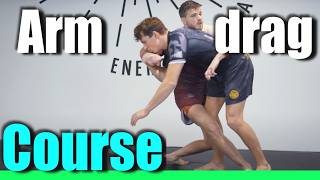
Introduction to the Arm Drag
The arm drag is a fundamental wrestling technique used to create movement and set up subsequent takedowns. This instructional covers the essential mechanics, setup principles, and multiple application scenarios that wrestlers of all levels can incorporate into their arsenal.
Two Primary Arm Drag Variations
The outside-leg variation involves dragging the opponent's arm while stepping forward with the outside leg, then pivoting to establish shoulder-to-shoulder contact. The inside-leg variation requires stepping through with the inside foot while pulling the arm past, creating a more direct penetration angle.
Setup Fundamentals: Push, Pull, Fake
All effective arm drags require proper setup using three core principles: pushing the opponent to create resistance, pulling to draw them forward, and faking high-level attacks to create openings. Combining these elements ensures the technique lands with maximum effectiveness and minimal resistance.
Using Arm Drags for Positional Advantage
The arm drag's primary function is generating opponent movement, particularly effective against strong or stationary wrestlers. By dragging and circling aggressively, the wrestler forces the opponent to chase or face immediate takedown consequences, creating opportunities for follow-up techniques.
Arm Drag from Thumb Block Position
When the opponent establishes a thumb block, the wrestler posts the opposite hand and straightens the opponent's arm. The free hand then chops low on the wrist while reaching up to grip the tricep, enabling a smooth drag past the opponent.
Arm Drag from Inside Tie
From an inside tie control, the wrestler pushes the opponent's tricep while simultaneously reaching with the opposite hand to secure the arm. A decisive step inward combined with a direct pull past the body completes the technique efficiently.
Arm Drag from Wrist Control
The arm drag functions effectively from various wrist-control scenarios, including open-hand grips, underhook combinations, and Russian ties. Mutual wrist control situations present equal drag opportunities, allowing the wrestler to transition regardless of which arm is controlled.
Arm Drag Against Underhook Defense
When an opponent establishes an underhook, the wrestler pinches the arm between their body and arm while gripping the bicep. A well-timed high-crotch fake followed by the arm drag pull creates the opening needed to complete the technique and transition into go-behind or leg-attack positions.
The Arm Drag | Wrestling Moves
Key Takeaways
- •Introduction to the Arm Drag
- •Two Primary Arm Drag Variations
- •Setup Fundamentals: Push, Pull, Fake
- •Using Arm Drags for Positional Advantage
Iron Faith Merch ➡️ https://amptstudio.chipply.com/ifwc/ Join the #1 Online Wrestling Academy in the world ➡️ https://www.skool.com/iron-faith-academy VIDEO BREAKDOWN: INTRO 00:00 ARM DRAG FUNDAMENTALS 00:20 WHEN TO HIT THE ARM DRAG 02:54 TAKEDOWNS FROM THE ARM DRAG 07:18 SUBSCRIBE For any questions or inquiries regarding this video, please reach out to [email protected] ------------------------------------------------------------- follow all of these right now • Facebook - https://www.facebook.com/ironfaithwrestling • Instagram - https://www.instagram.com/ironfaithwrestling -------------------------------------------------------------
Frequently Asked Questions
What does this video teach about standard standing arm drag?
This video covers introduction to the arm drag, two primary arm drag variations, setup fundamentals: push, pull, fake. It provides detailed instruction from Iron Faith Wrestling.
How long does it take to learn standard standing arm drag?
The basic mechanics can be understood in a single session, but developing reliable execution requires consistent drilling over weeks of practice. This 8-part breakdown helps structure your training by isolating each phase of the technique.
What are the key details for finishing standard standing arm drag?
The arm drag functions effectively from various wrist-control scenarios, including open-hand grips, underhook combinations, and Russian ties. Mutual wrist control situations present equal drag opportunities, allowing the wrestler to transition regardless of which arm is controlled.