Introduction and Instructor Credentials
Jordan Burroughs, an Olympic gold medalist and five-time world champion in freestyle wrestling, presents a comprehensive breakdown of the double leg takedown. This instructional session focuses on perfecting the technique through five fundamental steps that have proven effective throughout his elite wrestling career.
The Five-Step Framework
The double leg takedown is systematically deconstructed into five progressive steps: post, club, circle, level change, and penetration. This structured approach allows wrestlers to isolate and master each component before executing the complete technique.
Step One: The Post and Head Position
Maintaining a low head position equivalent to or below the opponent's head is critical for offensive success. A high approach exposes the wrestler to counterattacks. The initial post uses one hand to create imbalance while the opposite hand remains defensive, protecting against leg attacks.
Step Two: The Club and Hand Control
Heavy hand control through clubbing motions keeps the opponent uncomfortable and out of position. This aggressive upper-body engagement prevents the opponent from regaining composure and prepares them for the subsequent attack.
Step Three: Circling to Feet Alignment
Circling movements force the opponent into a square or feet-together stance, which is essential for executing a clean double leg. A staggered stance makes the takedown significantly more difficult and less effective.
Step Four: Level Change and Release
After pulling the opponent's head down heavily, the wrestler releases and executes a sharp level change with explosive forward penetration. The wrestler's left foot serves as the pivot point, generating power and establishing low positioning while the opponent rises high and out of base.
Step Five: Penetration and Hip Drive
The final step involves explosive penetration through the opponent's hips using the back foot for power generation. The wrestler maintains chest-up positioning with hips underneath, establishing control before driving through the opponent's body.
Finishing Position and Leg Control
Once penetration is achieved, the wrestler locks hips tight behind the opponent's hips while securing both legs to the chest. The head placement and body weight shift toward the opponent's support leg, enabling the wrestler to drive across the body and complete the takedown.
Jordan Burroughs Blast Double Breakdown
Key Takeaways
- •Introduction and Instructor Credentials
- •The Five-Step Framework
- •Step One: The Post and Head Position
- •Step Two: The Club and Hand Control
Refined and perfected over a decade, 6x World and Olympic Champion Jordan Burroughs breaks down the Double Leg Takedown that has made him one of the most dominant wrestlers in the history of the sport. For parts 2-4 of this Double Leg Breakdown, join RUDIS+ Today. https://plus.rudis.com/ Join RUDIS+ to watch Original Films, World Class Technique, Match Breakdowns and More Don't Miss SuperMatch on March 16th when Kyle Snyder takes on J'Den Cox in a best 2 of 3 series the night before the NCAA Tournament https://rudis.com/super-match/ Website: https://therudis.com/ Instagram: https://www.instagram.com/the_rudis/ Twitter: https://twitter.com/the_rudis Facebook: https://www.facebook.com/rudiswrestling/ GL0XGHZIY5PRFLED
Frequently Asked Questions
What does this video teach about standard double leg from cage?
This video covers introduction and instructor credentials, the five-step framework, step one: the post and head position. It provides detailed instruction from RUDIS.
How long does it take to learn standard double leg from cage?
The basic mechanics can be understood in a single session, but developing reliable execution requires consistent drilling over weeks of practice. This 8-part breakdown helps structure your training by isolating each phase of the technique.
What are the key details for finishing standard double leg from cage?
The final step involves explosive penetration through the opponent's hips using the back foot for power generation. The wrestler maintains chest-up positioning with hips underneath, establishing control before driving through the opponent's body.
Related videos
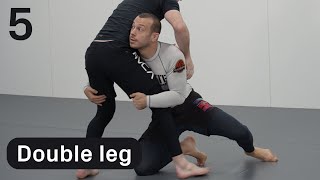
Basic Double Leg Takedown
Absolute MMA St Kilda - Melbourne
Top 5 Wrestling Moves *DOUBLE LEGS*
Cayden Henschel
Single leg defense variation, against the cage ..
Lyubomir Kumbarov
Double Leg Off Cage With Striking Set Up
MMA COACH
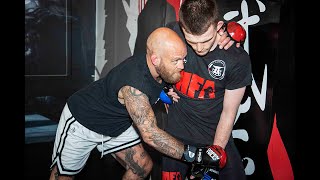
MMA Training - Using the Body Lock to Throw & Suplex off the Cage Wall with Peter Irving
Stuart Tomlinson