Introduction to Soto Uke
Soto uke, also known as the outside block, is a fundamental defensive technique in karate that protects against strikes directed at the centerline of the body. This block utilizes a sweeping motion of the forearm to redirect incoming attacks away from the practitioner's vital areas. Mastering soto uke is essential for developing solid karate fundamentals and effective self-defense capabilities.
Stance and Foundation
Begin in a stable fighting stance with feet shoulder-width apart, maintaining proper weight distribution and alignment. The lower body serves as the foundation for generating power and stability in the blocking motion. Keep your core engaged and posture upright to maximize defensive effectiveness and prepare for counterattacks.
Arm Position and Chamber
Position your blocking arm across your body with the fist near your opposite hip, chambering the technique. The non-blocking arm simultaneously pulls back to the hip in a reciprocal motion, creating rotational force from the hips and shoulders. This dual-arm movement generates the kinetic energy necessary for a powerful, decisive block.
Execution of the Block
Execute the block by rotating your hips and shoulders while sweeping your forearm outward in a circular arc. The blocking arm extends fully across the body, using the outer forearm to make contact with the incoming strike. The motion should be fluid and explosive, meeting the attack at its peak force to effectively neutralize the threat.
Follow-Through and Recovery
Complete the blocking motion with both arms finishing in their proper positions—the blocking arm extended and the opposite arm chambered at the hip. Maintain your stance throughout the technique without shifting your weight or compromising balance. Immediately prepare for a counterattack by maintaining defensive readiness and proper distance from your opponent.
Common Mistakes to Avoid
Practitioners often make the error of using only arm strength rather than generating power from hip rotation and core engagement. Avoid telegraphing the block by maintaining proper chamber position and executing with explosiveness. Additionally, ensure the blocking forearm remains in contact with the attacking limb to control and redirect the force effectively.
Training and Repetition
Develop proficiency in soto uke through consistent drilling with a partner or instructor providing varied attack angles and intensities. Practice the technique slowly at first to establish proper form, then gradually increase speed and power. Regular repetition builds muscle memory, timing, and the reflexive response necessary for effective application in sparring or self-defense situations.
Karate For You :: Outside block - Soto uke tutorial
Key Takeaways
- •Introduction to Soto Uke
- •Stance and Foundation
- •Arm Position and Chamber
- •Execution of the Block
In this video we are showing how to do Outside block , its combinations , applications and training .
Frequently Asked Questions
What does this video teach about soto uke?
This video covers introduction to soto uke, stance and foundation, arm position and chamber. It provides detailed instruction from Karate For You.
How long does it take to learn soto uke?
The basic mechanics can be understood in a single session, but developing reliable execution requires consistent drilling over weeks of practice. This 7-part breakdown helps structure your training by isolating each phase of the technique.
What are the key details for finishing soto uke?
Practitioners often make the error of using only arm strength rather than generating power from hip rotation and core engagement. Avoid telegraphing the block by maintaining proper chamber position and executing with explosiveness. Additionally, ensure the blocking forearm remains in contact with the attacking limb to control and redirect the force effectively.
Related videos
KARATE - block techniques (UKE waza)
Radim Pavelka
KARATE - block techniques (UKE waza)
Radim Pavelka
Can You Master This Karate Move? | Girl Power Uchi Uke Tutorial
Fitness Karate Academy
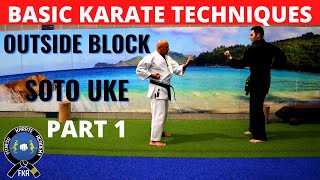
outside block martial arts for beginners part 1
Fitness Karate Academy
Japanese Karate Sensei's Tips On Shuto Uke (Knife Hand Block)
Karate Dojo waKu