Introduction to the Body Lock Takedown
The body lock takedown is considered the most dominant and efficient takedown for grapplers starting their journey in the standing position. For practitioners without prior judo or wrestling experience, upper-body-focused Greco-Roman style takedowns provide the essential foundation for understanding off-balancing principles and hip connection. Beginning with the body lock establishes proper mechanics before progressing to leg attacks and trips.
Why Double Under Hooks Is the Dominant Position
The under hook is the strongest grip available in the clinch, surpassing grips such as the collar tie or wrist control. Double under hooks represent the most dominant position achievable from the clinch, making it the ideal starting point for takedown progression. This position offers maximum control while remaining energy efficient.
Establishing Double Under Hooks
Double under hooks can be achieved multiple ways depending on the opponent's stance. For upright jiu-jitsu practitioners, the instructor keeps elbows tucked and crashes into the partner, forcing an over-under position before transitioning to double under hooks. An alternative method involves a high-guard crash into the opponent's shoulder, which typically prompts them to reach for a collar tie, creating access to the under-hook position.
Securing the Grip and Managing Initial Defense
Once double under hooks are achieved, the practitioner locks their hands using an S-grip, which reduces forearm strain compared to a gable grip. Trained opponents will typically pinch their elbows to their ribs and scoot their hips backward to create pressure on the lock. The practitioner must immediately take an angle by shuffling their feet toward the opponent's head side to execute the shuck.
The Shuck and Over Hook Response
When shuffling to the head side and executing the shuck, less experienced opponents may allow a complete transition to the rear body lock. However, experienced opponents will block this pathway by obtaining an over hook. Upon feeling the over hook, the practitioner must immediately crowd their hips forward, leading with the hips rather than the chest to eliminate the threat of a throw and maintain positional dominance.
Positioning for the Finish
The critical error most practitioners make is pulling their opponent toward them rather than pulling themselves into their opponent. The correct technique involves bringing the hips in close while pulling oneself toward the opponent, which manipulates their posture more effectively. This positioning sets up the final mechanics of the takedown.
Executing the Hip Pop and Leg Bump
With hips driven in and proper positioning established, the practitioner performs a pop with their hips while simultaneously bumping the opponent's leg forward with their rear leg. Once the opponent's feet lift off the ground, the practitioner shelves their weight onto their rear leg, completing the takedown. The hands are released immediately after the opponent's feet leave the ground to prevent injury.
Countering the Chest-Forward Defense
When an opponent reacts by dropping their chest forward to resist the initial lift, the practitioner uses a leg scoop instead of attempting to drive upward. The key tell for this defense is the opponent's heavy base upon the lift attempt. The practitioner steps in front of the opponent, scoops their leg out, and uses a step-pull motion to successfully complete the takedown, a technique employed effectively by fighters like Demian Maia.
THE KING OF ALL TAKEDOWNS: THE BODY LOCK TAKEDOWN FOR ALL GRAPPLING SYSTEMS.
Key Takeaways
- •Introduction to the Body Lock Takedown
- •Why Double Under Hooks Is the Dominant Position
- •Establishing Double Under Hooks
- •Securing the Grip and Managing Initial Defense
When building skills in the standing position, the first place every practitioner should start is the body lock takedown. Of the many variations of the body lock, the king of all of them is the body lock takedown with double underhooks in BJJ, wrestling, MMA, and grappling in general. Double underhooks are by far the most dominant grips you can achieve in the standing position because they allow you to build a strong connection in the clinch and create maximum leverage with the hips while exposing an opening to the back. If one is able to secure double underhooks, the foundation of their attacks should revolve around locking the hands and off-balancing with the hips. In this video, we discuss the importance of double underhooks in the standing position, how to leverage the grips once achieving the body lock, and a system of attacks based on the defending player’s reactions in Brazilian Jiu Jitsu, grappling, and MMA. We're building this channel to share high-level insights on Brazilian Jiu-Jitsu, No-Gi grappling, wrestling, Judo, and MMA training. If you find this breakdown helpful, please like, subscribe, and drop a comment with any questions or future video requests. https://www.youtube.com/@KataJiuJitsu www.instagram.com/katalosangeles Book a private or Q&A - [email protected] – KATA #MMA #wrestling #nogi #bjj #grappling #submissiongrappling #judo #jiujitsu #nogigrappling #dagestaniwrestling
Related Techniques
Frequently Asked Questions
What does this video teach about high front body lock?
This video covers introduction to the body lock takedown, why double under hooks is the dominant position, establishing double under hooks. It provides detailed instruction from Kata Jiu Jitsu.
How long does it take to learn high front body lock?
The basic mechanics can be understood in a single session, but developing reliable execution requires consistent drilling over weeks of practice. This 8-part breakdown helps structure your training by isolating each phase of the technique.
What are the key details for finishing high front body lock?
With hips driven in and proper positioning established, the practitioner performs a pop with their hips while simultaneously bumping the opponent's leg forward with their rear leg. Once the opponent's feet lift off the ground, the practitioner shelves their weight onto their rear leg, completing the takedown. The hands are released immediately after the opponent's feet leave the ground to prevent injury.
Related videos
A Complete Throwing System | From a Greco-Roman Wrestling National Champion
Wrestling University - Takedowns for Jiu Jitsu
Advanced Body lock passing with James Woonton
Arte Suave - BJJ Brisbane
Clinch Takedowns! Bodylock, Tani Otoshi And Knee Taps!
Mick Hall
The 'Secret' To Body Lock Takedowns + 2 Submissions (Kimura + Choke)
TRITAC Martial Arts
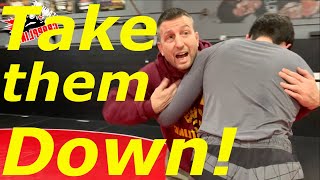
Basic CLINCH Bodylock Takedowns for EVERYONE!
TeachMeGrappling Coach Brian