Transition from Gi to No-Gi Grappling
Students transitioning from gi jiu-jitsu to no-gi competition often struggle with grip mechanics. No-gi training requires mastery of overhooks, underhooks, and hand control rather than collar grips. These grip variations are essential for both sport and self-defense applications.
Initial Posture Break and Overhook Control
From closed guard, break the opponent's posture by coming under their hands and pulling with the legs. Secure an overhook by pinching the back of their tricep with the bend of your arm. When the opponent's hand presses into your stomach to create space, immediately establish a C-clamp grip with thumbs facing toward you.
Arm Positioning and Hip Movement
After securing control of the opponent's arm, hip forward to set up triangle positioning. Move the trapped arm across the body using hip elevation. The triangle position serves as a versatile entry point for multiple submissions, including armbars and other leg lock attacks.
Finishing Hand and Leg Placement
Grip the shin with one hand while simultaneously controlling the head with the other. Position the top leg to lie across the opponent's neck, ensuring proper placement across rather than behind. This configuration creates downward pressure that secures the triangle and prevents escape.
Proper Knee Mechanics and Muscle Engagement
Push the knee inward toward your neck rather than simply pulling downward to increase choke efficiency. Keep the foot pointed upward to avoid ankle lock injuries from strong resistance. This knee-inward motion engages the hamstring muscles instead of smaller muscles, providing stronger and more sustainable pressure.
Closing the Triangle Gap
The triangle choke relies on closing the triangular space created between the legs. Turn the leg outward while clamping down to engage the hamstring's superior strength. This approach provides much more efficient biomechanical leverage than relying on knee compression alone.
Second Demonstration: C-Clamp Grip Setup
Execute a posture break followed by securing the overhook grip around the opponent's arm. When the opponent's opposite hand posts on your body, apply a firm C-clamp grip and press the arm downward and across the chest. This creates excellent arm control and forces the opponent into an uncomfortable position.
Triangle Lock Formation and Leg Placement
As the opponent adjusts their position, pull them upward and throw their trapped arm over your body to establish the triangle lock. The leg coming under the armpit must cross on top of their body, creating downward pressure. If the leg is positioned underneath, the opponent can straighten their posture and escape the submission.
Ratcheting Finish Technique
Employ a ratcheting action similar to a mechanical ratchet—extending and squeezing in controlled increments while maintaining constant contact. Slide the leg position incrementally while pulling the head, never losing full contact with the opponent's neck. This methodical approach works even against larger opponents and can finish from seemingly incomplete positions.
No Gi Triangle Choke From Closed Guard
Key Takeaways
- •Transition from Gi to No-Gi Grappling
- •Initial Posture Break and Overhook Control
- •Arm Positioning and Hip Movement
- •Finishing Hand and Leg Placement
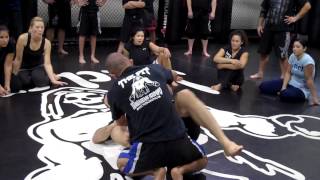
WWW.CHEWJITSU.NET In this video I show a triangle choke from guard. This is a great setup for either gi or no gi Brazilian Jiu-jitsu. I also go into a couple of details about finishing the triangle. Give it a try. Also, for more instructional videos, recipes and all sorts of helpful BJJ related information. Check out my blog www.chewjitsu.net.
Frequently Asked Questions
What does this video teach about triangle choke?
This video covers transition from gi to no-gi grappling, initial posture break and overhook control, arm positioning and hip movement. It provides detailed instruction from Chewjitsu.
How long does it take to learn triangle choke?
The basic mechanics can be understood in a single session, but developing reliable execution requires consistent drilling over weeks of practice. This 9-part breakdown helps structure your training by isolating each phase of the technique.
What are the key details for finishing triangle choke?
As the opponent adjusts their position, pull them upward and throw their trapped arm over your body to establish the triangle lock. The leg coming under the armpit must cross on top of their body, creating downward pressure. If the leg is positioned underneath, the opponent can straighten their posture and escape the submission.
Related videos
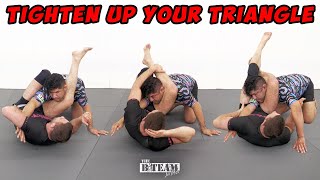
Instantly Make Your Triangle Choke Better | Ethan Crelinsten B-Team Technique
The B-Team
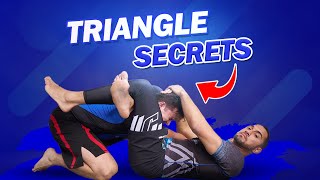
How to do the Triangle In Jiu Jitsu | Everything You Need to Know!
Matt Arroyo Jiu Jitsu
Flying Triangle
Gracie Jiu-jitsu Academy
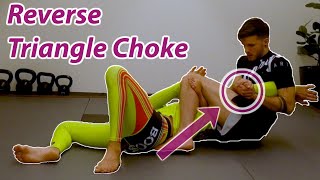
How To Do A Reverse Triangle From The Back
Wim Deputter BJJ
Brazilian Jiu-Jitsu: Open Guard Triangle Choke Submission
PitBlackBelt