Crucifix Position Overview
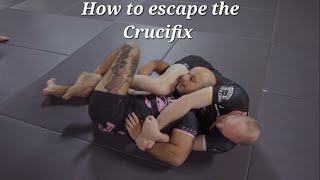
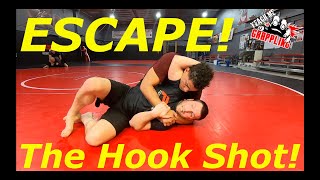
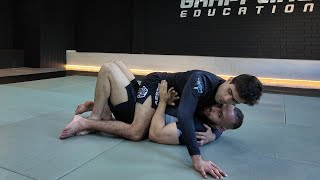
The crucifix is a dominant control position where the top player controls the bottom player's upper body with a harness or seat belt grip while also controlling one of their arms with a leg hook. The position features two main control layers: upper body control via the grip and lower body control via leg placement, with variations depending on whether the top or bottom leg hooks the arm.
Initial Repositioning
The first escape step involves breaking the perpendicular angle the top player has established. The bottom player should step the near leg in and work to position themselves below the top player's hooking leg, creating a more advantageous angle that buys time and reduces immediate submission threats.
Neck Safety
Before proceeding with the escape, the bottom player must secure their neck by placing their thumb on the inside of the top player's grip to prevent choking. This defensive measure provides additional time and safety while executing subsequent escape steps.
Leg Hook Control and Arm Extraction
The bottom player keeps the hooked leg elevated while squeezing tightly, then uses sequential hip movements to extract their trapped arm from the control. Once the arm begins to free itself, the bottom player can use both hands to facilitate the complete extraction.
Transition to Cross-Side
After extracting the arm, the bottom player pulls the top player's arm straight and lifts their head. At the opportune moment, they release the leg hook and drive into cross-side control, completing the escape sequence.
Bottom Leg Hook Variation
When the bottom leg hooks the arm instead of the top leg, the escape follows the same fundamental principles. The bottom player still works underneath the hooking leg, though this variation allows somewhat better protection against arm bar submissions.
Chimera Grip Defense
When the top player uses a chimera grip instead of a harness grip, the escape becomes more difficult. The bottom player must punch downward with both hands to break the grip first, then proceed with hip movement and arm extraction using the same sequential approach.
Sequential Problem-Solving Approach
The crucifix escape requires methodical execution of discrete steps rather than a single fluid movement. The bottom player addresses problems sequentially—first establishing a parallel spine position, then dismantling upper body control, and finally extracting the trapped arm—to incrementally work out of the dominant position.
How to Escape the Crucifix in BJJ
Key Takeaways
- •Crucifix Position Overview
- •Initial Repositioning
- •Neck Safety
- •Leg Hook Control and Arm Extraction
How to escape the crucifix is something you need to know if you're doing BJJ, otherwise you're going to get armlocked, choked, and maybe even neck cranked. In this video Ritchie Yip shows you several different crucifix variations and a step-by-step escape for getting out of them. It's not going to be easy - this is a TOUGH position - but at least now you've got a chance!
Related Techniques
Frequently Asked Questions
What does this video teach about crucifix escape?
This video covers crucifix position overview, initial repositioning, neck safety. It provides detailed instruction from Stephan Kesting.
How long does it take to learn crucifix escape?
The basic mechanics can be understood in a single session, but developing reliable execution requires consistent drilling over weeks of practice. This 8-part breakdown helps structure your training by isolating each phase of the technique.
What are the key details for finishing crucifix escape?
When the top player uses a chimera grip instead of a harness grip, the escape becomes more difficult. The bottom player must punch downward with both hands to break the grip first, then proceed with hip movement and arm extraction using the same sequential approach.