Escape Concept Overview
The most effective cross-side escape leads directly into an offensive attack on the opponent's arm rather than simply creating space. This approach often generates sufficient threat that the bottom player can either latch onto the opponent's arm with real danger or force them to release control and allow recovery.
Initial Frame Establishment
The escaping player establishes a two-point frame: the upper arm blocks across the opponent's collarbone to prevent shoulder pressure, while the lower arm frames in the hip pocket to prevent lower body control. This dual-component frame directly opposes the top player's attempt to establish an underhook and cross-face control.
Bridge and Head Positioning
The bottom player plants their feet and bridges aggressively, driving their hips upward while using forearm elevation to lift the chest and frame. Simultaneously, the head moves slightly inside the opponent's arm line so that the chin travels from outside the opponent's shoulder to underneath it—the positioning milestone for this escape.
Leg Fire and Head Capture
After dropping the hips and bringing the knees to the chest, the bottom player fires the outside leg upward to capture the opponent's head while threading the inside leg so that the chin nestles into the opponent's armpit. A strong drive through the back heel creates the mechanical foundation for controlling the opponent's upper body.
Scooping and Off-Balancing
From the leg capture position, the bottom player can scoop inside the opponent's leg and use directional pressure to off-balance them. This often allows the bottom player to settle the opponent onto the ground with sufficient control established.
Transition to Armlock Finish
Once the opponent is grounded, the bottom player releases the leg control, retrieves the opponent's wrist, and moves the arm across their body to establish either a half or three-quarter juregi armlock. The position can progress into a full armlock with repositioning of the second leg.
Realistic Pressure Expectations
The bridge generates only modest space rather than dramatic separation, particularly against larger opponents. The key is generating just enough clearance for the head to transition to the inside position, or alternatively sliding the body underneath the opponent similar to a mechanic working under a vehicle.
Diagonal Armlock Alternative
If the opponent maintains relentless pressure after the leg capture, the bottom player can immediately close their elbow and transition into a diagonal juregi armlock without grounding the opponent first.
Ground Control and Wrist Capture
When directing the opponent to the ground, the bottom player uses a scooping grip and drives their knees toward the floor to control descent. Once grounded, a double-control grip on the opponent's wrist combined with head displacement creates a high-percentage finish position for the armlock.
Practical Application Outcomes
The escape often catches opponents by surprise or forces them to release head control to preserve their arm, creating space for guard recovery. Against larger or stronger opponents who resist arm extraction, the bottom player can reliably establish and finish the armlock while the opponent is pinned.
Escape Cross-Side - Armlock with High-Leg (BJJ / Submission Grappling)
Key Takeaways
- •Escape Concept Overview
- •Initial Frame Establishment
- •Bridge and Head Positioning
- •Leg Fire and Head Capture
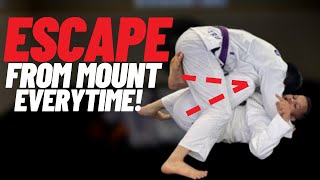
Cross-Side Escape into the Straight Armlock - the high-leg counter to the cross-side involves two jiu-jitsu essentials: bridging to create space and the use of a forearm frame to maintain it. In most cross-side escapes, we use our upper body to counter head control and our lower body to counter hip control. With the high-leg escape, we recruit our legs to manage the upper body pin - a much stronger and robust way of creating space. Not only that, but it leads directly into the jujigatame out of the pin. === Like this video? Subscribe here: https://bit.ly/subscribeBZG === PLEASE CHECK OUT ⬇️ 🚨 INSTAGRAM: http://www.instagram.com/bzglick 🚨 FACEBOOK: http://www.facebook.com/bzglick 📹 VIDEOS @ THEDOJO.COM : https://bit.ly/glick_thedojo 🥋 SHOYOROLL: https://shoyoroll.com/ 🙇🏻 BROOKLYN BJJ: https://www.brooklynbjj.com
Related Techniques
Frequently Asked Questions
What does this video teach about submission escape?
This video covers escape concept overview, initial frame establishment, bridge and head positioning. It provides detailed instruction from Brian Glick.
How long does it take to learn submission escape?
The basic mechanics can be understood in a single session, but developing reliable execution requires consistent drilling over weeks of practice. This 10-part breakdown helps structure your training by isolating each phase of the technique.
What are the key details for finishing submission escape?
When directing the opponent to the ground, the bottom player uses a scooping grip and drives their knees toward the floor to control descent. Once grounded, a double-control grip on the opponent's wrist combined with head displacement creates a high-percentage finish position for the armlock.
Related videos
How To Escape The Head & Arm Choke | Submission Grappling Escapes
Knight Jiu-Jitsu
Beginners MUST KNOW This One!!: BABY-BOLO - Taking the Back from De La Riva
玉木強 / YOSHI JIU-JITSU TECH
Berimbolo | Z Lock & Triangle Lock | 4K
玉木強 / YOSHI JIU-JITSU TECH
10th Planet Counters: Einstein's Triangle Escape
Alder Hampel
2 Ways to Escape the Mount EVERY Time!
BIG OSS Jiu-Jitsu Channel