Common Disengagement Mistakes
A frequent error in foil disengagements is exaggerating the movement, typically caused by anxiety or uncertainty about proper execution. Practitioners often compensate by making large, animated disengagements in an attempt to avoid parries, but this approach actually slows the action and makes it more visible to opponents, allowing them to recover before the attack lands.
Wrist and Finger Warm-Up
Before practicing disengagements, performers should warm up the wrist, fingers, and thumb through circular blade movements. Starting with large circles and gradually shrinking them creates the looseness and sensitivity necessary for sharp, smooth disengagement execution.
Basic Single Disengagement Drill
The foundational disengagement involves a sharp U-turn movement in a single line from on-guard position. Practitioners extend the arm and finish with a lunge in one line before returning to on-guard and repeating the sequence.
Nine Progressive Disengagement Exercises
The training progression includes nine exercises combining single, double, and triple disengagements with varying distances and footwork: from static position strikes, step-in approaches, and lunging attacks. Each exercise should be practiced for approximately 30 seconds until comfortable before advancing to the next variation.
Broken Time Attack Technique
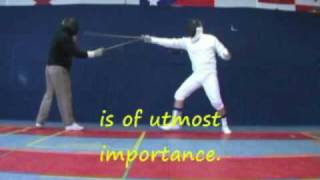
The broken time attack involves holding the arm back during a lunge while the body moves forward, extending only near the moment of contact. This technique prevents the blade from becoming vulnerable to parries during the approach, as the parrying action passes without finding the blade before the final extension.
Progressive Training Advancement
After mastering static disengagements, practitioners should perform them from fluid attacking positions, integrating the disengagement into continuous movement such as steps or lunges. Training can be further varied by mixing different disengagement patterns sequentially to maintain challenge and freshness.
Foil Disengaging
Key Takeaways
- •Common Disengagement Mistakes
- •Wrist and Finger Warm-Up
- •Basic Single Disengagement Drill
- •Nine Progressive Disengagement Exercises
Work on developing and improving your skill at making tight and controlled disengagements in foil. Make sure that your opponent can't catch you with their searching parries next time you fence by following along with these exercises.
Related Techniques
Frequently Asked Questions
What does this video teach about foil parry?
This video covers common disengagement mistakes, wrist and finger warm-up, basic single disengagement drill. It provides detailed instruction from OSM Fencing.
How long does it take to learn foil parry?
The basic mechanics can be understood in a single session, but developing reliable execution requires consistent drilling over weeks of practice. This 6-part breakdown helps structure your training by isolating each phase of the technique.
What are the key details for finishing foil parry?
The broken time attack involves holding the arm back during a lunge while the body moves forward, extending only near the moment of contact. This technique prevents the blade from becoming vulnerable to parries during the approach, as the parrying action passes without finding the blade before the final extension.