Introduction: Footwork Fundamentals
Proper footwork is essential for maintaining calmness and controlled motion during Yokomenuchi Shihonage. Poor footwork compromises the entire technique, making it difficult to execute effectively. This lesson focuses on the most challenging footwork variations to build a strong foundation.
Initial Positioning and Angle Adjustment
When receiving a yokomen strike, the defender must immediately adjust positioning by switching angles away from the attack line. The defender slides from the elbow down to the wrist at approximately 45 degrees, though this angle may increase depending on the attacker's approach and force. This initial repositioning is critical for achieving proper alignment.
Understanding Shikaku (Dead Angle)
The defender must move into shikaku, the dead angle positioned behind the attacker's line of force. This positioning prevents the attacker from effectively counterattacking while allowing the defender to maintain control. Proper footwork carries the defender to this advantageous position while the attacker's target continues to move.
Multi-Step Footwork Sequence
Executing Yokomenuchi Shihonage requires a precise footwork pattern: step, pivot, step, step—incorporating three pivots total. The defender's distance and stepping pattern are determined by the attacker's strike intensity. Vigorous attacks may require deeper repositioning to maintain control.
Controlling the Weapon, Not the Limb
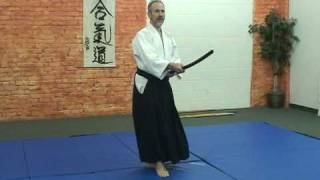
The key distinction in this technique is controlling the sword (the weapon) rather than the arm itself. The defender redirects focus from the blade to the attacker's shoulder, as the entire striking apparatus originates from the shoulder joint. This perspective simplifies the technique and reduces the physical effort required.
Wrist Control and Thumb Manipulation
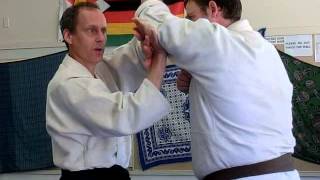
The defender maintains light contact around the wrist while controlling from the center line, requiring only a subtle downward rotation of the attacker's thumb. This minimal hand movement creates maximum control without forcing aggressive wrist manipulation. The defender must avoid excessive cutting actions that could disrupt the throw's execution.
Koteotoshi Alternative: Footwork Efficiency
Koteotoshi offers a more efficient footwork pattern than Tenkan, reducing multiple steps to a single pivoting movement. The defender keeps the right foot stationary while rotating around it, maintaining the weapon control established during the initial engagement. This economical footwork translates to faster execution and greater stability.
Maintaining Proximity and Preventing Escape
By keeping the controlled arm positioned close to the body across the centerline, the defender prevents the attacker from rotating out or creating distance. The attacker's proximity prevents them from striking effectively while the defender maintains complete control. This positioning is essential for clean technique execution.
Shihonage Execution: Arm Placement Over Shoulder
Rather than turning the attacker's body aggressively, the defender places their arm directly over the attacker's shoulder while the attacker rotates slightly with the throw. The defender's arm remains extended and controlled throughout the motion, guiding rather than forcing the throw. Proper arm placement generates the throw's power without requiring excessive body rotation from the attacker.
Footwork For Yokomenuchi Shihonage
Key Takeaways
- •Introduction: Footwork Fundamentals
- •Initial Positioning and Angle Adjustment
- •Understanding Shikaku (Dead Angle)
- •Multi-Step Footwork Sequence
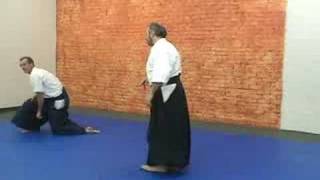
Instructional video with Doug Wedell, Chief Instructor of Seidokan Aikido of South Carolina, demonstrating the basic shihonage defense from yokomenuchi, filmed May 9, 2010 in Jerusalem Israel.
Related Techniques
Frequently Asked Questions
What does this video teach about yokomen?
This video covers introduction: footwork fundamentals, initial positioning and angle adjustment, understanding shikaku (dead angle). It provides detailed instruction from MasaKatsuAiki.
How long does it take to learn yokomen?
The basic mechanics can be understood in a single session, but developing reliable execution requires consistent drilling over weeks of practice. This 9-part breakdown helps structure your training by isolating each phase of the technique.
What are the key details for finishing yokomen?
By keeping the controlled arm positioned close to the body across the centerline, the defender prevents the attacker from rotating out or creating distance. The attacker's proximity prevents them from striking effectively while the defender maintains complete control. This positioning is essential for clean technique execution.