Shomen Uchi: Overview and Entry Mechanics
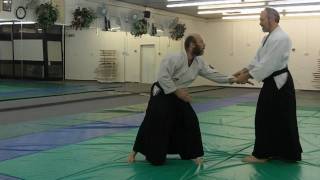
Shomen uchi is a fundamental overhead strike in Aikido practice. The defender executes an irimi entry by sliding both feet forward while simultaneously placing one hand beneath the attacker's elbow and delivering an atemi (strike) to the face. This dual-hand positioning allows the defender to control both of the attacker's hands as a natural protective response occurs.
Footwork: Sliding vs. Stepping
The defender employs a sliding motion with the front foot, bringing it forward and matching it with the rear foot to maintain stability and connection. In contrast, the attacker steps in to deliver the strike. This distinction in footwork is critical for the defender to maintain proper balance and control while entering.
The Entry Checkpoint: Posture and Position
Once the defender reaches the entry position, three critical elements must be verified: maintain an upright, centered posture rather than leaning forward or backward; keep the controlling elbow down and close to the body for balance and connection; and ensure the atemi hand remains at face level. The defender should pause and assess these elements before proceeding to technique application.
Balance and Weight Distribution
At the entry point, the defender should verify that they remain in balance while the attacker's weight is slightly forward and downward. This imbalance in the attacker creates responsiveness where the defender's lower body movement generates corresponding movement in the attacker. Practicing slowly allows the defender to develop sensitivity to this weight distribution.
The Hand Position: Relaxation and Connection
The defender must maintain relaxed hands rather than gripping or forcing, as tension eliminates sensitivity to the attacker's weight direction. The controlling hand should rest lightly on the forearm (radius and ulna) and palm rather than engaging finger tension. This relaxed contact allows continuous sensitivity to weight distribution throughout the technique.
Choice of Direction and Pivot
Once entry is established and balance verified, the defender has multiple options for redirecting the attacker's force—sideways, backward, or diagonally. In this application, the defender pivots the hips to bring the attacker's weight to one side and down. The choice of direction is determined by the attacker's weight and energy in the moment.
Transitioning to Ikyo Technique
As the defender pivots, they maintain hand position rather than reaching to grab the attacker's wrist, which would create an opening for a counter-strike. The ikyo arm position naturally develops through the pivot motion while the atemi hand maintains control. The legs step out of the way as the defender begins the descent into the throwing technique.
Final Execution: Integration and Control
The complete technique integrates upright posture, relaxed hand contact, both hands controlled, and purposeful hip pivoting to achieve the throw. The defender verifies proper alignment throughout the motion before taking the attacker down. Slow, deliberate practice ensures this integration of mechanical and sensitivity elements before increasing speed.
Shomen Uchi, Irimi Entry with an Atemi to the Face
Key Takeaways
- •Shomen Uchi: Overview and Entry Mechanics
- •Footwork: Sliding vs. Stepping
- •The Entry Checkpoint: Posture and Position
- •Balance and Weight Distribution
In the video, the defender enters irimi (straight in) to a shomen attack (vertical strike to the head).
Related Techniques
Frequently Asked Questions
What does this video teach about shomen?
This video covers shomen uchi: overview and entry mechanics, footwork: sliding vs. stepping, the entry checkpoint: posture and position. It provides detailed instruction from Joel Lindstrom.
How long does it take to learn shomen?
The basic mechanics can be understood in a single session, but developing reliable execution requires consistent drilling over weeks of practice. This 8-part breakdown helps structure your training by isolating each phase of the technique.
What are the key details for finishing shomen?
As the defender pivots, they maintain hand position rather than reaching to grab the attacker's wrist, which would create an opening for a counter-strike. The ikyo arm position naturally develops through the pivot motion while the atemi hand maintains control. The legs step out of the way as the defender begins the descent into the throwing technique.