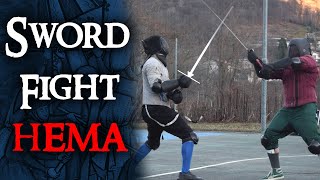
Introduction to Nebenhut
Nebenhut (side guard) is a supplementary guard used frequently in modern HEMA practice, though it lacks extensive documentation in historical treatises. Eric Lowe demonstrates the Swordwind interpretation of this guard as a practical tool for students, acknowledging the limited textual evidence available compared to the four primary Lichtnauer guards.
Historical Context and Textual References
Nebenhut appears in Ring's Appendix as a position for executing Streichend (short edge ascending cuts), though Ring provides no detailed description. Meyer mentions the guard without illustrating it in his plates, instructing practitioners to hold the sword on the right side with the point toward the ground and pommel raised.
Stance and Body Mechanics
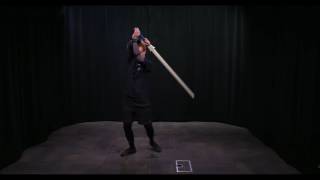
The Nebenhut requires significant hip coiling to generate power for the primary cut—the Unterhau (upward strike). The blade is held nearly vertical to maintain proper edge alignment, preventing practitioners from over-cocking the blade and misaligning the cutting plane. Arms remain extended naturally without elevation, while the torso twists to load the hips for explosive cutting action.
Key Technical Elements
Practitioners must maintain a solid default cutting grip with all fingers connected to the sword, ready to initiate the cutting action. The blade points directly backward, which aligns the cutting plane and reduces unnecessary stress on the elbow joint. The body remains fully coiled alongside the shoulders, positioning the practitioner for efficient hip rotation during the cut.
Common Errors and Corrections
The most frequent mistake is allowing the arms to hike upward, which disrupts proper mechanics. Practitioners shorter than their blade length face practical challenges; holding the blade to the side is preferable to raising the arms, which compromises form and creates excessive joint stress.
Left-Side Nebenhut Variation
The left Nebenhut employs a crossed-hand position with the sword held on the left side. Ring specifically recommends executing Streichend from the left rather than the right, noting superior mechanical effectiveness. The non-dominant hand maintains its default cutting grip at the sword's heel, preserving cutting readiness.
Longsword Guards: Nebenhut
Key Takeaways
- •Introduction to Nebenhut
- •Historical Context and Textual References
- •Stance and Body Mechanics
- •Key Technical Elements
A detailed look at nebenhut, addressing historicity, our preferred "default" version for beginners, and common errors.
Related Techniques
Frequently Asked Questions
What does this video teach about schrankhut?
This video covers introduction to nebenhut, historical context and textual references, stance and body mechanics. It provides detailed instruction from Swordwind Historical Swordsmanship.
How long does it take to learn schrankhut?
The basic mechanics can be understood in a single session, but developing reliable execution requires consistent drilling over weeks of practice. This 6-part breakdown helps structure your training by isolating each phase of the technique.
What are the key details for finishing schrankhut?
The most frequent mistake is allowing the arms to hike upward, which disrupts proper mechanics. Practitioners shorter than their blade length face practical challenges; holding the blade to the side is preferable to raising the arms, which compromises form and creates excessive joint stress.