Introduction to the Hanging Pell
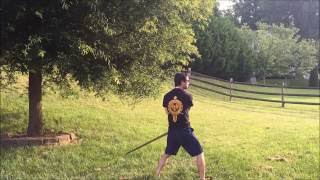
A hanging pell is a simple yet effective training tool consisting of a small object suspended by string. The instructor demonstrates using a tennis ball hung from a tree branch as an affordable alternative to traditional stationary pells.
Targeting Efficiency Through Small Targets
Practicing thrusts against targets smaller than a fencing mask or human head develops precision in point placement. By training on progressively smaller targets—from tennis balls to ping pong balls—practitioners build the skill to place their point exactly where intended rather than in a general area.
Executing Solid Thrusts
Practitioners must ensure each thrust makes firm contact with the target rather than merely brushing it. Full commitment to each strike—sending the ball flying—maintains honest practice and prevents the acceptance of technically inadequate technique during solo training.
Progressive Thrust Exercises
Training begins with basic thrusting from a static position, then advances to thrusting from distance using various footwork such as lunges or passing steps. The hanging pell can remain stationary or be left swinging to add difficulty, gradually building toward combat-realistic scenarios.
Combat-Realistic Thrust Training
Advanced practice requires executing thrusts from weapon positions and windings similar to actual combat situations. Rather than simple forward attacks, practitioners should develop the ability to thrust smoothly from positions like right flue, mimicking the tactical complexity of armed engagement.
Discipline-Specific Thrust Variations
The appropriate thrust techniques vary by martial discipline—longsword practitioners focus on cross-body thrusts, while side sword fencers practice descending thrusts and backhanded reversals. Practitioners should work toward executing their system's specific thrusts reliably against small targets.
Cutting Practice Considerations
While hanging pells allow swords to pass through without abrupt stops, solid pells create practical challenges. The advantage of continuous follow-through is offset by the risk of the entire apparatus becoming tangled after solid impacts, making cutting practice a less efficient use of this tool.
Solo Practice: Hanging Pell
Key Takeaways
- •Introduction to the Hanging Pell
- •Targeting Efficiency Through Small Targets
- •Executing Solid Thrusts
- •Progressive Thrust Exercises
Two ways to use a hanging pell as a practice tool for historical fencing.
Related Techniques
Frequently Asked Questions
What does this video teach about hanging guard?
This video covers introduction to the hanging pell, targeting efficiency through small targets, executing solid thrusts. It provides detailed instruction from Swordwind Historical Swordsmanship.
How long does it take to learn hanging guard?
The basic mechanics can be understood in a single session, but developing reliable execution requires consistent drilling over weeks of practice. This 7-part breakdown helps structure your training by isolating each phase of the technique.
What are the key details for finishing hanging guard?
The appropriate thrust techniques vary by martial discipline—longsword practitioners focus on cross-body thrusts, while side sword fencers practice descending thrusts and backhanded reversals. Practitioners should work toward executing their system's specific thrusts reliably against small targets.