Introduction to Beginner Techniques
This instructional guide covers fundamental punching and kicking techniques along with distance-management strategies. The curriculum includes the double jab, side kick, and shuffling footwork essential for beginners developing their martial arts foundation.
Double Jab Execution
The double jab begins from a guard position with the practitioner extending one hand straight while rotating the fist. The second punch uses a half-retraction motion rather than a full pull-back, creating rapid successive strikes that produce a distinctive sharp sound when executed properly.
Double Jab Tempo and Rhythm
Proper double jab technique emphasizes speed and continuity, with both strikes flowing seamlessly. The rhythm should resemble quick, distinct claps rather than slow, deliberate movements, enabling practitioners to develop explosive hand speed.
Side Kick Fundamentals
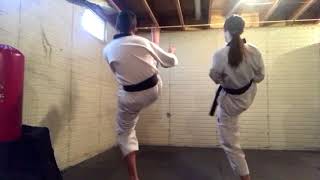
The side kick differs from a round kick by using a straight-line pushing motion rather than circular movement. The chambering position places the heel on the opposite side of the body from the kicking leg, requiring proper pivot mechanics and body rotation.
Side Kick Complete Sequence
The complete side kick sequence includes pivot, chamber, extension, reach chamber, and return to starting position. This technique requires substantial strength engagement throughout the glutes, hamstrings, and hip flexors.
Building Side Kick Strength
Practitioners often lack sufficient muscular strength to execute proper side kicks rather than lacking technical understanding. Holding the chambered position for two-second intervals through multiple repetitions effectively targets and strengthens the posterior chain and hip stabilizers.
Forward Shuffle Mechanics
The forward shuffle maintains consistent foot spacing while alternating small stepping motions from the balls of the feet. The movement differs from sliding by keeping feet separated at their original distance throughout the progression.
Reverse Shuffle and Distance Management
The reverse shuffle employs identical mechanics to the forward shuffle but moves backward without allowing heels to contact the ground. These shuffling techniques enable practitioners to manage distance effectively during both training and self-defense applications.
Seigler's Karate Center - Beginner Techniques Tutorial - January 2011
Key Takeaways
- •Introduction to Beginner Techniques
- •Double Jab Execution
- •Double Jab Tempo and Rhythm
- •Side Kick Fundamentals
Watch one of the instructors at Seigler's Karate Center in Augusta, GA go through a video tutorial of the beginner techniques taught to students at Seigler's Karate Center in Augusta, GA in January 2011. For more information about classes call 706-855-5685.
Related Techniques
Frequently Asked Questions
What does this video teach about tiip trong?
This video covers introduction to beginner techniques, double jab execution, double jab tempo and rhythm. It provides detailed instruction from xmakempo.
How long does it take to learn tiip trong?
The basic mechanics can be understood in a single session, but developing reliable execution requires consistent drilling over weeks of practice. This 8-part breakdown helps structure your training by isolating each phase of the technique.
What are the key details for finishing tiip trong?
The forward shuffle maintains consistent foot spacing while alternating small stepping motions from the balls of the feet. The movement differs from sliding by keeping feet separated at their original distance throughout the progression.