Introduction to Armada
The Armada is a Capoeira kick that strikes with the outside edge of the foot, similar to the Keshada. While both techniques share the same release point and loaded position, they differ fundamentally in the rotational approach used to reach that position.
Entry Through Cardeta
The Armada is most easily entered from Jhinga position by moving through Cardeta with two deliberate steps. The first step is a heel placement slightly forward of the body, followed by a toe step positioned in front of and beyond the standing foot to maintain center of gravity during rotation.
The Loading Mechanics
As the practitioner rotates, both heels lift off the floor while the legs wind together with arms raised to face level. The loaded position is achieved through opposing rotation of the ribs and hips, which stretches the internal and external obliques and locks the legs, maximizing the power available for the kick release.
Reset and Safety Positioning
After release, the practitioner must reset with ribs and hips rotating in opposite directions to stabilize the body. The finishing elbow guard is essential, and the hips, toes, and feet should always face forward to defend against counter-strikes.
Isolated Twist Drill
In the foundational twist drill, the practitioner crosses one foot over the other into a cross-legged position with hands raised for head protection. The shoulders drive the rotation while both heels lift, alternating which leg moves forward with each twist repetition.
Complete Technique Execution
The full Armada combines the entry steps with the loaded position and release in one fluid motion: from Jhinga, step heel, then toe, twist and look to load, release the kick with power, and reset with proper defensive positioning. Repetition on both sides develops symmetrical strength and timing.
Advanced Timing: Early Rotation
As proficiency increases, practitioners should initiate the twist immediately as the second foot lands, creating smoother transitions between steps and rotation. This eliminates unnecessary pauses and develops the body awareness needed for advanced variations.
Combination Training with Jinga
Practicing three Jinga steps between each Armada repetition builds rhythm, directional control, and the ability to transition seamlessly between movements. This combination drill also ensures proper stance reset and prepares the body for the next kick with balanced weight distribution.
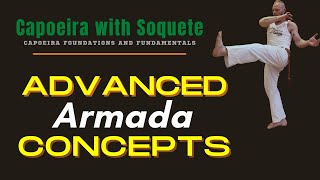
How to do Armada, an in depth Capoeira Kick Tutorial.
Key Takeaways
- •Introduction to Armada
- •Entry Through Cardeta
- •The Loading Mechanics
- •Reset and Safety Positioning
To really learn Armada , Watch this capoeira tutorial for beginners to advanced, learn how to do basic Capoeira kicks from within your ginga. Move along with Soquete during this in depth Capoeira instructional explaining the important details of Armada. Then follow along as you incorporate this kick into your ginga. Subscribe for more capoeira videos -- https://www.youtube.com/channel/UCDWPN_IddXQvHRLyNNMb4XQ Let’s connect: Instagram – https://www.instagram.com/soquete_capoeira.yoga Website – https://www.learncapoeira.ca Facebook -- https://www.facebook.com/mestrandosoquete Twitter – https://twitter.com/Kadara_Soquete?s=20 Thanks for watching, Soquete Cultivating a Community. :)
Related Techniques
Frequently Asked Questions
What does this video teach about armada?
This video covers introduction to armada, entry through cardeta, the loading mechanics. It provides detailed instruction from Capoeira with Soquete.
How long does it take to learn armada?
The basic mechanics can be understood in a single session, but developing reliable execution requires consistent drilling over weeks of practice. This 8-part breakdown helps structure your training by isolating each phase of the technique.
What are the key details for finishing armada?
As proficiency increases, practitioners should initiate the twist immediately as the second foot lands, creating smoother transitions between steps and rotation. This eliminates unnecessary pauses and develops the body awareness needed for advanced variations.