Overview: Lateral Tsuri Goshi
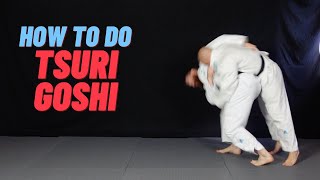
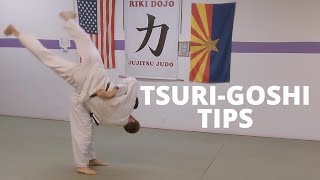
Tsuri goshi is a lifting hip throw that can be adapted into a lateral variation. This technique exploits the body's lateral weakness by applying kazushi (off-balance) from the side rather than the front, allowing effective execution even against bent-over opponents common in modern grappling sports.
Grip Setup: Upper Arm and Sleeve Control
The grip begins with the right hand placed around the opponent's upper arm and deltoid area, dominating that entire side of the shoulder. The left hand grips the judo uniform at the seam of the lapel or around the opponent's elbow, with the left hand ideally positioned at elbow height or lower on the sleeve if the opponent is extended far out.
Hand Mechanics and Clamping Action
The heel of the hand is critical to this technique's mechanics. Using the heel to clamp and 'bully' the opponent creates drag and control as the thrower begins to move laterally, preventing the opponent from escaping or resisting the directional change.
Entry Position and Foot Placement
The thrower should position the leading foot (the diashi or 'sugar foot') approximately in the middle of the opponent's body before initiating the throw. The thrower faces the opponent at an angle rather than directly facing them, maintaining a controlled stance to finish right when starting right.
Execution: Lateral Step and Hip Lift
As the thrower steps sideways with the left foot, they pull the opponent using the heel of the hand while simultaneously lifting upward onto their own hip. This lateral step combined with the upward lift creates the characteristic tsuri goshi action, displacing the opponent onto the thrower's hip.
Completion: Hip Positioning and Throw
Once the opponent is loaded onto the hip, the thrower completes the technique by stepping in front of the opponent and rotating to execute the final throw. The bent-over posture of many modern grapplers actually facilitates this technique by presenting less resistance and placing them in a vulnerable lateral position.
LATERAL TSURI GOSHI
Key Takeaways
- •Overview: Lateral Tsuri Goshi
- •Grip Setup: Upper Arm and Sleeve Control
- •Hand Mechanics and Clamping Action
- •Entry Position and Foot Placement
Here's an effective way to throw an opponent with Tsuri Goshi (Lifting Hip). #judo #judothrow #judotraining Welcome Mat Steve Scott YouTube Channel. Go to http://www.ymaa.com/ to get Steve Scott's books. Visit our web sites at http://www.welcomematjudoclub.com/ and http://www.judoblackbelt.com/ Join the Steve Scott Training Group on Facebook at https://www.facebook.com/groups/1094841137237608/ Comments are moderated. Please keep your comments on topic and think before posting them. Our videos are all original material and are copyrighted. Reproduction or showing these videos without the specific permission of Steve Scott is prohibited.
Frequently Asked Questions
What does this video teach about tsuri goshi?
This video covers overview: lateral tsuri goshi, grip setup: upper arm and sleeve control, hand mechanics and clamping action. It provides detailed instruction from welcomematstevescott.
How long does it take to learn tsuri goshi?
The basic mechanics can be understood in a single session, but developing reliable execution requires consistent drilling over weeks of practice. This 6-part breakdown helps structure your training by isolating each phase of the technique.
What are the key details for finishing tsuri goshi?
As the thrower steps sideways with the left foot, they pull the opponent using the heel of the hand while simultaneously lifting upward onto their own hip. This lateral step combined with the upward lift creates the characteristic tsuri goshi action, displacing the opponent onto the thrower's hip.