Seated Guard Problem: The Stalling Opponent
When working from seated guard against a defensive opponent who maintains distance and avoids engagement, the guard player faces difficulty closing the gap while the standing player can control the pace and avoid scoring opportunities. Traditional seated guard positioning prioritizes guard retention but limits the ability to initiate offense, leaving the guard player vulnerable to stalling tactics.
Setup: Hand Fighting and Disengagement
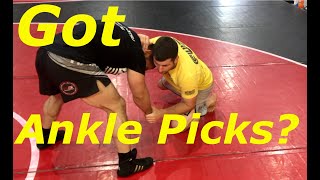
The inside ankle pick begins with hand engagement from the knees as the standing opponent maintains a tall posture with legs positioned back and hands low. When the opponent pulls their hands away during the hand fight exchange, the guard player uses this moment to advance by planting one hand and sweeping the legs backward to establish a kneeling position.
Position and Safety: Inside Hand Placement
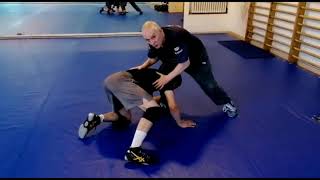
From the kneeling position, the attacking player places their hand on the inside of the opponent's ankle while their hip remains on the outside. This configuration provides safety from front headlock attempts, as the opponent would need to drive the attacker's head significantly inward between their legs to apply the technique effectively.
The Pick: Following Toe Direction
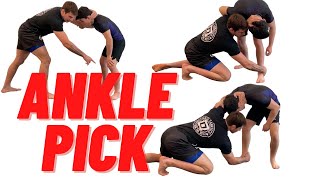
Rather than pulling the foot directly outward against the opponent's weight-bearing leg, the attacker pulls the foot in the direction the opponent's toes are pointing, which naturally breaks the opponent's balance and lifts the foot off the mat. This directional pull exploits the geometry of the standing position and reduces the strength required for the pick.
Follow-up Options: High Single or Leg Lock
Once the foot is lifted, the attacker may pursue either a high single leg takedown for top position or transition into a leg entanglement depending on their technical preferences and immediate scoring needs. The high single leg approach involves climbing the opponent's leg while maintaining control to execute a takedown.
Inside Grip Advantage: Turning Into Control
When the opponent attempts to escape by turning away, the inside grip maintains contact as the opponent rotates toward the attacker's hand, contrasting with an outside grip that would be lost during this turning motion. This mechanical advantage allows the attacker to retain the ankle grip and transition to climbing the leg for a back-take or continued takedown pressure.
Execution Summary
The inside ankle pick execution requires consistent hand fighting engagement, directional pulling along the opponent's toe line, and a planted base for knee drive. Success depends on reading the opponent's posture and escape attempts while maintaining the inside grip control throughout the transition to takedown or back control.
Wrestle up series: Inside ankle pick
Key Takeaways
- •Seated Guard Problem: The Stalling Opponent
- •Setup: Hand Fighting and Disengagement
- •Position and Safety: Inside Hand Placement
- •The Pick: Following Toe Direction
In this video, I cover one of my favorite ways to attack the ankle pick from seated guard against a standing opponent. Once you pick the ankle you have leglock and single leg options, in this video I focus on the single leg option. If you like my videos, please leave a like, a comment and consider subscribing to the channel (and clicking the bell).
Related Techniques
Frequently Asked Questions
What does this video teach about inside ankle pick?
This video covers seated guard problem: the stalling opponent, setup: hand fighting and disengagement, position and safety: inside hand placement. It provides detailed instruction from Mads H. BJJ.
How long does it take to learn inside ankle pick?
The basic mechanics can be understood in a single session, but developing reliable execution requires consistent drilling over weeks of practice. This 7-part breakdown helps structure your training by isolating each phase of the technique.
What are the key details for finishing inside ankle pick?
When the opponent attempts to escape by turning away, the inside grip maintains contact as the opponent rotates toward the attacker's hand, contrasting with an outside grip that would be lost during this turning motion. This mechanical advantage allows the attacker to retain the ankle grip and transition to climbing the leg for a back-take or continued takedown pressure.