Introduction & Historical Context
The Twister is a submission technique with roots in traditional wrestling, where it functioned as a turnover mechanism. Eddie Bravo adapted and refined the technique for Brazilian Jiu-Jitsu, transforming it into a powerful submission. This instructional approach teaches the technique from rear mount, establishing the finishing position before exploring more complex entries.
Transitioning to Half Back Control
When unable to finish a rear mount choke due to strong fence defense or hook escapes, the practitioner transitions to half back control by trapping one of the opponent's legs. This is accomplished by scooping the hips lower and triangling one's own leg to catch the opponent's leg from behind. This position provides excellent control even as a standalone technique.
Controlling the Opponent's Arm
Controlling the opponent's far-side arm is critical to preventing escape. The arm control prevents the opponent from rolling away while simultaneously setting up the submission sequence. Without this control point, the opponent can escape the position entirely.
Executing the Head Lock Placement
The practitioner dives the free hand underneath the opponent's body and brings it behind their own head, securing the opponent's head with maximum leverage. The grip should target the top of the head rather than the neck to optimize mechanical advantage. The practitioner then executes a controlled roll toward the camera to transition into the final position.
Applying the Twister Submission
With the arm controlled and the head secured behind the practitioner's head, a chain grip is applied to the top of the head and pulled toward the body. This creates a sideways neck crank combined with spinal rotation, placing significant stress on the cervical and thoracic spine. The submission is highly effective and demands immediate technical tapout from training partners.
Hip Positioning & Leg Triangle Setup
Proper hip positioning is essential for effective leg control. The practitioner must scoot down underneath the opponent's body rather than maintaining a high hip position, allowing for proper triangulation of the legs. The instep is placed behind the practitioner's own knee to secure the opponent's leg, preventing escape.
Elbow Pressure & Arm Security
The practitioner drops their elbow against the opponent's ribs to prevent the arm from being pulled through their body, maintaining structural integrity of the hold. This mechanical principle ensures the submission remains locked regardless of the opponent's resistance. Both control points—the arm and the leg—must be maintained simultaneously.
Safety Considerations & Technical Finesse
The Twister is a spinal neck lock capable of causing severe injury if not carefully controlled, including potential paralysis. Practitioners should only apply full pressure against opponents who demonstrate awareness and willingness to tap when caught. Against trained partners, reaching the finishing position and waiting for the tap is sufficient to demonstrate successful technique.
Competition Legality & Real-World Application
The Twister remains legal in No-Gi competition, Nogi ruleset, and MMA competition. Notable MMA applications include the Korean Zombie's finish against Leonard Garcia in UFC. The technique's difficulty and dramatic nature make it a high-value submission with significant prestige upon successful execution.
The Easiest Way to do the Twister
Key Takeaways
- •Introduction & Historical Context
- •Transitioning to Half Back Control
- •Controlling the Opponent's Arm
- •Executing the Head Lock Placement
How to do the Twister Submission the easiest way. By Stephan Kesting from http://www.grapplearts.com
Frequently Asked Questions
What does this video teach about twister?
This video covers introduction & historical context, transitioning to half back control, controlling the opponent's arm. It provides detailed instruction from Stephan Kesting.
How long does it take to learn twister?
The basic mechanics can be understood in a single session, but developing reliable execution requires consistent drilling over weeks of practice. This 9-part breakdown helps structure your training by isolating each phase of the technique.
What are the key details for finishing twister?
The Twister is a spinal neck lock capable of causing severe injury if not carefully controlled, including potential paralysis. Practitioners should only apply full pressure against opponents who demonstrate awareness and willingness to tap when caught. Against trained partners, reaching the finishing position and waiting for the tap is sufficient to demonstrate successful technique.
Related videos
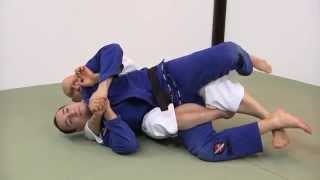
The Easiest Way to do the Twister
Stephan Kesting
twister side control / the truck / back
Black Dragon BJJ / Cobra Kai Karate Dungannon

The twister submission
CCMA Complete Control Martial Arts
Eddie B. - twister side control to truck
radiancethe
twister side control / the truck / back
Black Dragon BJJ / Cobra Kai Karate Dungannon