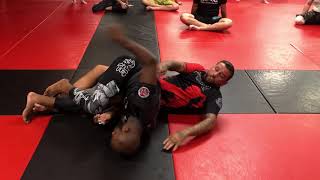
Introduction to Twister Side Control
This final week focuses on transitioning from basic side control to twister side control and exploring the subsequent truck and back positions. Previous weeks covered escapes and submissions from fundamental side control, with the most high-percentage escape being the opponent sweeping out. The instructor will now demonstrate how to control the opponent's positioning to prevent these common escape routes.
Establishing Twister Side Control Position
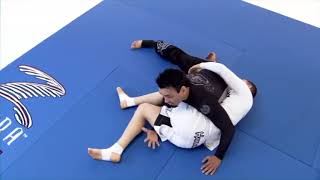
From side control, the instructor creates space by moving the right hand to insert the elbow, then transitions to twister side control by blocking the opponent's hip with the left knee instead of the right. Critical details include keeping the buttocks elevated off the mat at all times—if grounded, the opponent can execute a scissor escape—and maintaining chest-to-chest contact to control framing attempts.
Hand and Knee Positioning for Safety
The instructor keeps the hand on the far-side knee to block potential knee strikes from either leg, protecting the face. The left knee must be positioned as a focal point against the opponent's right hip, serving as a control point to prevent the opponent from initiating the truck position by placing their leg underneath.
Controlling the Opponent's Turn
When the opponent turns into the instructor, immediate control of the opponent's right leg is essential. If the opponent gets their right knee underneath the instructor's left leg and secures a grapevine, they can roll into the truck position. Controlling this leg prevents the opponent from either achieving the truck or transitioning to the back position.
Leg Control and the Love Hand Grip
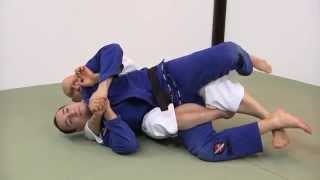
As the opponent turns into twister side control, the instructor swims the right hand underneath the opponent's thigh to secure a strong grip. The left hand then grabs the opponent's hip—called the love hand—which clamps down the position and makes it extremely difficult for the opponent to return to their back or create separation.
Transitioning to the Truck Position
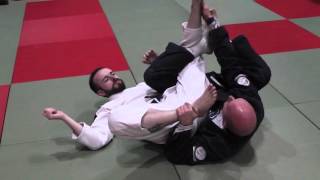
The instructor uses the right foot to hook and pass the opponent's left leg to the right side. After securing the leg with both hands in a gable grip, the instructor rolls over the left shoulder to enter the truck position, with hand placement options including calf crank control or foot lock variations.
Truck Position Finishing Options
Once in the truck position, the instructor can control the opponent's calf with the left hand while the right hand applies pressure on top, creating a calf crank submission. This position offers multiple finishing angles depending on the opponent's defensive adjustments.
Alternative Path to Back Control
Rather than settling into the truck, the instructor can transition directly to back control by rolling over without requiring the same leg control. This simplified path involves gripping the foot and rolling directly over to establish back position, offering an alternative finish when the truck position setup is contested.
twister side control / the truck / back
Key Takeaways
- •Introduction to Twister Side Control
- •Establishing Twister Side Control Position
- •Hand and Knee Positioning for Safety
- •Controlling the Opponent's Turn
black dragon brazilian jiu jitsu class wednesday 2nd december 2015 TWISTER SIDE CONTROL / THE TRUCK / BACK dungannon leisure centre 9pm to 10pm
Related Techniques
Frequently Asked Questions
What does this video teach about twister from truck?
This video covers introduction to twister side control, establishing twister side control position, hand and knee positioning for safety. It provides detailed instruction from Black Dragon BJJ / Cobra Kai Karate Dungannon.
How long does it take to learn twister from truck?
The basic mechanics can be understood in a single session, but developing reliable execution requires consistent drilling over weeks of practice. This 8-part breakdown helps structure your training by isolating each phase of the technique.
What are the key details for finishing twister from truck?
Once in the truck position, the instructor can control the opponent's calf with the left hand while the right hand applies pressure on top, creating a calf crank submission. This position offers multiple finishing angles depending on the opponent's defensive adjustments.