Introduction to Uki Otoshi
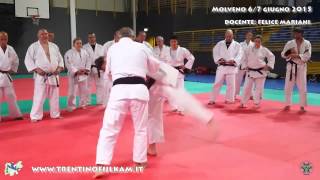
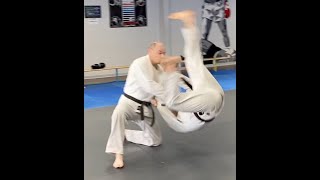
Uki otoshi is a floating throw that, while not commonly seen in competition, offers effective possibilities when the opponent is caught off balance. The technique appears as the first throw in kata and has multiple practical variations suitable for both traditional and competitive judo.
Kata Style Execution
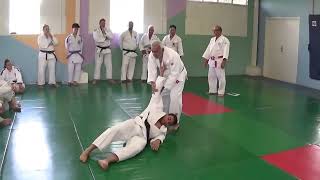
The traditional kata form of uki otoshi begins with three advancing steps, dropping the body weight on the third step while pulling the opponent downward. This classical version relies heavily on precise timing and opponent cooperation, making it less practical in live randori.
Key Distinction: Uki Otoshi vs. Sumi Otoshi
Unlike sumi otoshi, which directs the opponent toward the corner, uki otoshi is a floating throw that elevates and projects the opponent in any direction. The primary difference lies in the mechanics: uki otoshi uses a whipping action rather than corner-dependent footwork.
Hand and Body Mechanics
The throwing action requires catching the opponent at the precise moment when they cannot execute another step. The thrower then applies a rapid torquing motion, using both hands to whip the opponent's body while maintaining rotational momentum.
Competitive Application and Timing
In competition, uki otoshi succeeds when the opponent steps backward or commits their weight, creating a momentary vulnerability. The thrower must immediately step and execute the pulling-down rotation, making split-second timing and awareness essential for execution.
Advanced Competitive Variation
The opposite-side competitive version positions the thrower with the back leg withdrawn, allowing for a downward and circular pull motion similar to side sacrifice techniques. Success depends on forcing the opponent to react, then immediately exploiting that reaction with precise rotational force.
Summary of Three Methods
Uki otoshi encompasses three primary approaches: the classical knee-drop kata form, the traditional forward-flowing promotion style, and the competitive opposite-side variation. Each method requires different positioning and timing, with the competitive version being the most dynamic and difficult to execute in live randori.
3 Ways To Do Uki Otoshi (One Competition Style Too!)
Key Takeaways
- •Introduction to Uki Otoshi
- •Kata Style Execution
- •Key Distinction: Uki Otoshi vs. Sumi Otoshi
- •Hand and Body Mechanics
PEAK PERFORMANCE COACHING (Click the link below and schedule a call) https://tinyurl.com/mvae7f2z Check out my Ebook: THE WINNING EDGE (FREE) EBOOK: https://mindcoach-system.groovepages.... Check out my books: ✔️ The MindCoach System: A Scientifically Proven 7-Step Process To Unlock Your Peak Potential (paperback, audio, Kindle versions) https://tinyurl.com/4avvacnh ✔️ Take Care Of #1 So You Don't Step In #2: https://www.amazon.com/Take-Care-You-... ✔️ Protect Yourself: Top 10 Lifesaving Self-Defense Techniques https://tinyurl.com/mtuzvbwt ✔️ Join this channel to get access to perks: @dadbodjudo Uki Otoshi, a technique in judo, translates to "floating drop" in English. It is classified as one of the traditional judo throws in the Nage-no-kata (forms of throwing) and is part of the Gokyo (the five sets of throwing techniques). Description Category: Te-waza (hand techniques) Objective: To use an opponent's forward momentum to execute the throw, causing them to fall or drop. Execution Grip (Kumi-kata): Uke (the person receiving the throw) and Tori (the person performing the throw) begin in a standard grip, with Tori holding Uke's sleeve with one hand and collar with the other. Movement: Tori pulls Uke forward with a sudden motion, disrupting their balance. As Uke moves forward, Tori steps slightly backward or to the side to further off-balance Uke. Drop: Tori drops their body down, extending one leg while maintaining the grip on Uke's sleeve and collar. This movement causes Uke to be "floated" or lifted off their feet momentarily. Completion: Uke's forward momentum, combined with the drop and pulling motion from Tori, results in Uke being thrown forward and down, often landing on their back or side. Key Points \Timing and Balance: Success in Uki Otoshi relies heavily on precise timing and the ability to off-balance Uke effectively. Fluid Motion: The throw is executed in a fluid and smooth manner, with Tori using minimal force but maximum efficiency. Positioning: Proper positioning and coordination between Tori and Uke are crucial to perform this technique safely and effectively. Applications Randori (Free practice): Though less common in free practice compared to other throws, Uki Otoshi can be an effective surprise technique. Kata (Forms): It is prominently featured in formal judo kata, demonstrating principles of balance and leverage. Uki Otoshi exemplifies judo principles, emphasizing the use of an opponent's force and momentum to achieve a throw with minimal effort. Join this channel to get access to perks: @dadbodjudo Join this channel to get access to perks: / @dadbodjudo Join this channel to get access to perks: / @dadbodjudo Join this channel to get access to perks: / @dadbodjudo Join this channel to get access to perks: https://www.youtube.com/channel/UC70x0We6E16ouimsmTKijyA/join
Frequently Asked Questions
What does this video teach about standard uki otoshi?
This video covers introduction to uki otoshi, kata style execution, key distinction: uki otoshi vs. sumi otoshi. It provides detailed instruction from DadBod Judo .
How long does it take to learn standard uki otoshi?
The basic mechanics can be understood in a single session, but developing reliable execution requires consistent drilling over weeks of practice. This 7-part breakdown helps structure your training by isolating each phase of the technique.
What are the key details for finishing standard uki otoshi?
The opposite-side competitive version positions the thrower with the back leg withdrawn, allowing for a downward and circular pull motion similar to side sacrifice techniques. Success depends on forcing the opponent to react, then immediately exploiting that reaction with precise rotational force.