Technique Classification and Context
Uki otoshi, known as the floating drop, is a hand technique (te waza) featured in the Nagino Kata with practical applications in judo, though it remains underutilized. The technique exemplifies a core judo principle: yielding to strength to overcome it, allowing the opponent's own momentum to generate the throw.
Kata Form and Mechanical Principle
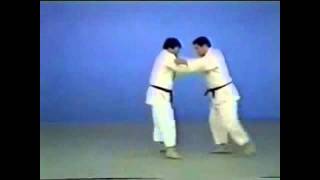
In kata form, uki otoshi involves redirecting an opponent's pushing motion from horizontal to vertical while maintaining minimal effort. The defender guides the attacker's forward momentum by pulling the sleeve and lifting the collar, exploiting the natural trajectory created when the opponent finds no resistance.
Practical Application Against Aggressive Opponents
Uki otoshi proves most effective against highly aggressive opponents who rush forward without engaging in grip-fighting. When a stronger opponent commits to forward pressure with height advantage, this technique provides an escape option superior to sacrifice throws or foot attacks that require getting underneath.
Contextual Effectiveness and Complementary Techniques
The technique works optimally only when the opponent commits to aggressive forward pressure; it fails against cautious, uncommitted opponents. When paired with osoto gake, uki otoshi creates a two-throw system where the initial response either throws the opponent or causes them to pull back, allowing entry for the secondary technique.
Execution Against Advancing Sweeps
When an opponent attacks with advancing foot sweeps like harai surikumayashi, uki otoshi can be executed by accepting the opponent's lifting motion and responding with directional control. The defender pulls downward on the collar while lifting at the elbow or sleeve, allowing the opponent's own momentum to complete the throw.
Comparison with Sumiyotoshi
Uki otoshi and sumiyotoshi (corner drop) differ in direction, hand positioning, and optimal timing. Uki otoshi requires the opponent to push forward continuously, while sumiyotoshi functions best when the opponent withdraws or hesitates after the defender reverses direction—a fundamental distinction in application.
Counter Application and Directional Flexibility
Uki otoshi can be applied from either side regardless of the opponent's initial attack direction, functioning as an effective counter to sideways sweeps like sasai surikumayashi. The technique responds immediately to off-balance moments created by the opponent's lifting and pulling motions.
Efficiency and Practical Designation
Uki otoshi exemplifies an efficient, low-effort throwing principle suitable for practitioners of all ages and sizes. The technique requires no strength advantage, relying instead on proper timing and directional guidance of the opponent's committed momentum.
Uki Otoshi
Key Takeaways
- •Technique Classification and Context
- •Kata Form and Mechanical Principle
- •Practical Application Against Aggressive Opponents
- •Contextual Effectiveness and Complementary Techniques
Mark Gilston, 4th degree judo black belt, discusses and demonstrates uses of Uki Otoshi, the Floating Drop throw in judo.
Related Techniques
Frequently Asked Questions
What does this video teach about uki otoshi?
This video covers technique classification and context, kata form and mechanical principle, practical application against aggressive opponents. It provides detailed instruction from Seiryoku Zenyo.
How long does it take to learn uki otoshi?
The basic mechanics can be understood in a single session, but developing reliable execution requires consistent drilling over weeks of practice. This 8-part breakdown helps structure your training by isolating each phase of the technique.
What are the key details for finishing uki otoshi?
Uki otoshi can be applied from either side regardless of the opponent's initial attack direction, functioning as an effective counter to sideways sweeps like sasai surikumayashi. The technique responds immediately to off-balance moments created by the opponent's lifting and pulling motions.