Introduction to the Collar Tie
The collar tie (kolotai) is a fundamental control position in Brazilian Jiu-Jitsu takedowns. Unlike pure wrestling, jiu-jitsu practitioners must adapt wrestling positions to accommodate submissions and positional control unique to the sport.
Core Mechanics of the Collar Tie
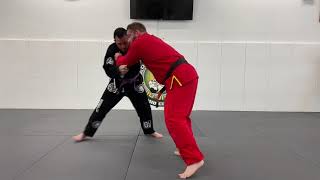
The collar tie functions through three primary actions: pushing with the elbow to prevent opponent entries, pulling with the hand on the neck for control, and rotating the opponent's posture. Proper elbow positioning—kept tight and inside—prevents the opponent from shooting underneath or breaking the grip.
Establishing Dominant Control
Rather than accepting a 50/50 grip exchange where both competitors control identically, the practitioner must establish superior control by denying the opponent's collar tie entry. The wrist can block the opponent's inside space while simultaneously maintaining push-and-pull capabilities.
Entry Angle and Positioning
When reaching for the collar tie, the practitioner should enter from an inside angle rather than extending the arm from the outside. Keeping the arm-side leg back prevents the opponent from catching a single-leg takedown during the entry.
The Snap Down Takedown
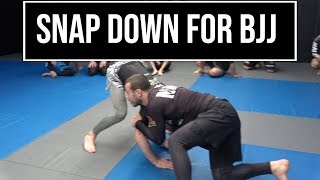
The snap down begins with established push-and-pull control. As the opponent pushes back, the practitioner pulls the opponent toward their position while simultaneously stepping back, using the neck and triceps control to drive the opponent to the mat.
Lever Mechanics and Grip Placement
Controlling the triceps or wrist (rather than the upper arm) provides mechanical advantage through proper lever mechanics. The farther the grip extends down the arm, the easier the downward snap becomes.
Post-Takedown Positioning
Following the snap down, the practitioner must immediately transition away from a vulnerable kneeling position. Options include sprawling to create distance, transitioning to a front headlock position, or moving to the opponent's back for submission opportunities.
Rotational Control and Stepping
The collar tie's rotational component forces the opponent to step to maintain balance. The practitioner can exploit this step timing to complete the takedown before the opponent makes contact with the mat.
TAKEDOWNS from the collar tie
Key Takeaways
- •Introduction to the Collar Tie
- •Core Mechanics of the Collar Tie
- •Establishing Dominant Control
- •Entry Angle and Positioning
TAKEDOWNS from the collar tie Let's get into a great upper body control mechanic to deny your opponent's takedowns and set up your own. Assuming you have a basic understanding of the double leg, the single leg and the bodylock; we will now look at a great way to create opportunities into these takedowns. Chapters 0:00 - Start 0:34 - The collar tie 3:03 - Controlling the inside space 6:12 - Rotating 6:45 - Disengaging 8:37 - Double leg entry 9:41 - Single leg entry 11:00 - Derailing & summary ❗ Remember to put on notifications to receive an update anytime we drop a new video ❗ 🔔 Subscribe 🔔 For more content, videos, solo drills and behind the scenes click on this link: https://www.patreon.com/c/Energia_martialarts Visit BJJ Fanatics for our top instructionals: https://bjjfanatics.com/search?q=tum ⚡ Or shop any of my short courses: https://www.patreon.com/c/energia_martialarts/shop ⚡ To check out our gear go to: https://energia-martialarts.com/energia-fight-wear/ TikTok: https://www.tiktok.com/@energiamartialarts Instagram: https://www.instagram.com/tumenergia/ Instruction: Tum Energia Assisting: Sandro Buise Music: Mr. Ortiz #takedowns #doubleleg #judo #submissions #counters #rearnakedchoke #bjj #submission #energiamartialarts #strangle #submissiongrappling #mma #brazilianjiujitsu #UFC #anklelock #leglock #rearnakedchoke #choke #mma #guard #backtake #chokes #wrestling
Frequently Asked Questions
What does this video teach about standard collar tie snap?
This video covers introduction to the collar tie, core mechanics of the collar tie, establishing dominant control. It provides detailed instruction from Energia Martial Arts.
How long does it take to learn standard collar tie snap?
The basic mechanics can be understood in a single session, but developing reliable execution requires consistent drilling over weeks of practice. This 8-part breakdown helps structure your training by isolating each phase of the technique.
What are the key details for finishing standard collar tie snap?
Following the snap down, the practitioner must immediately transition away from a vulnerable kneeling position. Options include sprawling to create distance, transitioning to a front headlock position, or moving to the opponent's back for submission opportunities.