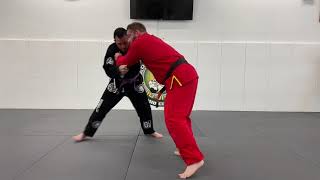
Introduction to the Two-On-One Keylock Takedown
This instructional segment covers the two-on-one keylock variation, a highly effective takedown technique that offers superior control compared to traditional Russian two-on-one applications. The instructor emphasizes that this method has not been previously demonstrated on the channel and will include a twist variation for enhanced effectiveness.
Proper Grip Mechanics and Hand Positioning
The critical distinction in this technique lies in thumb placement and grip positioning. Rather than the conventional shoulder-over grip used in standard two-on-one applications, the instructor advocates for positioning the grip high on the biceps with the thumb up, which provides significantly greater control over the opponent's arm and prevents the loss of control common in ineffective executions.
Defensive Positioning and Opponent Response
When the opponent stands upright, the attacker gains easier access to their back; however, a defending opponent will naturally crouch to protect their position. This defensive posture creates advantages for the opponent, allowing them to develop an underhook and create resistance. Understanding these defensive mechanics is essential for executing the technique against a competent, aware partner.
The Keylock Grip and Arm Position Variations
The keylock configuration presents two primary defensive responses: an extended arm position where the opponent attempts to pull free, and a bent-arm position where the opponent draws the arm toward the chest for stability. The instructor demonstrates that the bent-arm position creates greater stability, necessitating a transition to the full keylock grip for proper control.
Transitioning to the Full Keylock with Thumb-Up Grip
The transition involves moving the grip inside with the palm facing up and positioning the thumb upward, which creates a proper full keylock distinct from the initial keylock variation. This positioning creates biomechanical leverage where the practitioner's ulna presses against their own radius, which in turn applies pressure against the opponent's radius, creating a tight and highly effective lock.
Biomechanical Leverage and Control Application
The thumb-up keylock configuration creates a mechanical advantage through stacked bone structures: the practitioner's right ulna presses into their left radius, which subsequently pressurizes the opponent's right radius. This creates intense control that allows the practitioner to bring the opponent down and transition to back control, making it effective against resistant opponents.
Self-Defense Application and Practical Effectiveness
In self-defense contexts against non-compliant opponents, this technique proves remarkably effective for directional control and compliance without requiring submission to joint locks. Even when an opponent resists or attempts to move independently, the keylock allows the practitioner to physically direct the opponent's movement and navigate them away from danger with minimal additional force.
Execution Sequence and Finishing Position
The complete sequence begins with a collar grip, transitions to the two-on-one position, and culminates in the threaded keylock with thumb-up positioning. Once properly secured, this lock can be maintained for compliance, used to bring the opponent to the ground, or transitioned into back control, providing versatility in multiple combat scenarios.
EASY Takedown with a 2 on 1 Keylock!
Key Takeaways
- •Introduction to the Two-On-One Keylock Takedown
- •Proper Grip Mechanics and Hand Positioning
- •Defensive Positioning and Opponent Response
- •The Keylock Grip and Arm Position Variations
This video I breakdown an easy takedown you can use from a Russian 2 on 1 tie. Check out the details and you are sure to find something useful! Enjoy! If you have any questions, comments, or suggestions, please comment below. More videos to come! Please like, share, and subscribe!! PLEASE Click this link to SUPPORT the TeachMeGrappling Channel!!! https://www.patreon.com/TeachMeGrappling or https://www.paypal.me/CoachBrianPeterson Your contribution is much appreciated and will help me continue to bring you content! 🙏 www.NextLevelGuy.com The NextLevelGuy Podcast with Coach Brian Peterson has been released!! Check it out!
Frequently Asked Questions
What does this video teach about standard two-on-one snap?
This video covers introduction to the two-on-one keylock takedown, proper grip mechanics and hand positioning, defensive positioning and opponent response. It provides detailed instruction from TeachMeGrappling Coach Brian.
How long does it take to learn standard two-on-one snap?
The basic mechanics can be understood in a single session, but developing reliable execution requires consistent drilling over weeks of practice. This 8-part breakdown helps structure your training by isolating each phase of the technique.
What are the key details for finishing standard two-on-one snap?
In self-defense contexts against non-compliant opponents, this technique proves remarkably effective for directional control and compliance without requiring submission to joint locks. Even when an opponent resists or attempts to move independently, the keylock allows the practitioner to physically direct the opponent's movement and navigate them away from danger with minimal additional force.