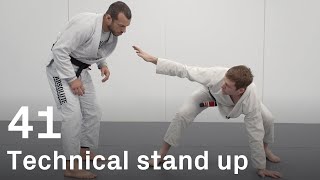
Foundation: Single Leg Takedowns from Half Guard
The single leg takedown from half guard is one of the most practical leg attacks to develop, particularly for beginners. The athlete already controls one of the opponent's legs with their guard position, making the transition from lower body to upper body control the primary technical focus.
Initial Position: Knee Shield Setup
The athlete establishes a high knee shield between their top knee and the opponent's top deltoid. The hand is placed on the athlete's own knee to create a unified structure, allowing both the knee and hand to advance through as a single unit when extending the leg.
Upper Body Control: Establishing the Waist
After extending through the knee shield, the athlete drives their elbow to the opponent's armpit and shucks upward, establishing a tight waist control. This transition moves the control from lower body positioning to upper body positioning.
Leg Hook Transition: The Cosoto Hook
The athlete transfers leg control by raking the opponent's ankle with the inside leg, then slipping the outside leg underneath to establish a Cosoto hook. The opponent's knee is positioned in front of the athlete's hip, maintaining consistent pressure on the ankle.
Lower Body Positioning: Hand Placement and Knee Scissors
The athlete places their hand below the opponent's gluteal line at the hamstring level—not at the waist or buttocks. The legs scissor while the hand maintains control, creating a stable foundation for the next phase.
Building Base: Forehead and Knee Post
The athlete builds height by posting their forehead on the mat first, then their knee, followed by placing their hand on the mat. This progression creates a stable three-point base before attempting to sink the elbow.
Sinking the Elbow: Pressure and Ankle Rake
Once elevated, the athlete sinks their elbow to the mat while maintaining weight to prevent the opponent from turning back. If the elbow doesn't immediately sink, the athlete postures up and uses their knee to rake the opponent's ankle across, creating space for the elbow to drop.
Leg Shelf Position: Finishing the Transition
The athlete places their head over the sunken elbow, captures the opponent's toes, and traps the leg on the shelf created by their upper body. From this control position, the athlete is prepared to execute the single leg takedown.
Finishing Sequence: Circle and Flatten
The athlete locates the opponent's far leg, circles multiple times to flatten the opponent, then covers their body to secure the position. This sequence completes the technical progression into an optimal attacking posture for the single leg takedown.
Half Guard Wrestle Up: The Easiest Way A Jiu Jitsu Athlete Can Develop Single Leg Offense
Key Takeaways
- •Foundation: Single Leg Takedowns from Half Guard
- •Initial Position: Knee Shield Setup
- •Upper Body Control: Establishing the Waist
- •Leg Hook Transition: The Cosoto Hook
5 Stones Jiu Jitsu Class Excerpt
Frequently Asked Questions
What does this video teach about standard single leg wrestle-up?
This video covers foundation: single leg takedowns from half guard, initial position: knee shield setup, upper body control: establishing the waist. It provides detailed instruction from Placido Santos .
How long does it take to learn standard single leg wrestle-up?
The basic mechanics can be understood in a single session, but developing reliable execution requires consistent drilling over weeks of practice. This 9-part breakdown helps structure your training by isolating each phase of the technique.
What are the key details for finishing standard single leg wrestle-up?
The athlete places their head over the sunken elbow, captures the opponent's toes, and traps the leg on the shelf created by their upper body. From this control position, the athlete is prepared to execute the single leg takedown.