Cervical Extension Crank: Basic Mechanics
The cervical extension crank is a submission technique applied from back control or top position, involving extension of the opponent's neck backward. Unlike chokes that restrict blood flow, this technique creates pain and potential injury through mechanical stretching of the cervical spine. The technique is distinguished by lifting the opponent's head upward while maintaining control of the body, forcing the chin away from the chest.
Application from Back Control
When securing back control, the attacker can transition to a neck crank by positioning underneath the opponent's chin and applying upward pressure on the head. This variation is particularly effective when the opponent attempts to defend against rear-naked choke applications. The technique relies on controlling the opponent's torso with legs while using arm positioning to extend the cervical spine.
Half-Nelson Variation
The half-Nelson neck crank employs a single-arm configuration where the attacker lifts on the back of the head while maintaining pressure on the opponent's upper body. This position forces the chin downward toward the chest, restricting airflow and creating submission pressure. The technique is particularly effective when combined with leg control or when the opponent's head is positioned against the cage.
Positioning and Control Elements
Effective application of the cervical extension crank requires controlling multiple points: maintaining side control or back control, preventing the opponent's shoulder movement, and isolating the head. The attacker's leg positioning is critical for preventing escape attempts and stabilizing the opponent during the submission. The intensity of the crank increases when the opponent's pulse is elevated, reducing their ability to withstand the pressure.
Turning Vulnerability and Exploitation
When a defender attempts to turn toward their belly from back control, they expose their head fully to neck crank applications. This positional shift creates a critical window where the attacker can immediately secure a crank before the opponent can reestablish a defensive posture. Patience during lateral positioning allows the defender to maintain oxygen flow, but aggressive turning toward the belly eliminates this protection.
One-Arm Variations
The one-arm neck crank represents an unconventional submission variation where the attacker secures the opponent's neck with minimal arm engagement. This technique pulls the neck forward or extends it, creating submission pressure without relying on two-armed control. The reduced grip requirement allows the attacker to maintain positional dominance while applying submission pressure.
Fence Positioning and Smother Combinations
The cervical extension crank becomes particularly effective when the opponent's head is positioned against the cage or fence, eliminating escape angles. Attackers can combine the crank with smothering pressure to restrict breathing and increase discomfort. The combination of neck extension and facial pressure creates a multi-vector submission attack that encourages faster submission responses.
Distinction from Chokes and Submission Mechanics
The cervical extension crank differs from choke submissions in that it primarily targets structural integrity of the neck and airway restriction through positioning rather than blood flow occlusion. The technique induces rapid submission due to acute pain in the cervical region and difficulty breathing caused by forced positioning. Competitors often tap quickly to this submission due to the intensity of discomfort and fear of spinal injury.
Every Neck Crank Finish in UFC History
Key Takeaways
- •Cervical Extension Crank: Basic Mechanics
- •Application from Back Control
- •Half-Nelson Variation
- •Positioning and Control Elements
Submissions due to neck cranks were more popular in the early part of the promotion's history with Tank Abbott, Tito Ortiz, and Mark Coleman able to pull the rare submission off, just to name a few. At UFC 229 in 2018, lightweight champion Khabib Nurmagomedov pulled off the biggest neck crank in UFC history against Conor McGregor. Subscribe to get all the latest UFC content: http://bit.ly/2uJRzRR Experience UFC live with UFC FIGHT PASS, the digital subscription service of the UFC. Visit https://ufcfightpass.com/ To order UFC Pay-Per-Views on ESPN+, visit https://bit.ly/2vNIBE8 (U.S. only) To order UFC Pay-Per-Views, visit http://welcome.ufcfightpass.com/#PPV (Non U.S.) Connect with UFC online and on Social: Website: http://www.ufc.com Twitter: http://www.twitter.com/ufc Facebook: http://www.facebook.com/ufc Instagram: http://www.instagram.com/ufc Snapchat: UFC Periscope: http://Periscope.tv/ufc Connect with UFC FIGHT PASS on Social: Twitter: http://www.twitter.com/ufcfightpass Facebook: http://www.facebook.com/ufcfightpass Instagram: http://www.instagram.com/ufcfightpass
Related Techniques
Frequently Asked Questions
What does this video teach about cervical extension crank?
This video covers cervical extension crank: basic mechanics, application from back control, half-nelson variation. It provides detailed instruction from UFC.
How long does it take to learn cervical extension crank?
The basic mechanics can be understood in a single session, but developing reliable execution requires consistent drilling over weeks of practice. This 8-part breakdown helps structure your training by isolating each phase of the technique.
What are the key details for finishing cervical extension crank?
The cervical extension crank becomes particularly effective when the opponent's head is positioned against the cage or fence, eliminating escape angles. Attackers can combine the crank with smothering pressure to restrict breathing and increase discomfort. The combination of neck extension and facial pressure creates a multi-vector submission attack that encourages faster submission responses.
Related videos
The Easiest Way to do the Twister
Stephan Kesting
The Crossface Cradle - Yes, it is Osaekomi
The Judokai Network
Can Opener - Illegal BJJ Submission Neck Crank from Top Guard advanced Grappling for MMA - CanOpener
Peter Mettler Martial Arts
twister side control / the truck / back
Black Dragon BJJ / Cobra Kai Karate Dungannon
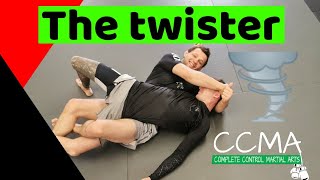
The twister submission
CCMA Complete Control Martial Arts