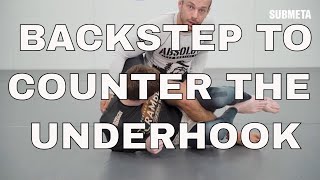
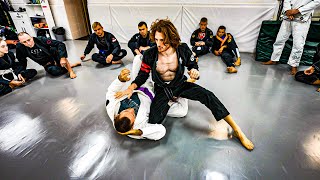
Introduction to the Backstep Pass Series
Stephen Miller demonstrates a comprehensive series of techniques for countering an opponent's underhook from half guard. The instructor will show multiple variations and angles to address different defensive responses. This series provides multiple pathways to either complete submissions or advance positional control.
Establishing Position and the Initial Backstep
From inside half guard against an opponent's underhook, the top player controls the head with one hand while posting the other hand to the mat. By elevating the hips and executing a backstep rotation, the top player settles into a dominant seated position on the opponent's torso while maintaining control of the opponent's leg. This secure position prevents back take attempts while opening multiple offensive options.
Knee Bar Entry and Finish
If the opponent fails to defend against the knee bar threat, the top player hugs the leg and falls to their hip while extending their feet toward the opponent's gluteus. The player rolls onto their back, allowing proper angle alignment for the submission. The knee bar slides naturally into position through this controlled rolling motion.
Backstep Pass with Shoulder Pressure
When the opponent defends against the knee bar, the top player transitions into a pass by controlling the armpit while driving shoulder pressure into the opponent's face. The top hand controls the near leg while the bottom leg posts onto the opponent's knee. Through sequential hip scooting and leg extension, the top player slides into dominant side control.
Knee Cut Variation with Underhook
An alternative approach involves posting on the opponent's knee while clearing space to establish a near-side underhook. The top player hops backward while sweeping the opponent's arm, then slides directly into side control. This technique suits practitioners who favor knee cut passing methodology.
Underhook Pass with Elevated Head Placement
Rather than rushing to square the hips, the top player establishes a near-side underhook and posts the hand to the mat, ensuring the knee clears first. The top leg extends high while posting, and the head slides down to the mat into side control. This methodical approach maintains control throughout the transition.
Back Take Setup from Top Position
When the opponent grips the top leg to prevent passing, the top player controls the hip with one hand and secures the opponent's ankle with the other. The player then turns toward the opponent's hips while rolling over their shoulder, establishing the truck position. This setup creates a natural transition into back control with proper hook placement.
Back Control Finish with Hook Sequencing
From the truck position, the top player stacks their feet and extends both legs while securing the belt and collar grip. Rather than rushing both hooks, the player bridges the hips forward to allow the top hook to settle naturally into place. Once both hooks are secured, controlling the collar allows the player to manage the opponent's turning options while maintaining back control.
Opposite Side Execution with Submission Options
The same sequence executes equally well from the opposite side, with the player controlling the top shin while positioning the knee to the mat. This variation includes access to alternative submissions such as the calf slicer before committing to the back take. The player can rest in the truck position momentarily before completing the back control or submission sequence.
Back step pass series with Stephen Miller
Key Takeaways
- •Introduction to the Backstep Pass Series
- •Establishing Position and the Initial Backstep
- •Knee Bar Entry and Finish
- •Backstep Pass with Shoulder Pressure
Ground Control Columbia Stephen Miller teaching a little back step from half guard series. Highly effective and basic technique with a little fun ;)
Frequently Asked Questions
What does this video teach about standard backstep pass?
This video covers introduction to the backstep pass series, establishing position and the initial backstep, knee bar entry and finish. It provides detailed instruction from Simplicity Jiu Jitsu.
How long does it take to learn standard backstep pass?
The basic mechanics can be understood in a single session, but developing reliable execution requires consistent drilling over weeks of practice. This 9-part breakdown helps structure your training by isolating each phase of the technique.
What are the key details for finishing standard backstep pass?
From the truck position, the top player stacks their feet and extends both legs while securing the belt and collar grip. Rather than rushing both hooks, the player bridges the hips forward to allow the top hook to settle naturally into place. Once both hooks are secured, controlling the collar allows the player to manage the opponent's turning options while maintaining back control.