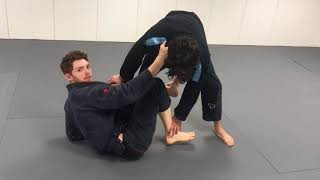
Introduction to the Lasso Guard
The lasso guard presents significant technical challenges for many practitioners, but a fundamental grip adjustment unlocks its full potential. This guide explores the critical details that transform the lasso guard into a high-percentage position, even against experienced opponents.
Grip Mechanics and Hand Positioning
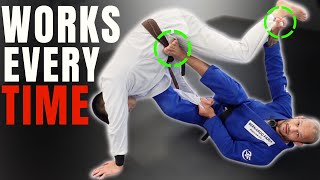
Hand orientation is the primary factor determining grip security. A palm-up grip creates structural strength that prevents the opponent from rotating out, whereas a palm-down position allows immediate escape. Practitioners should maintain a relaxed hook grip on the cuff rather than sustained tension to avoid fatigue during extended exchanges.
Spider Lasso and Triangle Entry
From the spider lasso position, the practitioner curls the toes inward while pulling the opponent forward with leg pressure. Transitioning the upper hand to the opponent's back shoulder enables the practitioner to climb directly into a triangle finish, creating a fluid attacking sequence.
Shallow Lasso Structure and Position Retention
The shallow lasso engages the opponent's shoulder rather than achieving deep leg position, providing superior connectivity when the opponent attempts to pass. When the opponent pressures the shallow lasso downward, the practitioner must immediately establish a full lasso to maintain control and prevent guard passage.
Defending Against Lateral Shoulder Pressure
When the opponent walks laterally and flares the elbow to displace the foot from the shoulder, the practitioner must invert the knee and close the thigh gap toward the mat. This defensive adjustment allows the practitioner to establish hip contact and maintain positional integrity throughout the opponent's pass attempt.
Integrating Half Guard Mechanics with Lasso
Combining lasso control with half guard structure, particularly through knee lever positioning, creates multiple sweep opportunities. By controlling the opponent's knee leg and establishing foot placement on the mat, the practitioner can execute hip flares that disrupt the opponent's base and generate scoring position.
Knee Lever Execution and Transition
The knee lever operates by pinching both feet toward the mat while flaring the knees outward to generate rotational momentum. Once the opponent is displaced, the practitioner maintains a hook under the hamstring while establishing sleeve and collar control to prevent immediate recovery.
Reverse De la Riva Finishing Position
The lasso guard integrates effectively with reverse De la Riva positioning when the opponent stands, allowing the practitioner to cross-foot and flare the knees for takedown entry. By distributing weight across the opponent's hip during the flare, the practitioner concentrates force on a single leg and completes the sweep into scoring position.
The ONLY Lasso Guard Guide You’ll Ever Need
Key Takeaways
- •Introduction to the Lasso Guard
- •Grip Mechanics and Hand Positioning
- •Spider Lasso and Triangle Entry
- •Shallow Lasso Structure and Position Retention
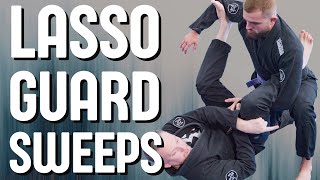
One of the strongest guards in the sport, Lasso Guard can take you all the way from white to black belt! In this video we’ll look at a tiny adjustment that UNLOCKED this guard for me as well as a comprehensive look at just about everything you could need to know to be a master Lasso Player!! You’ll learn how the knee lever combines with lasso to make an insanely strong sweep, lasso X hybrids, some classic spider lasso and the famous Meregali sweep and much more!! I’ve made this as jam packed as possible so save this resource as you’re going to want to come back to and refer to this on your lasso guard journey! If you have any questions or feedback don’t hesitate to let us know in the comment section!! #bjj #bjjtechnique #lassoguard #bjjinstructional
Related Techniques
Frequently Asked Questions
What does this video teach about standard lasso guard?
This video covers introduction to the lasso guard, grip mechanics and hand positioning, spider lasso and triangle entry. It provides detailed instruction from Precision MMA .
How long does it take to learn standard lasso guard?
The basic mechanics can be understood in a single session, but developing reliable execution requires consistent drilling over weeks of practice. This 8-part breakdown helps structure your training by isolating each phase of the technique.
What are the key details for finishing standard lasso guard?
The knee lever operates by pinching both feet toward the mat while flaring the knees outward to generate rotational momentum. Once the opponent is displaced, the practitioner maintains a hook under the hamstring while establishing sleeve and collar control to prevent immediate recovery.