Introduction to Four Lasso Guard Sweeps
This instructional series covers four essential lasso guard sweeps divided into two categories: two variations from the standing position and two from the knee. These techniques are specifically designed to be effective against heavier and stronger opponents who resist conventional guard attacks.
Lasso Guard Setup from Collar Sleeve
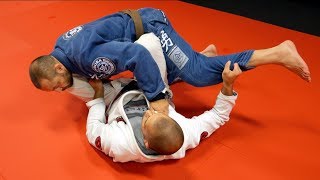
When the opponent stands from closed guard with collar sleeve control, transition to the lasso grip immediately after losing the collar. Secure the opponent's far ankle and advance the hips close to establish control before initiating the sweep mechanics.
First Standing Sweep: Foot Elevation and Extension
Force the standing opponent to post by elevating their far leg with a hip-to-hip connection. Drive through the opponent's supporting leg and arm using foot pressure and hip extension, optionally removing the lasso to facilitate the sweep finish with knee on belly transition.
Second Standing Variation: Near Ankle Attack
When the far ankle becomes unavailable, transition to controlling the near ankle instead. Position the lasso foot carefully along the opponent's hip line, keeping the toe directed properly to prevent counter-attacks, then hook the calf and drive through the elbow for a powerful sweep.
Lasso Half Guard Foundation
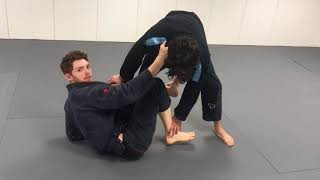
Establish lasso half guard when the opponent attempts to step over the trapped leg or move to a passing position. This position creates advantageous leverage for sweeping stronger opponents through extended leg mechanics and controlled weight distribution.
Third Sweep: Extended Leg Drive from Half Guard
Shoot the knee deeply behind the opponent's back while maintaining full leg extension. Use the bottom leg in a rowing motion to bring the opponent's weight forward, then release the lasso to post and transition to a cross-face dominant position for the pass.
Fourth Sweep: Knee-to-Chest Mechanics
Position the knee directly behind the opponent's back while maintaining heavy upper body pressure. Drive the knee toward the chest in a bowing motion while using the arm to control the opponent's base, preventing any backward escape before transitioning to a cross-face pass.
Locked Feet Finish Option
The final variation incorporates a foot lock in the half guard configuration, allowing the practitioner to trap and control both of the opponent's legs simultaneously. This locked position creates additional stability and prevents the opponent from escaping the sweep mechanics.
The ONLY 4 Lasso Guard Sweeps You Need
Key Takeaways
- •Introduction to Four Lasso Guard Sweeps
- •Lasso Guard Setup from Collar Sleeve
- •First Standing Sweep: Foot Elevation and Extension
- •Second Standing Variation: Near Ankle Attack
on this video i show you all 4 ways to sweep your opponents 2 ways when they stands from your lasso and 2 when they stay heavy on the knees in your lasso enjoy. Improve your GAME even FASTER INSTRUCTIONALS https://bjjfanatics.com/search?q=MARCOS%20TINOCO LASSO GUARD BUNDLE CLOSED GUARD ATTACKS HOW TO PASS LASSO ETC.... CHECK IT OUT.. Use my code TinocoFly24 https://hyperfly.com/Marcos . IF YOU LIKE THIS VIDEO PLEASE THUMBS-UP, SHARE AND SUBSCRIBE BIG OSS #fundamentalanalysis #closedguard #bjj #bigoss
Related Techniques
Frequently Asked Questions
What does this video teach about standard lasso guard?
This video covers introduction to four lasso guard sweeps, lasso guard setup from collar sleeve, first standing sweep: foot elevation and extension. It provides detailed instruction from BIG OSS Jiu-Jitsu Channel.
How long does it take to learn standard lasso guard?
The basic mechanics can be understood in a single session, but developing reliable execution requires consistent drilling over weeks of practice. This 8-part breakdown helps structure your training by isolating each phase of the technique.
What are the key details for finishing standard lasso guard?
Position the knee directly behind the opponent's back while maintaining heavy upper body pressure. Drive the knee toward the chest in a bowing motion while using the arm to control the opponent's base, preventing any backward escape before transitioning to a cross-face pass.