Introduction to Clinch Work Fundamentals
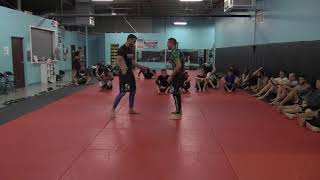
Clinch work represents the most valuable yet undertrained aspect of Brazilian Jiu-Jitsu instruction across most academies. From a self-defense perspective, practitioners must prioritize developing clinch control to effectively neutralize strikes and establish dominant positioning before transitioning to ground-based techniques.
The Strategic Role of Overhooks and Underhooks
Overhooks and underhooks serve as complementary tools rather than hierarchical techniques—each counters the other depending on the practitioner's objective. The fundamental principle governing clinch work states that whoever dictates distance controls the engagement, making positional awareness critical for both standing and ground applications.
Distance Control and Space Manipulation
Tight clinch positioning eliminates space that opponents require to build structural defenses, similar to side control pressure principles. An effective overhook acts as a spacer, preventing the opponent from establishing the body-to-body proximity necessary for tight underhook control.
Defensive Progression: Hands to Head Defense
Defense against clinch attacks progresses through distinct stages: hand frames establish initial separation, forearm structures maintain medium distance, and head positioning combined with overhook placement prevents complete closure. Each defensive layer serves to either create space or control opponent positioning.
Overhook Mechanics and Control Applications
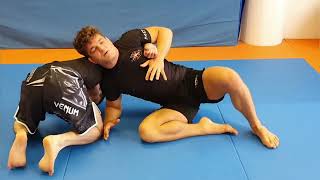
The overhook's primary purpose differs from the underhook—it prevents opponent advancement rather than facilitating control holds. Proper overhook positioning combined with chest frame placement severely limits opponent mobility and posture-breaking capacity while enabling multiple offensive sequences.
Grip Variations and Guillotine Integration
Practitioners may execute overhooks with separated hands or by gripping their own forearm, with both methods proving effective. The overhook transitions seamlessly into guillotine choke attacks when opponents attempt aggressive clinch penetration, creating offensive opportunities from defensive positioning.
Strategic Advantages of Overhook Dominance
Developing overhook expertise provides tactical flexibility against opponents who exclusively pursue underhook control. By accepting underhook attempts and transitioning to overhook-based sequences, practitioners maintain offensive capabilities while frustrating predictable opponent strategies.
Self-Defense Application Beyond Gi Training
Overhook and underhook control prove essential for self-defense scenarios where sleeve grips fail to prevent strikes effectively. Practitioners who neglect clinch work in favor of sleeve-based techniques risk compromised striking defense in real-world confrontations, making clinch mastery fundamental to practical self-protection.
BJJ Self-Defense Course | Lesson 56: The Overhook
Key Takeaways
- •Introduction to Clinch Work Fundamentals
- •The Strategic Role of Overhooks and Underhooks
- •Distance Control and Space Manipulation
- •Defensive Progression: Hands to Head Defense
We hope everyone is enjoying our Gracie Jiu-Jitsu Self-Defense Course. We are offering these lessons for free, but If you are enjoying what we are doing and want to support us, you can make a donation to PayPal at [email protected]. Please click Like, Subscribe, and hit the notification bell for updates on this course. You can also Join my Patreon for more Content at: www.Patreon.com/RoyMarshJiuJitsu.com Or, check out my Video Instructionals at RoyMarsh.selz.com You can also read my Blog at: www.ConceptualJiuJitsu.Worpress.com My Websites: www.GracieSchwarzwald.com www.RoyMarshJiuJitsu.com www.Facebook.com/GracieSchwarzwald www.Instagram.com/GracieSchwarzwald
Frequently Asked Questions
What does this video teach about standard overhook counter?
This video covers introduction to clinch work fundamentals, the strategic role of overhooks and underhooks, distance control and space manipulation. It provides detailed instruction from Gracie Schwarzwald Jiu-Jitsu.
How long does it take to learn standard overhook counter?
The basic mechanics can be understood in a single session, but developing reliable execution requires consistent drilling over weeks of practice. This 8-part breakdown helps structure your training by isolating each phase of the technique.
What are the key details for finishing standard overhook counter?
Developing overhook expertise provides tactical flexibility against opponents who exclusively pursue underhook control. By accepting underhook attempts and transitioning to overhook-based sequences, practitioners maintain offensive capabilities while frustrating predictable opponent strategies.