Introduction to the Choke from Hades
The instructor introduces the Choke from Hades as the most powerful finishing technique in Brazilian Jiu-Jitsu. This technique is derived from the classical judo hadaka jime (naked choke) and serves as an advanced finishing tool for practitioners.
The Problem It Solves
The Choke from Hades addresses a common problem when the initial lapel choke attempt fails to secure full neck control. When the opponent successfully defends by tucking their chin or inserting their fingers, a standard rear-naked choke becomes ineffective, requiring an alternative approach.
Understanding Failed Choke Positions
A choke attempt with the opponent's chin fully down results in a painful crush against the jaw rather than a true choke, which is considered poor technique. This intermediate position—where full neck control is lost but the choke is partially secured—is where the Choke from Hades becomes necessary.
Initial Setup and Transition
Starting from the partially secured choke position, the attacker rolls the opponent to their side while maintaining hand control. The attacker then releases their hooks and transitions to a stomach-down position, maintaining pressure throughout the movement.
Establishing Dominant Position
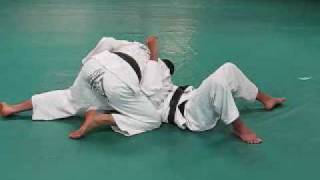
Once transitioned to the stomach-down position, the attacker uses their knees to elevate the opponent's hips and sit them upright. This positioning removes the opponent's ability to defend with their hands and creates vulnerability to the finishing mechanism.
The Finishing Mechanism
From the seated position, the attacker drops their body weight while maintaining the forearm choke across the opponent's neck. The combination of the opponent's seated posture and the attacker's weight distribution creates immense pressure that forces submission even when hand defense was previously effective.
Key Technical Advantages
The effectiveness of this technique lies in its ability to apply pressure regardless of hand placement or chin position. The positional shift from hooks-based control to weight-based pressure transforms a failed technique into a finishing move, making it particularly valuable in competition.
Drilling the Transition Sequence
The complete sequence involves hand-fighting engagement, rolling to the side, removing hooks, transitioning to stomach, and then moving through the knees to an upright seated position before applying the choke. Practitioners should drill this transition repeatedly to develop the timing and body control necessary for reliable execution.
How To Hit The Most Powerful Choke In Jiu Jitsu
Key Takeaways
- •Introduction to the Choke from Hades
- •The Problem It Solves
- •Understanding Failed Choke Positions
- •Initial Setup and Transition
FOR A FREE CLASS VISIT: http://www.BamBamMartialArtsHouston.com 713-307-5375 Bam Bam Martial Arts 4007 Bellaire Blvd. ii Houston Tx 77025 [email protected] Bam Bam Martial Arts is a SAFE, BENEFICIAL, and ENJOYABLE martial arts school for anyone, of any age, with varying levels of fitness and ability. Since 2007 we having been teaching muay thai, kickboxing, brazilian jiu jitsu, MMA, and other martial arts disciplines for 1000's of Houston residents. We look forward to teaching you soon.
Frequently Asked Questions
What does this video teach about thrust lapel choke technique?
This video covers introduction to the choke from hades, the problem it solves, understanding failed choke positions. It provides detailed instruction from Bam Bam Martial Arts Houston.
How long does it take to learn thrust lapel choke technique?
The basic mechanics can be understood in a single session, but developing reliable execution requires consistent drilling over weeks of practice. This 8-part breakdown helps structure your training by isolating each phase of the technique.
What are the key details for finishing thrust lapel choke technique?
The effectiveness of this technique lies in its ability to apply pressure regardless of hand placement or chin position. The positional shift from hooks-based control to weight-based pressure transforms a failed technique into a finishing move, making it particularly valuable in competition.