Setup and Grip Configuration
The practitioner establishes control by gripping the opponent's collar with a long-step grip while simultaneously controlling the leg with the opposite hand. This dual control prevents the opponent from establishing a knee shield or stepping on the bicep. Proper hand placement on the leg is essential—whether using a pants grip, cigarette grip, or knee push—to maintain positional dominance.
Initiating the Leg Weave Transition
From the gripped position, the instructor shuffles laterally to initiate the leg weave pass. However, before completing the traditional leg weave, the technique transitions into a cross-step by stepping over the opponent's leg at the midpoint of the movement. This hybrid approach creates a gap that allows the practitioner to advance to the side control position.
Cross-Step Execution and Hip Placement
As the practitioner steps over the opponent's leg, they simultaneously drop their elbow under the opponent's armpit to prevent escape via under-hook or back-control attempts. The body weight transfers to the side as the foot placement completes the cross-step. This precise elbow positioning is critical to maintaining dominant control during the transition.
Side Control Stabilization
Once positioned on the side, the practitioner can immediately stabilize side control by controlling the elbow and maintaining heavy pressure on the opponent's hip. This position offers a complete guard pass with multiple submission and positional advancement options available. The practitioner can choose to remain here or transition to more aggressive passing positions.
Transition to Leg Drag Position
For practitioners who prefer to maintain momentum toward back control, walking backward toward the opponent's hips transitions the position into the leg drag. This position is mechanically superior for back-take sequences and provides cleaner pathways to rear control. The leg drag position represents an intermediate step between guard pass completion and back-control dominance.
Positional Alternatives and Decision Making
The practitioner has the flexibility to pursue either side control dominance or the leg drag position based on their game preference and the opponent's reactions. From side control, the instructor can move toward mounted position for submission opportunities. Both pathways successfully complete the guard pass with different strategic objectives.
CROSS STEP PASS FROM LEG WEAVE
Key Takeaways
- •Setup and Grip Configuration
- •Initiating the Leg Weave Transition
- •Cross-Step Execution and Hip Placement
- •Side Control Stabilization
danilo
Frequently Asked Questions
What does this video teach about standard leg weave pass?
This video covers setup and grip configuration, initiating the leg weave transition, cross-step execution and hip placement. It provides detailed instruction from Bryce Nie.
How long does it take to learn standard leg weave pass?
The basic mechanics can be understood in a single session, but developing reliable execution requires consistent drilling over weeks of practice. This 6-part breakdown helps structure your training by isolating each phase of the technique.
What are the key details for finishing standard leg weave pass?
For practitioners who prefer to maintain momentum toward back control, walking backward toward the opponent's hips transitions the position into the leg drag. This position is mechanically superior for back-take sequences and provides cleaner pathways to rear control. The leg drag position represents an intermediate step between guard pass completion and back-control dominance.
Related videos
Over under pass (Lachlan Giles)
Absolute MMA St Kilda - Melbourne
The GREAT DOUBLE UNDER Guard Pass!
The Grappling Academy
Leg Weave Pass
MICAEL GALVÃO
Basic Stack Pass to Flow Pass - Andre Galvao
Atos Jiu-Jitsu HQ | World's Best BJJ Academy - Home Page
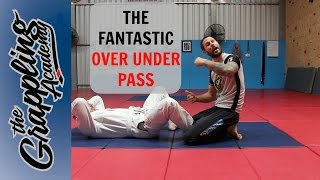
A Fantastic PASS - The OVER UNDER Pass!
The Grappling Academy