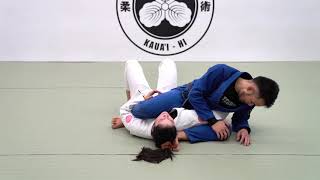
Introduction to the Omoplata
The Omoplata is a versatile leg lock submission that requires isolating the opponent's arm from their body using the legs. This technique is particularly effective from closed guard, where the opponent cannot rely on keeping their elbow attached to their knee for defense. Understanding the fundamental principle of arm isolation is essential before attempting the submission.
Initial Grip and Arm Control
Begin by grabbing both sleeves or isolating the tricep of the target arm when the opponent assumes a postured position. The practitioner should push the opponent's hand down toward their own hip while simultaneously bending the opponent's arm. This initial control mirrors the mechanical principles of a Kimura, but executed using leg pressure rather than arm strength.
Leg Positioning and Posture Break
Position one leg between the opponent's arm and torso, then drive that leg downward in a chopping motion similar to the setup for a triangle choke. This movement breaks the opponent's posture and creates space to insert the second leg. The practitioner should simultaneously control the opponent's neck to facilitate leg insertion in both gi and no-gi variations.
Securing the Triangle Configuration
Free the second leg and position the heel of the first leg against the knee, creating a triangle with the opponent's trapped arm. Lock the triangle by crossing one leg over the other, ensuring the opponent's elbow remains pressed into their body. Hand control on the belt or opponent's collar helps prevent the opponent from rolling to escape.
Leg Extension and Elbow Entrapment
Extend the legs while maintaining tight pressure, keeping one leg beneath the opponent's arm and the opposite leg locked over it. The bottom leg remains bent to trap the elbow securely in place, while the top leg straightens to apply shoulder pressure. If the grip loosens, the practitioner can re-grip the opponent's sleeve or arm to maintain control.
Finishing the Submission
Sit up while bringing the head over the opponent's far shoulder, forcing their arm toward the back of their head in a position similar to a Kimura finish. Simultaneously drive the hips diagonally to increase pressure on the shoulder joint. Maintain elbow control throughout while bending the arm to elicit the submission tap.
Defense and Transitions
The opponent may attempt to roll through the position to escape the submission. If this occurs, the practitioner can transition to top position and pursue alternative submissions. The Omoplata also serves as an effective sweeping position and can transition into arm bars, triangles, and shoulder locks, making it a versatile tool in closed guard.
Key Principles and Training
The Omoplata's effectiveness depends on maintaining tight leg pressure, isolating the elbow, and controlling posture. This technique can be used as both an entry submission and a transition point to other finishing positions. Practitioners should focus on drilling the technique with a cooperative partner while emphasizing safety and controlled pressure application.
What is an Omoplata? BJJ How-to Tutorial
Key Takeaways
- •Introduction to the Omoplata
- •Initial Grip and Arm Control
- •Leg Positioning and Posture Break
- •Securing the Triangle Configuration
Coach Erin Herle teaches how to do a omaplata submission (which means 'scapula' in Portuguese). This shoulder lock is done by using the leverage of your legs and hips, which will also move you into a safer, more dominant position. Erin Herle on IG: http://www instagram.com/erinherle SUBSCRIBE TO GET MORE #FIGHTTIPS►http://bit.ly/1APnzvw FOLLOW: Facebook | http://bit.ly/fightTIPSFacebook Twitter | http://bit.ly/fightTIPSTwitter Instagram | http://bit.ly/fightTIPSInstagram
Frequently Asked Questions
What does this video teach about standard omoplata?
This video covers introduction to the omoplata, initial grip and arm control, leg positioning and posture break. It provides detailed instruction from fightTIPS.
How long does it take to learn standard omoplata?
The basic mechanics can be understood in a single session, but developing reliable execution requires consistent drilling over weeks of practice. This 8-part breakdown helps structure your training by isolating each phase of the technique.
What are the key details for finishing standard omoplata?
The opponent may attempt to roll through the position to escape the submission. If this occurs, the practitioner can transition to top position and pursue alternative submissions. The Omoplata also serves as an effective sweeping position and can transition into arm bars, triangles, and shoulder locks, making it a versatile tool in closed guard.