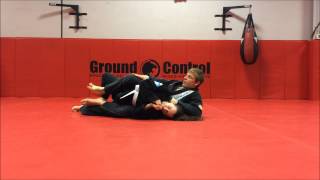
Understanding Position Zero
Position zero represents a critical juncture where the opponent has established base and is preparing to drive a knee through the middle of the guard. The defender must immediately recognize this setup, as it creates a high-percentage passing opportunity with minimal risk of the defender establishing half-guard. Early recognition allows the defender to implement counter-measures before the pass gains momentum.
Controlling the Passing Knee
The defender's primary concern is controlling the opponent's knee with hand placement to prevent penetration. While one hand on the knee provides basic control, using both hands significantly restricts the opponent's ability to cut through the guard. This dual-hand control creates the foundation for all subsequent defensive techniques.
Managing the Hanging Hook Vulnerability
The defender must address the exposed leg hook, which creates an ankle lock opportunity if the opponent secures an overhook. Placing the foot on the opponent's hip neutralizes this threat while simultaneously enabling hip escape mechanics. This positioning serves dual defensive purposes and should be established immediately.
Establishing Shin-to-Shin Control
The defender brings the foot back and points the toe inward, looping it inside the opponent's leg before flexing outward to establish contact. This shin-to-shin position creates a barrier that prevents the opponent from driving the knee to either side of the guard. The contact point must be established with the shin rather than bone-on-bone to maximize leverage and comfort.
Defending Against Knee Penetration
If the opponent attempts to penetrate through the shin-to-shin control, the defender can immediately extend their leg to clear space and pull the opponent back into closed guard. This counter-pass negates the opponent's progress and returns them to their starting position, creating a frustrating cycle for the passing player. The technique is repeatable and prevents guard break success.
Activating Muscular Control
The defender activates the shin muscles by flexing the toes outward, converting passive bone contact into active muscular engagement. This muscular tension increases control while reducing pain from sustained pressure. Proper muscle activation is essential for maintaining the position during the opponent's pass attempts.
Transitioning to Back Control
When the opponent extends their arm or attempts to drive through, the defender releases the lapel grip and pulls the opponent's extended arm while maintaining shin-to-shin contact. This creates an opening to reach around the opponent's torso and establish gift wrap control. The back control transition capitalizes on the opponent's commitment to the pass and creates a scoring opportunity.
Executing the Choke Finish
From the gift wrap position behind the opponent, the defender uses the lapel grip to establish a choke with palm control. The combination of the secured back position and lapel control creates a high-percentage submission finish. This sequence transforms defensive position into offensive advantage.
Knee Middle Passing Counter (Immortal BJJ - Raleigh, N.C.)
Key Takeaways
- •Understanding Position Zero
- •Controlling the Passing Knee
- •Managing the Hanging Hook Vulnerability
- •Establishing Shin-to-Shin Control
http://immortalbjj.com Professor Todd demonstrates how to counter knee in the middle passing. This technique serves also as a great transition to the back.
Frequently Asked Questions
What does this video teach about standard knee-in-the-middle pass?
This video covers understanding position zero, controlling the passing knee, managing the hanging hook vulnerability. It provides detailed instruction from ImmortalBJJNC.
How long does it take to learn standard knee-in-the-middle pass?
The basic mechanics can be understood in a single session, but developing reliable execution requires consistent drilling over weeks of practice. This 8-part breakdown helps structure your training by isolating each phase of the technique.
What are the key details for finishing standard knee-in-the-middle pass?
When the opponent extends their arm or attempts to drive through, the defender releases the lapel grip and pulls the opponent's extended arm while maintaining shin-to-shin contact. This creates an opening to reach around the opponent's torso and establish gift wrap control. The back control transition capitalizes on the opponent's commitment to the pass and creates a scoring opportunity.