Initial Setup and Foot Positioning
The practitioner begins by pulling the opponent's arm while positioning the left leg in front. Circular footwork is essential—the instructor emphasizes shuffling the feet while maintaining a low stance rather than pushing prematurely. The left foot must remain in front throughout the circling motion to establish proper positioning for the trip.
The Pull and Weight Distribution
The instructor stresses pulling the opponent's arm into the floor to establish control and force a weight commitment. This pulling action is critical to prevent the opponent from stepping out during the entry. The practitioner should maintain downward pressure on the arm while preparing to enter.
Entry Mechanics and Knee Placement
As the practitioner enters, the left knee drops to the mat while the left foot remains elevated—never touching the ground. The push happens simultaneously with the entry, which causes the opponent to instinctively step backward. Proper timing ensures the opponent commits weight before the trip is completed.
Preventing the Step-Out Defense
The opponent's natural reaction is to step out when feeling pressure. To prevent this escape, the practitioner must maintain downward pressure on the opponent's arm, forcing weight commitment to the inside leg. Without this control, the opponent can easily evade the technique by stepping away.
The Critical Drop Phase
The practitioner should drop to the knee without aggressive pushing—timing is more important than force. The head must stay on the same side as the tripping leg (left head position with left leg trip) to maintain proper weight distribution. This positioning prevents the opponent from stepping out and locks the leg in place.
Hand and Arm Control Options
After securing the trip, the practitioner can either maintain the arm pull or slide the left hand down to capture the leg with an over-hook. Both approaches are viable; continuous arm control or leg capture each provides advantages depending on the situation. The choice depends on the practitioner's positioning and the opponent's defensive options.
Head Positioning and Weight Management
Keeping the head on the left side (same side as the trip leg) helps direct body weight correctly and feels more natural. Many practitioners instinctively turn their head to the opposite side, which shifts weight incorrectly and compromises the technique. Proper head placement ensures the trip remains locked and prevents the opponent from recovering.
Preparation and Entry Timing
Correct foot placement is essential before executing the trip—the left leg should already be positioned inside the opponent's stance. The practitioner dances or shuffles into position while pulling the opponent's arm, establishing control before committing to the entry. This preparation phase determines whether the trip will succeed or fail.
Full-Speed Execution and Leg Entrapment
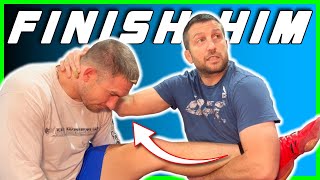
At full speed, the technique flows as a continuous sequence: pull, force a step, drop without pushing, and crash down. Once the leg is trapped with the knee on the mat and downward arm pressure applied, the opponent cannot escape—the leg becomes locked in place. This entrapment allows the practitioner to control the finish and prevent the opponent from landing in guard.
Application Against the Body Lock
The inside trip finish is particularly effective against an opponent attempting a body lock or over-under clinch. When the opponent commits to pulling the practitioner's hips forward, the trip becomes easier to execute. The practitioner can spread their hands for balance after completing the takedown, using body weight rather than grip strength to maintain control.
Inside Trip for BEGINNERS!
Key Takeaways
- •Initial Setup and Foot Positioning
- •The Pull and Weight Distribution
- •Entry Mechanics and Knee Placement
- •Preventing the Step-Out Defense
PLEASE Click this link to SUPPORT the TeachMeGrappling Channel!!! https://www.patreon.com/TeachMeGrappling or https://www.paypal.me/CoachBrianPeterson Your contribution is much appreciated and will help me continue to bring you content! 🙏 www.NextLevelGuy.com The NextLevelGuy Podcast with Coach Brian Peterson has been released!! Check it out! http://teachmegrappling.com This video I help a couple of students work on their inside trip. This is new for them but they have already had success with it! Check out the details and you are sure to find something useful! Enjoy! If you have any questions, comments, or suggestions, please comment below. More videos to come! Please like, share, and subscribe!!
Related Techniques
Frequently Asked Questions
What does this video teach about inside trip finish?
This video covers initial setup and foot positioning, the pull and weight distribution, entry mechanics and knee placement. It provides detailed instruction from TeachMeGrappling Coach Brian.
How long does it take to learn inside trip finish?
The basic mechanics can be understood in a single session, but developing reliable execution requires consistent drilling over weeks of practice. This 10-part breakdown helps structure your training by isolating each phase of the technique.
What are the key details for finishing inside trip finish?
At full speed, the technique flows as a continuous sequence: pull, force a step, drop without pushing, and crash down. Once the leg is trapped with the knee on the mat and downward arm pressure applied, the opponent cannot escape—the leg becomes locked in place. This entrapment allows the practitioner to control the finish and prevent the opponent from landing in guard.
Related videos
Wansu Kata (Dragon Boy/Girl Dumping Form/Strong Arm Form
AncientArts Family Karate/Ju-Jitsu Academy
SLICK Way to BEAT the Whizzer!... LIMP ARM!
TeachMeGrappling Coach Brian
Tree Top Finish + Shoryuken Finish
Still Rolling
Armdrag to Double to Run the PIPE!
TeachMeGrappling Coach Brian
2 EASY Single Leg FINISHES!
TeachMeGrappling Coach Brian