Mae Geri Fundamentals
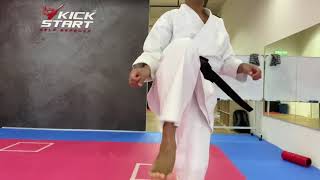
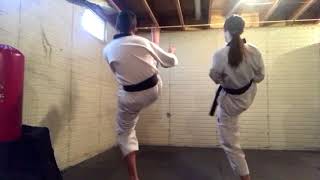
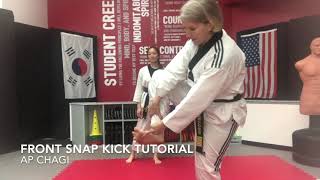
Mae geri is the most foundational kick in karate. Sensei Tatsuya Naka emphasizes that proper execution depends on three critical elements: posture, center of gravity transfer, and breathing. Mastering these fundamentals enables practitioners to execute the technique effectively from any distance.
Center of Gravity Transfer
Many practitioners focus excessive attention on the kicking leg itself, which weakens the technique when faced with frontal or overhead pressure. The key is to shift the center of gravity onto the front leg while engaging the hip joint. This redistribution of weight dramatically increases the kick's stability and power.
Hip Joint Engagement and Posture
Practitioners should maintain focus on moving the center of gravity to the forefoot while maintaining proper hip alignment. Avoid extending the chest forward, as this compromises stability and reduces the kick's defensive strength. The sensation should mirror the grounded feeling of seiza posture.
Ground Push Mechanics
Rather than consciously pushing the ground with the toes, practitioners should lift the entire leg quickly and dynamically. The back foot should leave the floor completely, with the sole rising vertically rather than the heel leading the movement. This internal lift creates deception and perceived speed for the opponent.
Distance Adjustment Through Joint Angles
Mae geri's effective range varies based on ankle, knee, and hip joint positioning. At close range, minimal joint extension is needed; however, at medium or long distances, all three joints must extend forward significantly. This angular adjustment allows practitioners to bridge gaps and maintain proper distance regardless of opponent placement.
Chamber and Recovery Control
Hikiyoshi, the pulling-back phase, serves two purposes: preventing the opponent from catching the leg, and enabling the practitioner to control or pull the opponent if contact occurs. The direction the toes point during recovery is critical—forward-facing toes generate pulling strength, while outward-pointing toes eliminate this power.
Transition to Follow-up Techniques
When an opponent dodges or catches the kick, proper chamber mechanics allow rapid recovery for immediate counterattack. Practitioners can transition directly into tsuki as the leg retracts, maintaining offensive momentum. This fluidity requires consistent practice of posture, center of gravity shift, and controlled breathing.
【Karate】How to hit "Mae-geri" (Front kick) from any distance【Tatsuya Naka】
Key Takeaways
- •Mae Geri Fundamentals
- •Center of Gravity Transfer
- •Hip Joint Engagement and Posture
- •Ground Push Mechanics
※ This AI voice is created from Naka sensei's own voice with his permission. It is the wish of Kuro-obi World that as many people as possible around the world can enjoy BUDO. ★Original voice with subtitles version https://youtu.be/trbAb0FteFU ★Rent and Buy "KURO-OBI WORLD MOVIES" https://vimeo.com/channels/kuroobiworldppv/
Related Techniques
Frequently Asked Questions
What does this video teach about mae geri keage?
This video covers mae geri fundamentals, center of gravity transfer, hip joint engagement and posture. It provides detailed instruction from kuro-obi world.
How long does it take to learn mae geri keage?
The basic mechanics can be understood in a single session, but developing reliable execution requires consistent drilling over weeks of practice. This 7-part breakdown helps structure your training by isolating each phase of the technique.
What are the key details for finishing mae geri keage?
Hikiyoshi, the pulling-back phase, serves two purposes: preventing the opponent from catching the leg, and enabling the practitioner to control or pull the opponent if contact occurs. The direction the toes point during recovery is critical—forward-facing toes generate pulling strength, while outward-pointing toes eliminate this power.