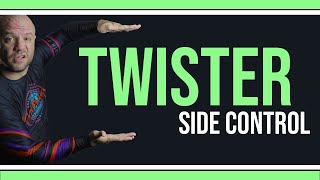
Kesa Gatame Foundation and Underhook Defense
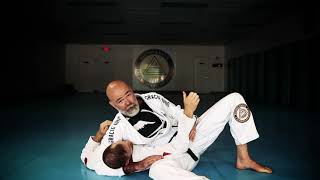
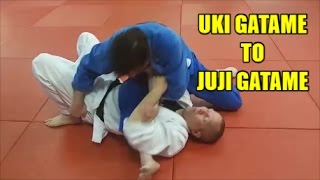
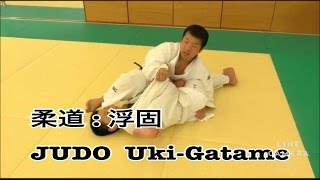
Kesa gatame, known as headlock control in Japanese jiu-jitsu, is commonly encountered when an opponent secures an underhook position. When facing an underhook, the defender must immediately grab the opponent's elbow and pull upward to prevent being rolled, then thread the hand underneath the opponent's head to establish control.
Leg Positioning and Pressure Application
The defender extends their right leg underneath the opponent's tricep while simultaneously securing their own hamstring with the right hand, creating a locked configuration that prevents the opponent from extracting their arm. Pressure is applied by elevating the hips off the floor, concentrating body weight through a small contact point on the defender's lat muscle against the opponent's ribs.
Head Control Variant with Leg Triangle
An alternative finish involves looping the leg over the opponent's body and optionally establishing a triangle configuration while lifting the opponent's head upward. This technique applies pressure through hip elevation and is noted as particularly effective despite being underutilized in competition jiu-jitsu.
Shoulder Lock Transition and Arm Extension Response
When the opponent resists downward pressure by extending their arm straight, the defender can transition to a shoulder lock by looping the opposite leg over and trapping the opponent's wrist between the hamstring and calf. The key to effectiveness is ensuring both knees face toward the opponent before applying the lock, which dramatically increases the mechanical advantage of the position.
Complete Kesa Gatame Finish Sequence
The initial control is established through elbow control and head positioning with a leg hook. If the opponent does not extend their arm, a direct rib compression finish from the top position can be executed. If the opponent straightens their arm defensively, the wrist-trapping shoulder lock with inward-facing knees provides an alternative finish.
Counter to Head Escape and Front Control Transition
If the opponent manages to extract their head while the defender still controls the arm, the defender should immediately apply body weight while maintaining tightness, then perform a wrestler's scramble by grabbing the opponent's head with both hands in front control. This repositioning prevents the opponent from securing back control and provides the defender the best chance of regaining top position during the scramble.
The Awesome Kesa Gatame!
Key Takeaways
- •Kesa Gatame Foundation and Underhook Defense
- •Leg Positioning and Pressure Application
- •Head Control Variant with Leg Triangle
- •Shoulder Lock Transition and Arm Extension Response
SALE SALE SALE OVER 50% OFF – BOX SET – ALL 4 COURSES 50% OFF CLICK HERE – https://bit.ly/2lAOHmp • The Blue Belt Super Series • The Kimura Attack System • The Trap Door Series • 14 Days to Better BJJ CLICK HERE – https://bit.ly/2lAOHmp PURCHASE SINGLE COURSES • The Blue Belt Super Series - https://bit.ly/2PvbrCo • The Kimura Attack System - https://bit.ly/2m3a1kF • The Trap Door Series - https://bit.ly/2DdTbX0 • 14 Days to Better BJJ - https://bit.ly/2kaavFc TESTIMONIALS ‘Started hitting the moves laid out in these courses the very next class...extremely uplifting to have such a quick improvement in my game’ - Houston, TX ‘I’m the only white belt in the academy doing these moves…I’m suddenly competing at a blue belt and above level…thanks Coach Tom’ - LA, California ‘Some of the best strategies you are going to see for control and submission’ - London, UK ‘The detailed way Prof Tom breaks down his moves into the absolute essentials is just next level for me. This is absolute gold‘ - Sydney, Australia ‘Most of the guys at my Academy, have about 60lbs on me, but since purchasing your ‘Kimura Attack system’ and ’14 days’ everything has changed. I feel much more confident, roll better and the guys on the mat have commented on the same. Thanks, Coach Tom’ – Dallas, TX ‘I know you have your names for your courses, but I’ve renamed them the ‘Zero to hero’ courses, I went from getting constantly owned, to now being completely dominant on the mat in no time at all’ - San Diego, California ‘I use the course material heaps, and just recently put it into action at a local comp, walked away with double gold. No one was more surprised than me! - Miami, Florida ‘As a new white belt, these classes have helped me so much, Prof Tom’s technique, the details, and his attitude. I love how Prof. Tom shows the ‘mistakes people make’ and then shows the correct way of doing things. The only one I have ever seen do this’ – New York, New York Great videos, great instruction. I just watch them for hours…Melbourne, Australia ‘The instructional saved me big time at a recent comp, my opponent was def more experienced, but that was ok, coz I had Prof Tom’s video in my brain. Nailed it and scored gold’ - Colorado, Denver ‘All of it. Everything you show in your awesome videos are now my ‘go to techniques’. Thanks for your vids Prof, Tom’ - Houston, TX ‘You really have to watch every second of the video because Prof, Tom drops these little nuggets of gold throughout the course. And they make ALL the difference. The only one doing this. Keep them coming Professor’ - NY, New York ‘If I could only be taught from one person, Prof Tom would be it. I can’t wait to train in person one day’ – Dallas, TX ‘Went to a recent competition with these videos fresh in my mind. I knew I had an edge and the confidence this gave me was unreal. Got the gold. All submission wins! – LA, California
Related Techniques
Frequently Asked Questions
What does this video teach about kesa gatame?
This video covers kesa gatame foundation and underhook defense, leg positioning and pressure application, head control variant with leg triangle. It provides detailed instruction from The Grappling Academy.
How long does it take to learn kesa gatame?
The basic mechanics can be understood in a single session, but developing reliable execution requires consistent drilling over weeks of practice. This 6-part breakdown helps structure your training by isolating each phase of the technique.
What are the key details for finishing kesa gatame?
The initial control is established through elbow control and head positioning with a leg hook. If the opponent does not extend their arm, a direct rib compression finish from the top position can be executed. If the opponent straightens their arm defensively, the wrist-trapping shoulder lock with inward-facing knees provides an alternative finish.