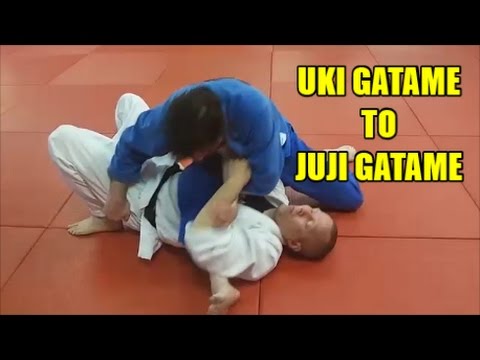
UKI GATAME TO JUJI GATAME
0
Uki Gatame·welcomematstevescott
Uki Gatame (Straddle Hold or Pin) is a strong hold for time, but is also a good set up for Juji Gatame (Cross-Body Armlo…
Translation: floating hold
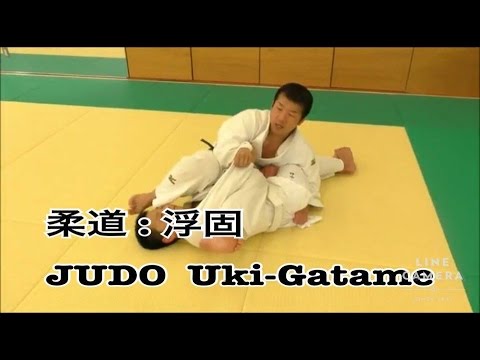
Uki Gatame is a judo hold-down where the attacker controls the opponent from a floating position — lying across the opponent's chest without heavy body contact, using arm and leg control to maintain the pin. [1] Unlike the heavy pressure of Kesa Gatame, Uki Gatame uses skeletal alignment and positioning to maintain control with minimal energy expenditure. [1]
Classified in the Kodokan Judo syllabus. [1]
An energy-efficient hold that allows the attacker to maintain control while conserving strength. [1] Less commonly used as a scoring pin in competition but valuable as a transitional position. In BJJ, the floating concept appears in various top positions where pressure is applied through angles rather than weight. [1]
Kodokan judo lineage: Jigoro Kano (1860–1938) systematized this technique as part of the Kodokan judo curriculum. Transmitted through the Kodokan instructor system to judo federations worldwide. Adopted into BJJ through Mitsuyo Maeda → Carlos Gracie → the Gracie family lineage. [1]
Recognized Kodokan judo technique. Used in IJF World Championships and Olympic judo competition. Frequency varies by weight class and era. [1]
No images yet for this technique.
Sign in to suggest an image.
Uki Gatame (Straddle Hold or Pin) is a strong hold for time, but is also a good set up for Juji Gatame (Cross-Body Armlo…
「浮固」は国際規定(IJFルール)でのみ認められている抑込技です。 この技は十字固めとの相性がよく、最終的には殆どの場合、十字固で極まります。 十字固めを取りかけているけど、相手の防御が強くて極めれないときに移行してください。 JUDO …
No instructional courses yet for this technique.
Sign in to suggest a course.
Risk of injury to the person this technique is applied to
Pinning position.
Skill level needed to execute this technique reliably
Whether this technique is allowed under major competition rule sets
Kano, J. Kodokan Judo. Kodansha International.
[1] Kano, J. Kodokan Judo. Kodansha International.
Official Kodokan ground technique classification system
Standard Japanese martial arts terminology (kanji/hiragana)
Established Japanese martial arts naming convention — native Japanese term (和語/漢語)
[1] Kano, J. Kodokan Judo. Kodansha International.
body awareness, balance, ability to control through positioning
core (maintaining float), arms (frame control), legs (counter-balance)
Uki gatame (floating hold) is a Kodokan judo pinning technique where the attacker controls from a position similar to an armbar setup. It is one of the seven osaekomi-waza (pinning techniques) recognized by the Kodokan. (Kano, Kodokan Judo)
Yes, uki gatame does count as a time hold. Since you're controlling your opponent's body and they can't get up, you can hold them there and run out the clock if they aren't fighting too much.
When going for the straddle hold, grab your opponent's thigh rather than the belt—both work well, but the thigh gives you better control. Make sure to keep your back leg close enough that you can swing it up quickly if you need to shift into juji gatame.
Sit right on your opponent's torso, literally on the diaphragm, and shift your weight back and forth to keep them where you want. Trap their arm tightly to your chest and keep your leg across their torso for added control.
Yes—uki gatame works as a setup for juji gatame, which is the most common finish from this position. You can also use it as a fake by threatening the straddle hold, letting your opponent react, and then sitting back into juji gatame.
Uki Gatame is a judo hold-down where the attacker controls the opponent from a floating position — lying across the opponent's chest without heavy body contact, using arm and leg control to maintain the pin. Unlike the heavy pressure of Kesa Gatame, Uki Gatame uses skeletal alignment and positioning to maintain control with minimal energy expenditure.
Classified in the Kodokan Judo syllabus.
IJF Judo: Legal: legal — Kodokan classified technique; IBJJF: Legal {src:IBJJF Rules Book v6.0, June 2024|/sources/IBJJF: legal — Rules-v6.0-June-2024.pdf}; Unified MMA: Legal {src:Unified Rules of MMA, August 2025|/sources/Unified: legal — MMA-Rules-August-2025.pdf}; FIAS Sambo: Legal {src:FIAS International Sambo Competition Rules|/sources/FIAS: legal — Sambo-Rules.pdf}
Danger rating 2/10. Low — pinning position.
The standard setup chain: Throw → land in floating position across chest → Uki Gatame → Transition from Kesa Gatame → extend body into floating hold → Passing guard → settle into Uki Gatame before consolidating heavier pin.
Standard counters include: Bridge aggressively — the light pressure can be overcome with a strong bridge / Create frames — push against the floating body / Turn into the attacker — the light contact allows rotation.
Common variants: Tight Uki Gatame (closer body contact for more pressure); Extended Uki Gatame (maximum reach for control against larger opponents); Transitional Uki Gatame (using the float as a transition between other holds).
Recognized Kodokan judo technique. Used in IJF World Championships and Olympic judo competition.
Top errors to watch for: Trying to use body weight like Kesa Gatame — defeats the purpose of the floating hold / Not maintaining arm/leg balance — easy to be rolled / Staying too long — this is often a transitional hold, not a permanent pin / Losing the control frame — arms and legs must stay active.
The Uki Gatame is also known as Uki Gatame, Uki-Gatame, Floating Hold, Ukigatame.