Waki-Gatame: Overview and Application
Waki-gatame is a traditional jiu-jitsu and judo technique found across multiple martial arts disciplines, including the Gracie curriculum for self-defense. This instructional guide examines the technique from both self-defense and competitive randori perspectives, exploring why it proves ineffective against trained opponents while identifying valuable throwing and pinning opportunities.
Self-Defense Setup From a Push
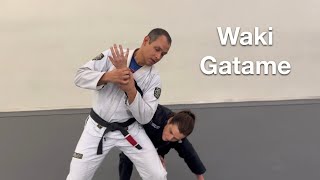
When receiving a push, the defender absorbs the force and pivots, stepping in front of the opponent to prevent forward momentum. The defender throws their arm over the opponent's shoulder and applies an armpit squeeze—similar to a ground armbar—by maintaining a tight, compressed position at the axilla.
The Standing Finish and Tournament Restrictions
The finishing position involves stepping toward the opponent's front while applying downward pressure, creating a standing joint lock that crushes the shoulder and arm. This technique is banned in judo competition due to its status as a standing joint lock, though it remains effective for self-defense applications.
Randori Application: Using Kazushi and Arm Pull
Against trained opponents, the initial waki-gatame attempt fails because they immediately defend their arm. The instructor leverages this defensive response by pulling the opponent forward to create kazushi—destabilizing them on their heels—then stepping behind to execute a sacrifice throw.
No-Gi Entry and Overhand Grip Control
In no-gi grappling, an overhand grip with thumb-down positioning provides tight control without relying on sleeve manipulation. The practitioner initiates the pull to trigger the opponent's backward weight shift before stepping deeply into tani otoshi for a controlled takedown.
Ground Pinning Mechanics and Shoulder Isolation
The waki-gatame ground finish involves flattening the opponent with their shoulder on the mat and palm facing upward. By moving the shoulder forward at a high angle, the instructor creates immediate pressure that forces submission before requiring additional wrist locks or controls.
Turtle Position Setup and Arm Isolation
The waki-gatame finish commonly occurs from turtle position through inverted control and arm isolation techniques. The instructor blocks the opponent's face and drops their shoulder while scooting their foot outward to fully isolate the captured arm.
Forward Pressure and Submission Execution
Once the arm is isolated with the opponent's palm facing upward, the instructor takes a large step forward while maintaining shoulder pressure. This forward movement generates the submission without requiring a wrist lock, as the isolated shoulder position and high angle create overwhelming pressure.
Waki Gatame - when and how to use it.
Key Takeaways
- •Waki-Gatame: Overview and Application
- •Self-Defense Setup From a Push
- •The Standing Finish and Tournament Restrictions
- •Randori Application: Using Kazushi and Arm Pull
Waki Gatame - when and how to use it. There are a lot of traditional judo example videos on waki gatame, and I’m sure @Shigashi84 has some great insight, but I wanted to show some examples of how this traditional jujitsu technique can be used effectively, and in different situations. Brazilian jiu-jitsu and judo are so closely related and this is one technique that isn’t often used. I talk about some aikijujutsu pinning principles that also support this technique. #judo #bjj #brazilianjiujitsu #graciejiujitsu #daitoryu #aikijutsu #aikido #grappling #nogi #martialarts #wakigatame #kansetsuwaza
Frequently Asked Questions
What does this video teach about waki-gatame from standing?
This video covers waki-gatame: overview and application, self-defense setup from a push, the standing finish and tournament restrictions. It provides detailed instruction from Robert Silas (Aiki_and_Jiu).
How long does it take to learn waki-gatame from standing?
The basic mechanics can be understood in a single session, but developing reliable execution requires consistent drilling over weeks of practice. This 8-part breakdown helps structure your training by isolating each phase of the technique.
What are the key details for finishing waki-gatame from standing?
The waki-gatame finish commonly occurs from turtle position through inverted control and arm isolation techniques. The instructor blocks the opponent's face and drops their shoulder while scooting their foot outward to fully isolate the captured arm.
Related videos
WAKI GATAME By John Saylor
welcomematstevescott
Katame Waza || Grappling Techniques - 32 Holds, Strangles/Chokes and Armlocks
The Judo Way of Life
Waki Gatame - when and how to use it.
Robert Silas (Aiki_and_Jiu)
Waki Gatame into Ura Oni Kudaki - Yossi Sheriff in Madrid
AKBAN Ninjutsu – Yossi Sheriff

9 Standing Arm Locks (BREAKS) in Jiu-Jitsu #jujitsu #armlock
TRITAC Martial Arts