Understanding Jiu-Jitsu as a Breaking Art
While modern jiu-jitsu is primarily practiced as a sport, its foundational application remains as a self-defense and breaking art. True jiu-jitsu encompasses both Japanese and Brazilian traditions, with Japanese jiu-jitsu emphasizing the breaking and combat applications. This instructional focuses on standing arm locks as practical self-defense techniques rather than sport submissions.
Setting Up the Basic Standing Armlock from 50/50 Clinch
The straight armlock (Udi gatami) begins from a 50/50 pommel position. The instructor frames the inside of the opponent's neck and establishes control by placing the forearm blade against the inside of the elbow joint. By pushing the elbow forward while applying slight rotational torque, the practitioner creates the breaking pressure necessary for the technique to succeed.
The Mere Lock Variation
A secondary variation uses the same initial position but transitions into the mere lock by turning the opponent's arm inward. This technique can be executed from both standing and ground positions, as famously demonstrated by UFC fighter Frank Mir in competition. The key distinction lies in the rotational component rather than the direct forward pressure.
Critical Safety Considerations for Sport Training
These techniques are designed as self-defense breaks, not sport submissions, and can cause permanent injury if applied with full force during training. Sport jiu-jitsu practitioners should never execute these techniques aggressively on partners during rolls. These methods are reserved exclusively for genuine self-defense situations where an opponent's aggression necessitates a decisive response.
The Uritori Variation with Underhook Control
The Uritori technique begins with the 50/50 clinch and underhook position, then transitions to a forearm blade connection at the elbow joint. The practitioner clears their arm to the inside and creates a tight lock by pulling with the opposite hand. This variation allows for simultaneous shoulder and elbow compression, creating multiple breaking vectors simultaneously.
Elbow Blade Mechanics and Pressure Points
The fundamental principle across all standing armlock variations involves positioning the forearm or blade to reference the inside of the opponent's elbow joint. This specific contact point determines the effectiveness of the break by isolating the elbow as the primary pressure point. Proper blade placement allows the technique to function with minimal force application while maximizing mechanical advantage.
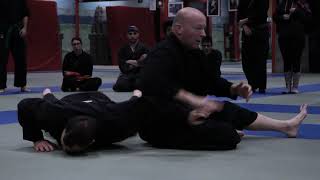
9 Standing Arm Locks (BREAKS) in Jiu-Jitsu #jujitsu #armlock
Key Takeaways
- •Understanding Jiu-Jitsu as a Breaking Art
- •Setting Up the Basic Standing Armlock from 50/50 Clinch
- •The Mere Lock Variation
- •Critical Safety Considerations for Sport Training
Standing arm locks, or should we call arm breaks are a cornerstone of Japanese Jujitsu Techniques. In the video coach Matt Bryers breaks down how to use 9 different standing arm locks found in Japanese & Brazilian Jiu-Jitsu. Learn more about the standing breaks and fight finishes here: https://tritacmartialarts.com/survey Standing Arm Locks from Jiu-Jitsu Chapters: 00:00 - Standing Armlocks Overview 01:14 - Ude Gatame (Straight Arm Lock( 03:20 - Ude Garami ("Mir Lock" / Americana) 04:57 - Kote Maki Tori (Wrist Wrapping Technique) 06:25 - Waki Gatame (Armpit Arm Lock) 08:44 - Hiji Gatame (Elbow Lock) 10:12 - Shiho Nage 12:02 - Gyaku Ude Garami (Kimura) 13:23 - Sankajo 14:57 - Tekubi tori
Related Techniques
Frequently Asked Questions
What does this video teach about straight armlock?
This video covers understanding jiu-jitsu as a breaking art, setting up the basic standing armlock from 50/50 clinch, the mere lock variation. It provides detailed instruction from TRITAC Martial Arts.
How long does it take to learn straight armlock?
The basic mechanics can be understood in a single session, but developing reliable execution requires consistent drilling over weeks of practice. This 6-part breakdown helps structure your training by isolating each phase of the technique.
What are the key details for finishing straight armlock?
The Uritori technique begins with the 50/50 clinch and underhook position, then transitions to a forearm blade connection at the elbow joint. The practitioner clears their arm to the inside and creates a tight lock by pulling with the opposite hand. This variation allows for simultaneous shoulder and elbow compression, creating multiple breaking vectors simultaneously.
Related videos
Back to Basics: The Straight Arm Lock Fundamentals
Knight Jiu-Jitsu
Americana Trap to Straight Armlock Submission Combo by Andre Galvao
BJJ Fanatics
Katame Waza || Grappling Techniques - 32 Holds, Strangles/Chokes and Armlocks
The Judo Way of Life
Waki Gatame - when and how to use it.
Robert Silas (Aiki_and_Jiu)
Waki Gatame into Ura Oni Kudaki - Yossi Sheriff in Madrid
AKBAN Ninjutsu – Yossi Sheriff