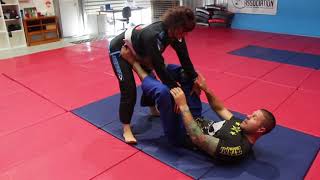
Basic Berimbolo Structure
The berimbolo begins with a deliriheber hook—the practitioner's left leg hooks behind the opponent's knee to prevent it from opening. The right leg frames against the opponent's face or body using the sole of the foot, similar to spider guard mechanics, to maintain distance and prevent the opponent from inserting their leg into the gap.
Shin Positioning and Defense
As the practitioner enters the berimbolo, the shin becomes critical for creating a protective barrier between themselves and the opponent's hips. Keeping the shin in front of the opponent's belly acts as a shield, preventing the opponent from reaching the practitioner's hips and countering with a back take when the practitioner inverts.
Inversion Mechanics
During the inversion to go upside down, the practitioner maintains the knee hook on one leg while using the opposite shin against the opponent's torso. This configuration prevents hip exposure and keeps the opponent pinned, allowing the practitioner to control the opponent's movement and set up attacks rather than face counterattacks.
Lower Body Leg Control
The right leg operates in multiple ways during berimbolo, using the shin, knee, and inner thigh to trap the opponent's thigh in a pinching motion. This comprehensive leg entanglement stabilizes the opponent's lower body and prevents leg extension, fully locking their joints and eliminating their ability to escape to the back.
Z-Lock Transition
When the opponent increases distance and the standard berimbolo cannot be maintained, the practitioner transitions to the Z-lock by sliding the right shin behind the opponent's knee instead of in front of their belly. Both legs work together in a butterfly-hug configuration to trap the opponent's leg, allowing continued control even when the initial berimbolo structure breaks down.
Positional Adaptation
The practitioner must recognize when hip angle changes indicate loss of control and fluidly transition from berimbolo to Z-lock mechanics. By sliding the bottom leg behind the opponent's knee and adjusting leg positioning, the practitioner maintains leg control despite the opponent's postural adjustments.
Berimbolo | Z Lock & Triangle Lock | 4K
Key Takeaways
- •Basic Berimbolo Structure
- •Shin Positioning and Defense
- •Inversion Mechanics
- •Lower Body Leg Control
Carpe Diem London Merchant Page: https://teespring.com/en-GB/stores/carpe-diem-london Tsuyoshi Tamaki Instagram: https://www.instagram.com/tsuyoshicdlondon Carpe Diem BJJ London Instagram: https://www.instagram.com/carpediembjj_london Official Website: vhttp://www.carpediembjj.co.uk Chapters: - 00:00 Intro - 00:09 Basic Berimbolo - 00:46 How to Use the Sole - 01:36 How to Use the Shin - 02:38 Berimbolo Lock - 05:25 Berimbolo - highlight - 05:32 Z Lock - 07:51 with Underhook - 08:11 Z Lock - highlight - 08:15 Triangle Lock - 09:54 Making the Proper Angle - 11:22 Triangle Lock - 12:45 Triangle Lock - highlight - 13:01 Outro #BJJin4K #Berimbolo #DoubleGuard #BJJ #Jiujitsu #Lumix #GH5 #Gopro #GoProHero9
Related Techniques
Frequently Asked Questions
What does this video teach about standard berimbolo?
This video covers basic berimbolo structure, shin positioning and defense, inversion mechanics. It provides detailed instruction from 玉木強 / YOSHI JIU-JITSU TECH.
How long does it take to learn standard berimbolo?
The basic mechanics can be understood in a single session, but developing reliable execution requires consistent drilling over weeks of practice. This 6-part breakdown helps structure your training by isolating each phase of the technique.
What are the key details for finishing standard berimbolo?
When the opponent increases distance and the standard berimbolo cannot be maintained, the practitioner transitions to the Z-lock by sliding the right shin behind the opponent's knee instead of in front of their belly. Both legs work together in a butterfly-hug configuration to trap the opponent's leg, allowing continued control even when the initial berimbolo structure breaks down.