Reverse De La Riva Guard Overview
The reverse De La Riva is a fundamental open guard position in Brazilian Jiu-Jitsu where the bottom player controls the opponent's lead leg from the inside using their own leg. Rather than relying solely on a hook, this position functions primarily as a defensive frame to prevent knee cut passes and split squat entries. The position allows the bottom player to off-balance opponents and set up sweeps while maintaining control.
Anatomical Position Setup
In the reverse De La Riva, the bottom player positions their inside knee against the opponent's knee while hooking the outside of the opponent's hip with their foot's laces. The inside hand grips the opponent's ankle or heel, while the elbow remains tucked to the inside of the hip to prevent underhook entries. The outside leg is kept with the knee toward the shoulder and can be used for off-balancing or inversion mechanics.
Hook Variations and Adaptation
The foot hook may come off when the opponent straightens their leg, but the position remains effective through knee-to-knee contact and off-balancing mechanics. The grip on the opponent's ankle changes based on technical objectives and may transition from heel control to scooping mechanics. Practitioners should understand that reverse De La Riva can be maintained without a continuous hook through active leg positioning.
First Off-Balance Sequence
The first off-balance involves pushing the inside knee upward into the opponent's knee while using downward foot pressure to force the opponent's back leg to step. This action causes the opponent to bend their knee, allowing the bottom player to quickly re-establish the hook. The off-balance must be executed decisively to prevent the opponent from advancing their pass.
Second Off-Balance and Position Reset
The second off-balance uses a foot post on the mat combined with the inside hand gripping behind the opponent's knee to create pressure. The bottom player uses this grip and foot post simultaneously to extend the opponent's leg and force their hands to the mat for a reset. This sequence resets the opponent's pass attempt and returns the bottom player to a defensive reverse De La Riva position.
Weight Distribution and Pass Prevention
The fundamental goal is to remove weight from the opponent's lead leg, preventing them from driving their knee into the bottom player. Each time the opponent drives forward with their lead leg, the bottom player must execute an off-balance to counteract the pressure. When the opponent straightens their leg and loses the hook, extending the bottom player's leg creates a straight-line formation that destabilizes pass attempts.
Entry and Arm Positioning
The reverse De La Riva can be entered directly through aggressive positioning or established defensively when an opponent attempts to pass. Proper arm positioning is critical—the inside elbow must remain tucked to prevent underhook access, and opening the arm exposes the bottom player to underhook passes. The inside hand maintains constant contact with the opponent's ankle or heel throughout the exchange.
How To Hit The Kiss of The DRAGON
Key Takeaways
- •Reverse De La Riva Guard Overview
- •Anatomical Position Setup
- •Hook Variations and Adaptation
- •First Off-Balance Sequence
The Kiss of the Dragon is one of the most effective ways to take the back when your opponent is pressuring your Reverse De La Riva. Instead of fighting the smash head-on, we use angle, timing, and off-balancing to slip underneath and expose the back. Please visit our website to get more information: https://www.jiujitsumodern.com/ ✅ Timestamps: 0:00 - Intro 1:45 - What is RDLR 2:45 - Off Balance Drill 9:00 - Kiss of The Dragon (backtake) 🔗Important Link to Follow: Shop from Jiu-Jitsu Modern: https://shop.jiujitsumodern.com/ 🔔𝐃𝐨𝐧'𝐭 𝐟𝐨𝐫𝐠𝐞𝐭 𝐭𝐨 𝐬𝐮𝐛𝐬𝐜𝐫𝐢𝐛𝐞 𝐭𝐨 our 𝐜𝐡𝐚𝐧𝐧𝐞𝐥 𝐟𝐨𝐫 𝐦𝐨𝐫𝐞 𝐮𝐩𝐝𝐚𝐭𝐞𝐬. https://www.youtube.com/@jiujitsumodern?sub_confirmation=1 🔗 Stay Connected With Us. Linktree: https://linktr.ee/Jiujitsumodern Instagram: https://www.instagram.com/jiu_jitsu_modern/ Facebook: https://www.facebook.com/JJMDRNNY Website: https://www.jiujitsumodern.com/ 📩 For business inquiries: [email protected] 📞 Call us: (631) 392-0096 Or 💬 Text us: 1-866-621-6470 ============================= 🎬Suggested videos for you: ▶️ https://www.youtube.com/watch?v=bLt3R_Vsz08 ▶️ https://www.youtube.com/watch?v=d6lhB5zZ0z0 ▶️ https://www.youtube.com/watch?v=Jye11m4rZzY ▶️ https://www.youtube.com/watch?v=uoUvyY8eRx8 ▶️ https://www.youtube.com/watch?v=pQbYb65UfZ8 ▶️ https://www.youtube.com/watch?v=7aEhUzvikmk ▶️ https://www.youtube.com/watch?v=5Zb_1xWhXZ8 ▶️ https://www.youtube.com/watch?v=FeY8JX2D6MU ▶️ https://www.youtube.com/watch?v=JSvuRSiGhyw ▶️ https://www.youtube.com/watch?v=Jq_IHqvf0AI ================================= #bjj #nogi #kissofthedragon #backtake How To Hit The Kiss of The DRAGON
Related Techniques
Frequently Asked Questions
What does this video teach about kiss of the dragon?
This video covers reverse de la riva guard overview, anatomical position setup, hook variations and adaptation. It provides detailed instruction from JIU JITSU MODERN.
How long does it take to learn kiss of the dragon?
The basic mechanics can be understood in a single session, but developing reliable execution requires consistent drilling over weeks of practice. This 7-part breakdown helps structure your training by isolating each phase of the technique.
What are the key details for finishing kiss of the dragon?
The fundamental goal is to remove weight from the opponent's lead leg, preventing them from driving their knee into the bottom player. Each time the opponent drives forward with their lead leg, the bottom player must execute an off-balance to counteract the pressure. When the opponent straightens their leg and loses the hook, extending the bottom player's leg creates a straight-line formation that destabilizes pass attempts.
Related videos

Berimbolo | Z Lock & Triangle Lock | 4K
玉木強 / YOSHI JIU-JITSU TECH
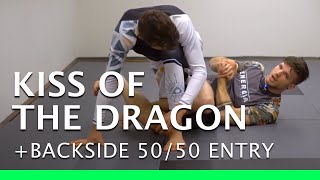
Kiss of the Dragon
Energia Martial Arts

A Jiu Jitsu Berimbolo That Everyone Can Do by Mikey Musumeci
Bernardo Faria BJJ Fanatics
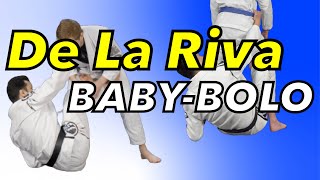
Beginners MUST KNOW This One!!: BABY-BOLO - Taking the Back from De La Riva
玉木強 / YOSHI JIU-JITSU TECH
Wedding Sweep from Half Guard Basic
TeachMeGrappling Coach Brian