Guillotine Choke Mechanics
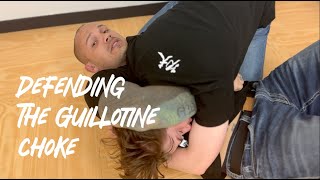
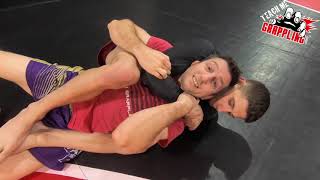
The guillotine choke is primarily executed through pressure from the attacker's forearm, bicep, and rib cage rather than the second arm, which serves only a supplementary role. Understanding this distinction is critical for developing effective escapes, as many practitioners misidentify the primary pressure source.
Standing Escape Fundamentals
The foundational escape begins with a vertical lift of the head to create space. The defender then transitions to their tiptoes while driving their hips backward and laterally, creating a gap in the choke triangle that allows the head to rotate across the attacker's torso.
Addressing the Marcello Garcia Variation
Even when the attacker wraps their forearm completely over the neck—a variation popularized by Marcello Garcia—the escape remains viable because the pressure originates from the attacker's rib cage rather than the overhooked arm.
Ground Escape: Von Flu Counter
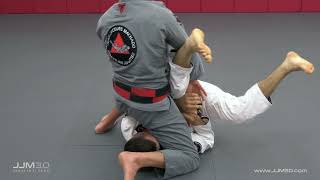
When the guillotine is applied from the attacker's butterfly guard, the defender can employ the Von Flu escape by checking the attacker's leg, wrapping the arm, and rotating to establish crossside control with the head positioned away from the choke.
Escape Under Elevated Guard Pressure
If the attacker lifts their leg to increase pressure from guard, the defender executes the same vertical lift and backward hip drive while incrementally rotating the head across the attacker's midsection, gradually alleviating pressure.
Thigh Checking During Escape
As the defender rotates out, they must check the attacker's thighs to prevent a transition to mount position. This defensive hand positioning is essential to maintaining control while the head progressively clears the choke.
Progressive Drilling Method
The escape can be isolated as a repetition drill where the attacker applies the guillotine and the defender executes the exit technique in controlled fashion. This builds both technical proficiency and psychological confidence in the escape's effectiveness.
How To Escape The Guillotine Choke
Key Takeaways
- •Guillotine Choke Mechanics
- •Standing Escape Fundamentals
- •Addressing the Marcello Garcia Variation
- •Ground Escape: Von Flu Counter
https://www.infighting.ca/blog/brazilian-jiu-jitsu/ For more tips, techniques and videos on Brazilian Jiu Jitsu, check out our blog! The Guillotine Choke is one of the most common submissions in BJJ. It is the submission that most people already are familiar with when the walk into a BJJ school for the first time. It is also the most practical submission for self defense. In this video, I do a quick breakdown on how you can escape the Guillotine Choke and transition the attack into a Guard Pass!
Related Techniques
Frequently Asked Questions
What does this video teach about guillotine escape?
This video covers guillotine choke mechanics, standing escape fundamentals, addressing the marcello garcia variation. It provides detailed instruction from Ritchie Yip.
How long does it take to learn guillotine escape?
The basic mechanics can be understood in a single session, but developing reliable execution requires consistent drilling over weeks of practice. This 7-part breakdown helps structure your training by isolating each phase of the technique.
What are the key details for finishing guillotine escape?
As the defender rotates out, they must check the attacker's thighs to prevent a transition to mount position. This defensive hand positioning is essential to maintaining control while the head progressively clears the choke.