Judo Pin Science and Mechanics
Judo pins function through specific anatomical principles and structural positioning rather than raw strength. Modern judo requires 20-second immobilization for victory, making pins highly effective techniques that work by neutralizing an opponent's escape mechanisms.
Spinal Elongation and Bridge Prevention
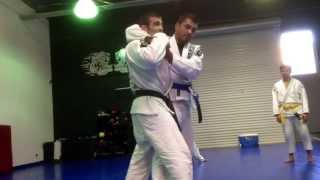
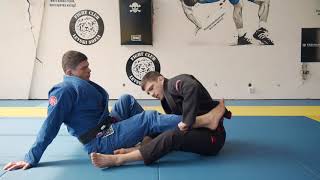
When an opponent's knees are bent, they retain the ability to bridge their hips upward—a powerful escape mechanism. By elongating the spine through chin-to-chest contact, the instructor demonstrates how bridging becomes mechanically much more difficult, as it requires engagement of core muscles that are now compromised by spinal extension.
Lateral Movement Restriction Through Head Control
An opponent can normally create escape space through side-to-side scooting, which requires less force to execute than an opponent can maintain in resistance. By applying spinal twist—rotating the head—the instructor demonstrates that lateral movement becomes significantly more difficult, since the body mechanically follows head position.
Head Position and Directional Movement
The principle 'where the head goes, the body follows' means that by controlling head direction, an instructor can restrict movement away from their position while allowing only movement toward themselves. Adding hand pressure near the hip further prevents scooting in the escape direction.
Haul Kiss A Guy Pin Structure
In the haul kiss a guy pin, the controlling position combines a knee beneath the opponent's shoulder, an arm under the head controlling the lapel, and chest-to-chest pressure. This structure simultaneously elongates the spine, prevents head rotation away from the control point, and blocks the opponent's body—eliminating both bridging and lateral escape options.
Pin Effectiveness Through Combined Controls
The pin's difficulty lies in combining spinal elongation and head control, which together neutralize the two primary escape mechanisms: vertical bridging and horizontal scooting. Tension and positioning snugness significantly affect pin effectiveness, as loose application allows degrees of freedom that compromised structure otherwise eliminates.
Judo Pins For BJJ - Part 1 - Spinal Control
Key Takeaways
- •Judo Pin Science and Mechanics
- •Spinal Elongation and Bridge Prevention
- •Lateral Movement Restriction Through Head Control
- •Head Position and Directional Movement
Why Judo Pins Work: Osaekomi Waza (pinning techniques) used in Judo are efficient by design. The intent is high level of difficulty for the person being held (Uke) and very low level of difficulty for the person doing the pin (Tori). In this short video, we demonstrate and discuss some of the anatomical science that is being applied when using Osaekomi Waza (pinning techniques). While there are many principles being applied, spinal manipulation is the primary reason the pins work. By elongating the spine, it makes it difficult for the opponent to bridge or upa. By twisting the spine, it is nearly impossible for the opponent to shrimp, scoot, or turn. In the modern rules of Judo, you must hold your opponent down for 20 seconds to score a victory. In "old school" rules, it was for 30 seconds. The reason this information is important is to help us realize how effective the pins are. Holding someone down that does not want to be held down is very difficult without proper technique. Holding down someone that has Judo or Jiu-jitsu knowledge will be much more difficult. Therefore, this demonstrates the power of the pins in these arenas. Why are Judo pins important for Jiu-jitsu? Most Judo pins do not score any points in a Jiu-jitsu match. The exceptions would be Uki-gatame, worth 2 points, and Tate-shiho-gatame, worth 4 points. The main reason to use the pins in Jiu-jitsu would be efficiency. The pins enable us to hold, control, and exhaust an opponent with minimal effort and then use the pins to transition to a submission finish. 0:00 Welcome 0:55 Elongating the Spine 1:45 Twisting the Spine 2:47 Hon-kesa-gatame In my opinion, "Dynamic Judo -- Grappling" by Kazuzo Kudo, is the best book ever produced on the topic. Here is an Amazon link: https://amzn.to/2ZwW4fD
Related Techniques
Frequently Asked Questions
What does this video teach about spinal twist defence?
This video covers judo pin science and mechanics, spinal elongation and bridge prevention, lateral movement restriction through head control. It provides detailed instruction from Takedowns For Jiu-jitsu.
How long does it take to learn spinal twist defence?
The basic mechanics can be understood in a single session, but developing reliable execution requires consistent drilling over weeks of practice. This 6-part breakdown helps structure your training by isolating each phase of the technique.
What are the key details for finishing spinal twist defence?
In the haul kiss a guy pin, the controlling position combines a knee beneath the opponent's shoulder, an arm under the head controlling the lapel, and chest-to-chest pressure. This structure simultaneously elongates the spine, prevents head rotation away from the control point, and blocks the opponent's body—eliminating both bridging and lateral escape options.