Setup from Kimura Grip
The scissor choke is most effectively initiated from a Kimura grip in side control. This grip provides excellent positional stability and creates multiple submission options. The instructor establishes this control immediately after passing the guard.
Recognizing the Opening
When the opponent defends against the Kimura attack with their arms, the neck becomes exposed, creating an ideal opportunity for the scissor choke. The instructor identifies this defensive reaction as the trigger to transition to the leg lock. Maintaining chest pressure on the opponent's arm is critical during this transition.
Inserting the Bottom Leg
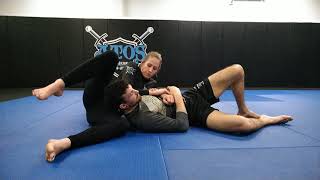
The instructor slides the knee behind the opponent's shoulder underneath their head to create a platform. This movement is paired with a hip follow to maintain control and positioning. The setup requires keeping the grip tight while maintaining chest pressure throughout.
Crossing the Top Leg
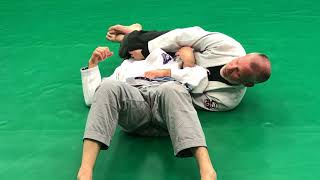
The top leg sweeps over the opponent's body, overshooting the chin to position the knee tendon underneath. The instructor then locks the top foot under the bottom foot, creating a secure scissor configuration. Proper leg crossing ensures maximum pressure distribution for the choke.
Applying Pressure and Finishing
From the locked scissor position, the instructor extends the legs while turning the hips downward to apply pressure. This hip rotation creates the mechanical advantage necessary to restrict blood flow. The submission typically results in a tap quickly due to the pressure application.
Addressing Chin Defense
When the opponent tucks their chin to prevent the choke, the instructor can use the knee tendon to ratchet underneath and dig the chin upward. If the choke feels more like a facial compression than a neck lock, the instructor scratches the face area before extending. This adjustment forces the opponent to expose their chin or accept the facial pressure.
Countering Explosive Bridge Escapes
Wrestlers and explosive opponents often attempt to bridge and knock the instructor off position. Rather than resisting, the instructor flows with this momentum, sliding underneath as the opponent moves. The leg positioning is then quickly secured into the scissor lock before the opponent can establish top control.
Maintaining the Kimura Grip Advantage
The Kimura grip must remain tight throughout the choke attempt, keeping the opponent's hand and wrist pressed into their own body. Losing this grip allows the opponent to extract their elbow and escape to top position. As long as this control is maintained, the instructor can safely pursue the choke without sacrificing positional advantage.
Fallback to Top Position
If the choke is not working and the opponent turns away or resists the chin placement, the instructor can release the leg lock and quickly return to top control. This transition requires pulling the legs back beneath the body to establish pressure. The opponent often becomes distracted by the choke attempt and forgets to maintain their Kimura grip defense, allowing the instructor to improve position.
Finishing from Improved Position
Once the opponent loses focus on the Kimura grip while defending the leg lock, the instructor can incrementally improve their top position. By moving the opponent's hand backward, the instructor regains dominant control and can finish the submission quickly. This combination approach demonstrates the seamless integration of positional control with submission hunting.
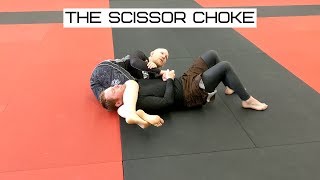
Scissor Choke Tutorial by Nikki Sullivan
Key Takeaways
- •Setup from Kimura Grip
- •Recognizing the Opening
- •Inserting the Bottom Leg
- •Crossing the Top Leg
I hit this choke back at EBI 12 and it can be pretty sneaky when your opponent's focused on defending the kimura. Check it out! Let me know what you think.
Frequently Asked Questions
What does this video teach about headscissors from side control?
This video covers setup from kimura grip, recognizing the opening, inserting the bottom leg. It provides detailed instruction from nicsulli.
How long does it take to learn headscissors from side control?
The basic mechanics can be understood in a single session, but developing reliable execution requires consistent drilling over weeks of practice. This 10-part breakdown helps structure your training by isolating each phase of the technique.
What are the key details for finishing headscissors from side control?
If the choke is not working and the opponent turns away or resists the chin placement, the instructor can release the leg lock and quickly return to top control. This transition requires pulling the legs back beneath the body to establish pressure. The opponent often becomes distracted by the choke attempt and forgets to maintain their Kimura grip defense, allowing the instructor to improve position.