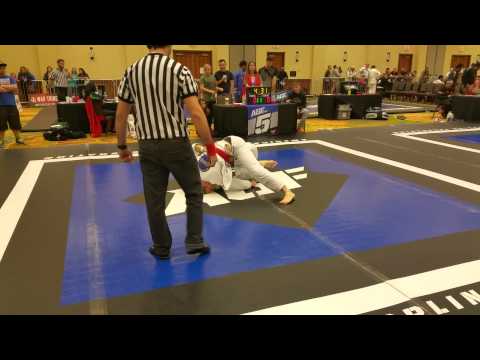
MUST SEE Head Scissor Choke
0
Headscissors From Turtle·Brandon Quick
Levi Mowles 155 vs 207lbs Hits a sub we commonly use at BQJJ HQ
Translation: Head Scissors (katakana loanword)
The headscissors from turtle is applied against an opponent in the turtle position by threading the legs around the opponent's head from the front or side, then squeezing the thighs together to compress the neck. [1],[2] The attacker typically approaches from the front or scrambles to a position where they can swing a leg over the opponent's head, then locks the scissors and rolls or sits back to complete the strangle. [1] The turtle position leaves the head exposed, making it vulnerable to leg-based attacks when the opponent is focused on protecting their back. [1],[2]
Applying headscissors to turtled opponents has precedent in freestyle and catch wrestling, where the turtle was a common defensive position that invited front headlock and head-trapping attacks. [1],[2] In BJJ and submission grappling, the turtle headscissors developed as a creative option alongside more conventional attacks like the clock choke, guillotine, and back-take sequences. [1] The technique provides a direct submission path when the opponent maintains a tight defensive shell. [1],[2]
Moderate effectiveness as a turtle attack — less common than back takes or front headlock transitions but can catch opponents who are focused on defending conventional attacks [1]
Rooted in catch wrestling's extensive turtle attack system; adapted to modern grappling by catch-influenced competitors [1]
Occasionally seen in submission-only events; rare at ADCC or IBJJF competition [1]
No images yet for this technique.
Sign in to suggest an image.
Levi Mowles 155 vs 207lbs Hits a sub we commonly use at BQJJ HQ
No instructional courses yet for this technique.
Sign in to suggest a course.
Risk of injury to the person this technique is applied to
Headscissors use the thighs to squeeze the head laterally; risk of neck strain
Skill level needed to execute this technique reliably
Whether this technique is allowed under major competition rule sets
Japanese grappling/BJJ standard terminology; JBJJF competition usage
Official Japanese BJJ federation — competition rules and terminology
Standard katakana transliteration of Western martial arts terminology (外来語) — used in Japanese MMA, boxing, and BJJ communities
Japanese terminology sourced from Japanese grappling/BJJ standard terminology; JBJJF competition usage
grip or squeeze strength, positional control
strong upper body for sustained compression
forearms, biceps, pectorals, core stabilisers
Every move, in any martial art, shares a few universal traits. Mix and match below to pinpoint the right tool — or compare equivalents across styles.
You want to position your legs ear to ear, establishing control on both sides of your opponent's head before tightening the scissor.
Yes, Brandon Quick recommends using a 'water fly' motion with your hips as you enter the position to generate momentum and maintain control.
The headscissors from turtle is applied against an opponent in the turtle position by threading the legs around the opponent's head from the front or side, then squeezing the thighs together to compress the neck. The attacker typically approaches from the front or scrambles to a position where they can swing a leg over the opponent's head, then locks the scissors and rolls or sits back to complete the strangle.
Applying headscissors to turtled opponents has precedent in freestyle and catch wrestling, where the turtle was a common defensive position that invited front headlock and head-trapping attacks. In BJJ and submission grappling, the turtle headscissors developed as a creative option alongside more conventional attacks like the clock choke, guillotine, and back-take sequences.
IBJJF: legal — Legal at all belt levels, gi and no-gi — chokes are the safest submission cat…; IJF: legal — Legal (shime-waza) — strangulation techniques are one of three permitted subm…; ADCC: legal — Legal; Unified MMA: legal — Legal — choke submissions are among the most common finishes in MMA; FIAS Sport Sambo: banned — All chokes prohibited in Sport Sambo; FIAS Combat Sambo: legal — Legal
Danger rating 7/10. Headscissors use the thighs to squeeze the head laterally; risk of neck strain
The standard setup chain: Achieve Controlling Position → Isolate the Neck → Set the Grip → Apply Pressure.
Standard counters include: Tuck Chin — protect the neck by lowering the chin to prevent the choke from sinking / Two-on-One Grip Fight — use both hands to strip the choking grip before it locks / Turn Into — rotate toward the choking arm to relieve carotid pressure / Posture Up — straighten the spine and create distance to break the choking angle.
Common variants: Standard grip variation (primary hand configuration for maximum choking pressure); Gi variation (uses the lapel or collar as an anchor for additional fric…); No-gi variation (adapted grip and positioning for submission grappling wit…); Transition finish (applied during a positional change to catch the opponent …).
Occasionally seen in submission-only events; rare at ADCC or IBJJF competition
Top errors to watch for: Attempting from directly behind — the side approach provides better leg access to the neck; from behind, the turtle p… / Not collapsing the turtle before or during the headscissors — the rounded turtle may protect the arteries; flatten th… / Threading too slowly — the turtled opponent can adjust and protect the head; thread quickly and decisively / Not locking the figure-four — the figure-four is essential for structural compression; without it, the opponent can p….
The Headscissors From Turtle is also known as Heddo Shizāzu, Turtle Head Scissors, Kubi-basami from Turtle.