Posture Breaking Fundamentals
The foundation of this system relies on controlling the collar grip while creating distance from the opponent. By backing away progressively, the instructor breaks the opponent's posture forward regardless of their strength. This mechanical principle works because the opponent on both knees cannot resist the leverage created by the increasing distance.
Grip Defense and Sleeve Control
When the opponent attempts to break the collar grip, they expose their sleeve, allowing immediate re-engagement. The instructor re-grabs the collar and establishes foot positioning: one foot on the hip for distance management and the other in the bicep to prevent grip breaks. This configuration creates a control system that is mechanically difficult to escape.
Loop Choke Setup and Execution
The loop choke becomes available when the opponent tightens their elbow in defense, forcing them to lower their posture. The instructor dips the wrist to create a pocket for the neck, then threads the free arm over the top and under the forearm. The top leg crosses over the back to trap the opponent in place, allowing the choke to finish even during roll-through attempts.
Omoplata and Triangle Alternatives
If the opponent postures upward to defend the loop choke, they expose the elbow-knee space for alternative attacks. The instructor places the shin on the inside of the arm, securing this position even if the opponent pulls their elbow tight. From here, the leg can be extended through to attack either the omoplata or triangle choke.
Single-Leg Transition from Knee Defense
When the opponent steps one knee forward to defend, the instructor pushes the neck with their fist and removes the hip foot to off-balance them. After securing a hook with the free foot, they transition to a single-leg grip by feeding the lapel and driving into the takedown. This progression significantly increases offensive opportunities.
Leg-Lock Succession and Back Takes
The same foot-on-hip position enables advanced sequences including single-leg takedowns, baron bolo sweeps, and back-take transitions. By maintaining control of the opponent's base while manipulating their hip position, the instructor creates multiple finishing pathways. This versatility makes the system adaptable to various defensive responses.
Double-Leg Stepping Defense
If the opponent steps up with both legs sequentially, the instructor wedges their leg between them, creating an inescapable space. They can then execute a single-leg takedown or transition to deeper lacing techniques such as the deep half guard finish. The structural positioning prevents the opponent from recovering their base.
Competition Application: Low-Posture Response
In the Mergoli versus Cyborg match, Mergoli establishes foot-on-hip control with collar-sleeve grip. When Cyborg maintains a low posture, Mergoli waits for him to sit up before threading the arm over the back. The leg crosses over the back immediately, maintaining position through the roll and securing the submission finish.
Competition Application: Spider Guard Entry
Daniel Donahue uses the threat of a wheel sweep from spider guard to establish foot-on-hip control. He transitions to collar-sleeve grip and threatens the omoplata-triangle combination. When his opponent tightens the elbow, Donahue shifts to the loop choke, secures the leg-over-back position, and finishes with a pin.
Competition Application: Deep Lasso Pressure
Mergoli establishes the position through a deep lasso sweep that forces the opponent back to both knees. From there, he drives into the loop choke using a half-guard lock variation with deep tricep control. The choke is set so securely that even when the opponent passes through the legs, the submission remains tight enough to finish.
The Easiest Way to Submit Strong Stalling Opponents
Key Takeaways
- •Posture Breaking Fundamentals
- •Grip Defense and Sleeve Control
- •Loop Choke Setup and Execution
- •Omoplata and Triangle Alternatives
This video I go through a simple system to create offense vs a strong stalling opponent. The key to attacking a stalling opponent is forcing them to move and open up, the easiest way to do this is to back up and pull on the collar to break posture, they will be forced to respond to this either exposing and Omoplata triangle choke or a loop choke. When you can effectively mix these systems it’s so hard to stop. For my full collar sleeve system check out my website here. https://www.jonthomasbjj.com/courses/modern-collar-sleeve Vital Kimonos: https://www.vitalkimonos.com/
Related Techniques
Frequently Asked Questions
What does this video teach about loop from guard?
This video covers posture breaking fundamentals, grip defense and sleeve control, loop choke setup and execution. It provides detailed instruction from JonThomasBJJ.
How long does it take to learn loop from guard?
The basic mechanics can be understood in a single session, but developing reliable execution requires consistent drilling over weeks of practice. This 10-part breakdown helps structure your training by isolating each phase of the technique.
What are the key details for finishing loop from guard?
Daniel Donahue uses the threat of a wheel sweep from spider guard to establish foot-on-hip control. He transitions to collar-sleeve grip and threatens the omoplata-triangle combination. When his opponent tightens the elbow, Donahue shifts to the loop choke, secures the leg-over-back position, and finishes with a pin.
Related videos
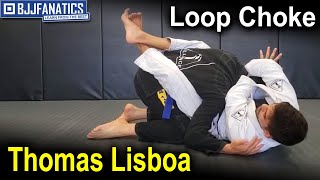
Loop Choke by Thomas Lisboa - BJJ Techniques
BJJ Fanatics
Lapel Grip in Full Guard for Breaking Posture and Setting Up Submissions
Chewjitsu
Loop choke options from mount. #brazilianjiujitsu #bjj #jiujitsu
Sickness Ferro
Best Loop Choke Technique (top and bottom)
Matt Arroyo Jiu Jitsu
Loop choke options from mount. #brazilianjiujitsu #bjj #jiujitsu
Sickness Ferro