Introduction & Safety Considerations
The spin-back outside crescent kick demands engagement of the core and hip flexors. Practitioners should prepare adequately by rolling out before training and using preventive measures such as KT tape if experiencing tightness or soreness in the hip flexor region.
Foundational Mechanics
Successful execution requires three key elements: spinning on the ball of the foot without stepping forward, using arm and elbow initiation to drive the rotation, and allowing the hips to follow the upper body momentum. The instructor demonstrates a slow repetition before advancing to practice drills.
Spotting Technique & Balance Control
Practitioners must maintain focus on a fixed point ahead throughout the spin to prevent dizziness and ground the body effectively. The head remains on the target during the spin, turns with the body, and returns to the same point as the kick completes. Proper spotting enables controlled rotation and eliminates loss of balance.
Hip Position & Chamber Mechanics
The defining characteristic of the crescent kick is hip orientation toward the target at the moment of impact. Incorrect hip alignment—facing sideways or backward—transforms the technique into a spin hook or spin heel kick. The practitioner must pull the hip back as the leg chambers, then open the hip explosively before extending.
Weight Distribution & Hip Extension Drill
Practitioners must identify their supporting leg and maintain upright posture with shoulders elevated throughout the rotation. A dedicated drill isolates the hip-opening motion, allowing trainees to perfect the cross-foot positioning and lateral hip extension required for proper kick trajectory.
Full Technique Execution & Self-Assessment
When performing the complete kick, practitioners should maintain light footwork and shoulder engagement while monitoring alignment. Video recording of practice sessions enables objective analysis of common errors such as lateral weight shift or premature hip extension ahead of body rotation.
Progressive Development & Problem-Solving
Advanced practitioners recognize that technical mastery requires ongoing refinement of specific elements such as balance and spinal alignment. Rather than viewing mistakes as failures, elite students actively isolate problem areas and develop targeted corrections to elevate overall performance.
Practice Applications & Target Training
Trainees benefit from varied practice methods including wall targets, hand pads held by partners, and household alternatives such as shields or pillows. External targets provide focus points that enhance success rates and allow practitioners to develop accuracy and power simultaneously.
Spin Crescent Kick
Key Takeaways
- •Introduction & Safety Considerations
- •Foundational Mechanics
- •Spotting Technique & Balance Control
- •Hip Position & Chamber Mechanics
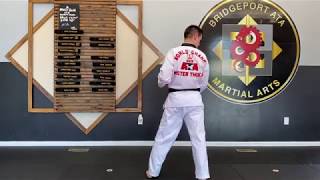
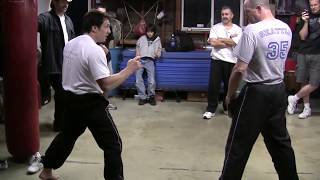
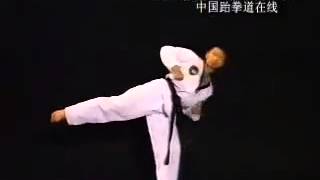
This video is a tutorial of the spin Crescent Kick. Here we breakdown rotation, hip motion, foot placement and flow.
Related Techniques
Frequently Asked Questions
What does this video teach about spin-back outside crescent kick?
This video covers introduction & safety considerations, foundational mechanics, spotting technique & balance control. It provides detailed instruction from Beyond Taekwondo.
How long does it take to learn spin-back outside crescent kick?
The basic mechanics can be understood in a single session, but developing reliable execution requires consistent drilling over weeks of practice. This 8-part breakdown helps structure your training by isolating each phase of the technique.
What are the key details for finishing spin-back outside crescent kick?
Advanced practitioners recognize that technical mastery requires ongoing refinement of specific elements such as balance and spinal alignment. Rather than viewing mistakes as failures, elite students actively isolate problem areas and develop targeted corrections to elevate overall performance.