Introduction to the Body Lock System
The body lock is a fundamental takedown system recommended for practitioners of all levels, from white belt to advanced. Unlike complex techniques such as double legs or uchi matas, the body lock relies on wrapping both arms around the opponent's torso. This system can be executed from the front or rear position, with the front body lock being the most accessible starting point for beginners.
Transitioning from Over-Under to Double Underhook
The front body lock typically begins from an over-under clinch position. To secure both underhooks, the practitioner creates pushing pressure into the opponent, then exploits the opponent's countering pressure by executing a small side step to off-balance them. Once squared up, the practitioner steps forward with the lead leg and pummels the second underhook while maintaining an S-grip with their hands.
Establishing the Front Body Lock Position
After securing both underhooks with an S-grip, the practitioner should anticipate the opponent pinching their elbows and hinging their hips backward to reposition. As soon as the opponent's hips move back, the practitioner takes a large step forward and shuffles into the proper front body lock position. This position forms the foundation for all subsequent finishing techniques.
Grip Progression and High-Knee Lift Finish
From the front body lock, the grip progresses from the initial S-grip to a Gable grip, then to a forearm tie by sliding the hands toward the opponent's forearms. This transition creates a rowing motion that drives the practitioner's chest into the opponent while maintaining posture. The practitioner then takes a large step with the rear leg in front of the opponent and executes a high knee strike to the hips, concluding with immediate wrist control and leg underhook upon landing.
Knee Bump Variation for Larger Opponents
When facing a significantly larger opponent, the high-knee lift may not generate sufficient momentum. In this scenario, the practitioner pivots their lead foot to execute a knee bump instead, followed by a shuffle step backward. Upon setting the opponent down with this variation, the same wrist control and leg underhook follow immediately.
Defending Against the Overhook Counter
The most common defensive response to the front body lock is an aggressive overhook from the opponent, who uses it to wrench the practitioner's shoulder forward and prevent a tight grip. This overhook creates leverage for throws like the uchi mata or a front headlock setup. To counter this, the practitioner recognizes the forward pull sensation and immediately steps deeply with the lead leg while leaning the hips back, then transitions hand control to the opponent's hip and inside knee.
Hip and Knee Control Counter
When countering the overhook, the practitioner releases the body lock and repositions the hands to control the opponent's hip and the inside of the knee. The hip grip pulls backward while the inside knee grip rotates the opponent forward, creating a rotational control that neutralizes the overhook advantage.
THE FIRST TAKEDOWN EVERYONE SHOULD LEARN: THE BODY LOCK #bjj #nogijiujitsu #takedowns #wrestling
Key Takeaways
- •Introduction to the Body Lock System
- •Transitioning from Over-Under to Double Underhook
- •Establishing the Front Body Lock Position
- •Grip Progression and High-Knee Lift Finish
Whether you’re new to jiu jitsu, or you’re a seasoned practitioner who wants to develop takedown skills, the body lock takedown is the best place to start. Although it isn’t the flashiest takedown, the body lock provides the best foundation in that it’s easy to learn, safe to attempt, efficient for all body types, works across styles, and is very hard for opponents to counter once achieved. In this video, we cover a basic body lock system perfect for all levels. We discuss the foundation of the body lock, how to achieve the position, as well as how to chain attacks off of potential counters from our opponent.
Related Techniques
Frequently Asked Questions
What does this video teach about front body lock?
This video covers introduction to the body lock system, transitioning from over-under to double underhook, establishing the front body lock position. It provides detailed instruction from Kata Jiu Jitsu.
How long does it take to learn front body lock?
The basic mechanics can be understood in a single session, but developing reliable execution requires consistent drilling over weeks of practice. This 7-part breakdown helps structure your training by isolating each phase of the technique.
What are the key details for finishing front body lock?
The most common defensive response to the front body lock is an aggressive overhook from the opponent, who uses it to wrench the practitioner's shoulder forward and prevent a tight grip. This overhook creates leverage for throws like the uchi mata or a front headlock setup. To counter this, the practitioner recognizes the forward pull sensation and immediately steps deeply with the lead leg while leaning the hips back, then transitions hand control to the opponent's hip and inside knee.
Related videos
The Body Lock Grip
Absolute MMA St Kilda - Melbourne
How to Escape The Body Lock Fast
SBG PDX & Vancouver BJJ and MMA Videos
Finishing With A Rear Body Lock by Cain Velasquez
FANATIC WRESTLING
No- gi BJJ Technique: Body Lock Pass Against Butterfly Guard
Tiger Muay Thai and MMA Training Camp, Phuket, Thailand
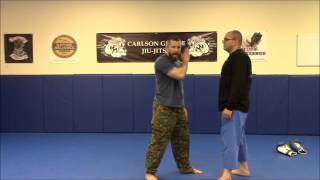
Defensive Tactics - Body Lock Clinch
Valhalla Academy